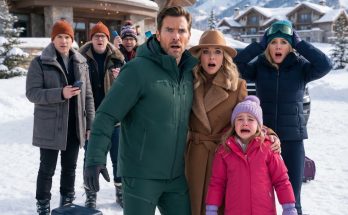
My entire body went cold.
I knew that voice.
Older now. Harsher.
But unmistakable.
Charles Voss.
The plant director from the photograph.
Dad’s face turned pale with recognition.
“Stay behind me,” he whispered.
But Leo moved before anyone could stop him.
He stepped toward the open doorway of the storage unit and called into the rain,
“The river remembers what people bury.”
The words cut through the darkness.
Outside, everything fell silent.
Then Charles Voss whispered, “Who told you that?”
Leo stood his ground, rain settling across his face.
“My father.”
Voss stepped into the doorway, holding an umbrella. He looked much older than he had in the photograph, his hair now silver, his face lined with age, but his eyes remained sharp and icy.
He stared at Leo as though he had seen a ghost.
Then he smiled.
Not with kindness.
“Ethan always did enjoy theatrics.”
Dad’s hands clenched into fists. “What did you do to him?”
Voss looked at him with quiet amusement. “Robert, after all this time, you still can’t remember?”
Dad became perfectly still.
Voss took another step forward.
“You created quite a problem for us. You and that young man. We spent years cleaning up your mess.”
Mom whispered, “Leave us alone.”
Voss paid no attention to her. His eyes never left Leo.
“That child was never supposed to exist.”
I stepped in front of my son.
Something inside me ignited.
“Don’t look at him.”
Voss’s smile widened. “Emma Hale. The girl who disappeared. We searched everywhere for you.”
“I know.”
“You should have remained hidden.”
Dad stepped forward. “That’s enough.”
Voss sighed quietly. “Robert, you were always such a disappointment. You could have enjoyed a comfortable retirement. Instead, you handed confidential documents to a student you barely understood.”
Dad’s voice trembled with anger. “You po!soned innocent people.”
“We managed liability.”
“You murdered Ethan.”
Voss’s expression never changed.
But he said nothing.
That silence told us everything.
Then bright headlights flooded the storage lane.
Another vehicle sped into the lot.
Voss turned immediately.
A woman stepped out wearing a blue raincoat, holding a phone in one hand.
“Nora Price,” she called. “And everything you just admitted has been recorded.”
Voss’s expression shifted.
For the first time, fear crossed his face.
Nora Price walked toward us, rain streaming down the hood of her coat.
“I received a scheduled delivery tonight,” she said, raising the legal envelope. “From my father’s old case system. Ethan Brooks arranged for it to activate the moment someone opened this storage unit.”
I stared at her.
“How?”
She smiled faintly. “Your father helped him create a de:ad man’s switch.”
Dad whispered, “I did?”
Nora looked at him with quiet sympathy. “Yes, Mr. Hale. You did.”
Voss slowly stepped backward.
“You have no idea what you’re getting involved with,” he warned.
Nora raised her phone.
“Actually, I do. And now the county sheriff does too.”
Sirens echoed in the distance.
Voss turned to run.
But Leo spoke once more.
Not loudly.
Not with anger.
Only with certainty.
“You can’t bury a river.”
Voss stopped.
For one strange moment, his shoulders slumped.
Then flashing police lights washed the storage units in red and blue.
As officers rushed through the rain toward us, my father reached out for my hand.
I almost pulled away.
But I didn’t.
Because inside that storage unit, surrounded by the evidence Ethan had given his life to protect, I finally understood the impossible truth.
My father had never betrayed Ethan.
Someone had stolen the memory of his bravery.
PART 5 — The Trial Of Buried Years
The arrest of Charles Voss did not repair our family.
Real life is far harsher than stories in that way.
It opened doors, certainly. It shattered old locks. It brought reporters, attorneys, investigators, and federal agents into our quiet Ohio town. It transformed Ethan Brooks from a forgotten missing person into the symbol of a scandal stretching across counties and decades.
But it did not erase the night Dad forced me out.
It did not return the ten years I had lost.
It did not give Leo his father.
And it did not make forgiveness any easier.
For three days, we remained at my parents’ house while Nora Price organized the evidence. I slept in my old bedroom beneath the faint marks where posters had once hung before I left for college. Leo slept on a mattress beside my bed because he insisted the house made “weird noises.”
On the second night, I woke to find Mom standing in the hallway holding a framed photograph.
It showed me at seventeen, wearing a yellow dress before senior prom.
“I kept it in my closet,” she said quietly.
I sat upright. “Why?”
“Because every time I looked at it, I remembered the sound of the front door closing behind you.”
I stayed silent.
Mom stepped into the room. “Emma, I was a coward.”
The words were plain.
No excuses.
No attempts to soften them.
Maybe that was why they hurt less.
“I kept telling myself your father couldn’t be challenged,” she continued. “I convinced myself you needed to learn responsibility. I told myself countless things so I could sleep at night.”
“Did you?”
She slowly shook her head. “No.”
Leo shifted in his sleep but never woke.
Mom looked at him, and her face crumpled beneath love and sorrow.
“He has Ethan’s eyes,” she whispered.
“Yes.”
“And your stubborn chin.”
Despite everything, I nearly smiled.
Mom carefully sat down on the edge of the bed. “After you left, when that man came here, I should have told someone. I should have told Robert. I should have found you.”
“Why didn’t you?”
She lowered her eyes to her hands.
“Because part of me was angry too,” she admitted. “Not the way your father was. But angry that you refused to explain. Angry that you made us afraid. Angry because our good little girl suddenly had secrets.”
The truth was painful.
But it was honest.
“I was nineteen,” I said. “I was terrified.”
“I know.” Her voice cracked. “And I left you to be terrified by yourself.”
That sentence entered me quietly and settled somewhere deep inside.
For years, I had imagined my mother apologizing dramatically, crying in my arms, begging for forgiveness. Instead, this was harder. Quieter. More human.
“I don’t know how to forgive you,” I admitted.
She nodded. “Then don’t. Not yet.”
I looked at her.
She wiped away her tears. “Just let me earn that chance.”
The following morning, Nora Price arrived carrying three boxes of copied documents and wearing the exhaustion plainly across her face.
“The evidence is even stronger than I expected,” she said. “Ethan documented contamination, illegal dumping, bribed inspections, falsified safety reports, and medical settlements hidden behind shell companies.”
Dad sat at the kitchen table with an oxygen tube beneath his nose. His illness looked far worse in the daylight. His hands had grown thin. His shoulders no longer carried their old strength.
“What about the gas leak?” he asked.
Nora’s expression became serious. “There are records confirming the incident. Several employees were exposed to a neurotoxic compound. The company physician documented symptoms in three workers, including you.”
Mom gripped the kitchen counter.
Dad slowly closed his eyes.
“Memory loss?” I asked.
“Yes,” Nora replied. “Confusion, headaches, breathing problems. Possible long-term neurological effects.”
Dad lowered his head.
I felt everything inside the room shift.
For ten years, I had believed Dad’s cru:elty came only from pride. But the truth was far more complicated. He had still chosen to throw me out. He had still refused to hear me. Yet beneath those choices lay fear, illness, man!pulation, d@maged memories, and a corporation that had mastered the art of turning families into silence.
The real villain had polluted more than a river.
It had poisoned trust itself.
The trial began six months later.
By then, the story had become national news.
Ethan’s remains were discovered near an a.ban.don.ed service road outside the plant grounds. There was no shocking revelation, no dramatic courtroom confession, only the quiet confirmation that he had never disappeared willingly.
He had been stopped.
Silenced.
But never defeated.
Because his evidence survived.
Because my father protected the key.
Because I protected Leo.
And because Leo had asked to meet his grandparents.
The courtroom was overflowing on the opening day.
I sat beside Leo in the front row. He wore a blue button-down shirt, his hands folded tightly together in his lap. Dad sat on my opposite side, thinner than ever but determined to be there. Mom sat beside him, nervously tearing tissues apart in her hands.
Charles Voss entered wearing a dark suit.
He never looked in my direction.
He looked at Leo.
Only once.
But that single glance was enough to make Dad lean forward, a low growl rising from his throat.
“Don’t,” I whispered.
Dad leaned back again, trembling.
Nora Price presented the case like a woman setting fire to a room that had been locked for years.
One document at a time.
One tape at a time.
One witness at a time.
Former employees took the stand. Families spoke about illness. Scientists explained the contamination. Investigators followed the money trail. The photograph appeared on the large courtroom screen.
Then Nora called my father.
Dad slowly walked to the witness stand.
The entire courtroom watched him.
He raised his right hand and swore to tell the truth.
Nora approached with quiet care. “Mr. Hale, did you know Ethan Brooks?”
Dad looked toward the jury.
“For ten years, I didn’t remember him,” he said. “But yes. I knew him.”
“And did you help him collect evidence?”
Dad’s voice trembled. “Yes.”
“Why?”
He looked at Leo.
Then at me.
“Because he was right.”
Nora allowed the silence to settle around those words.
Dad continued. “Because I worked at that plant and kept telling myself not to ask too many questions. I had a mortgage. A family. A daughter about to begin her future. Staying silent felt safer.”
His eyes filled with tears.
“Then Ethan showed me water reports from neighborhoods where children played. He asked, ‘Safe for who?’ And I had no answer.”
The courtroom remained completely silent.
“So I helped him.”
“Did you report the contamination yourself?” Nora asked.
“I tried. We arranged a meeting with senior management. This photograph was taken that day.”
The image appeared once more.
Dad stared at it.
“I remember now,” he whispered.
A wave of emotion swept through the courtroom.
Dad pressed a hand against his chest. “I remember Ethan telling Voss that the river samples were enough to trigger a federal investigation. I remember Voss smiling and saying, ‘Young man, you have no idea how expensive truth can be.’”
Voss shifted uneasily at the defense table.
Nora’s voice remained steady. “What happened after that meeting?”
Dad’s face grew tight.
“There was a leak. Or at least that’s what they told us. I remember a sharp chemical smell. Men shouting. Then a clinic room. After that… pieces of my memory disappeared.”
He swallowed hard.
“When my daughter told me she was pregnant, something inside me panicked. I didn’t understand why. I heard dan.ger in her words, but I couldn’t remember where that fear came from. So I made the worst decision of my life.”
He turned toward me.
“In front of this court, and in front of my grandson, I want to say what I should have said ten years ago.”
My breath caught.
Dad’s voice broke.
“Emma, I failed you. Not because I was sick. Not because I was afraid. Because I chose anger when my daughter needed love.”
I covered my mouth.
Leo reached over and took my hand.
Dad continued, tears now running freely.
“And Leo, you should have been welcomed into this family from the very first breath you took. I’m sorry I lost ten years of being your grandfather.”
Leo’s eyes filled with tears.
He whispered, “It’s okay.”
But Dad slowly shook his head.
“No, it isn’t. But I hope someday it can be better.”
That was the moment the trial stopped being only about evidence and became about everything that evidence had stolen.
The defense tried to tear apart his testimony.
They called him confused.
Sick.
Unreliable.
Then Nora played the tape.
Ethan’s voice echoed through the courtroom.
Clear.
Young.
Alive.
“Robert Hale is helping me. If I disappear, he is in danger too. He told me something tonight I can’t stop thinking about. He said, ‘My daughter deserves to grow up in a town that doesn’t poison its own children.’”
Dad broke down.
Mom did too.
And so did I.
Leo sat perfectly still, listening to his father’s voice for the very first time.
When the recording ended, he whispered, “Play it again.”
The judge looked at him with quiet kindness.
No one moved.
Then Nora, after receiving permission, played the recording once more.
Ethan’s voice filled the courtroom again.
“My daughter deserves to grow up in a town that doesn’t poison its own children.”
Leo buried his face against my shoulder.
For the first time, I allowed myself to cry not only for everything I had lost, but also for everything Ethan had fought to protect.
The verdict came after eleven days.
Guilty.
Not on every count.
But on enough.
The courtroom erupted—not exactly in celebration, but in relief. It sounded like hundreds of people finally breathing again after holding their breath for years.
Voss was escorted away.
He looked much smaller than before.
At the courtroom doors, he turned around one final time.
His eyes settled on Leo.
“You really think this ends here?” he said.
The bailiff pulled him forward.
But his words remained behind.
Because villains rarely build empires alone.
And three days after the verdict, Nora called me.
Her voice was heavy.
“Emma,” she said, “we found another name in Ethan’s files.”
I tightened my grip on the phone. “Who?”
She hesitated.
Then she spoke a name that made my mother drop the plate she had been carrying.
Daniel Whitcomb.
My father’s longtime doctor.
The physician who treated the workers after the chemical leak.
The same doctor still treating Dad.
PART 6 — The Doctor Who Kept The Town Sick
The strangest thing about betrayal is how ordinary it can appear.
Sometimes it doesn’t arrive with a villain’s smile or a black sedan parked outside your home.
Sometimes it wears a white coat.
Sometimes it simply says, “Take two of these and call me next week.”
Dr. Daniel Whitcomb had cared for half the town for twenty-five years. He delivered babies, signed school sports physicals, adjusted bl00d pressure medication, and smiled from a framed newspaper article hanging in his waiting room beneath the headline:
LOCAL DOCTOR HONORED FOR COMMUNITY SERVICE.
He had treated my father after the plant acc!dent.
He had cared for my mother’s kidney condition.
He had told Dad that his memory problems were simply “normal aging.”
According to Ethan’s files, he had also been receiving payments through a shell company connected to the plant.
Nora spread the documents across my parents’ kitchen table.
Leo had gone outside with Mom to plant flowers along the front walkway. It was the first truly ordinary thing they had done together, and I could hear his laughter drifting through the open window.
That laughter made everything feel even sharper.
“What exactly did Whitcomb do?” I asked.
Nora pointed to a ledger. “He minimized symptoms, falsified exposure records, and signed medical waivers claiming workers had suffered no lasting chemical injuries.”
Dad’s expression darkened. “He told me I was imagining everything.”
“He had every reason to,” Nora replied. “If your condition had been connected to the plant, it would have strengthened Ethan’s case.”
I looked toward Dad. “You’re still seeing him.”
Dad nodded slowly. “I have an appointment tomorrow.”
“No,” I said immediately.
Nora leaned back in her chair. “Actually, that appointment could help us.”
I stared at her. “Absolutely not.”
“We need evidence that he’s still hiding something.”
“My father is not bait.”
Dad looked up.
For one brief moment, surprise crossed his face.
Then something gentler.
He had heard what I called him.
My father.
Not Robert.
Not Dad spoken with years of distance wrapped around it.
My father.
“I can do it,” he said.
“No.”
“Emma—”
“I’ve already lost enough because adults convinced themselves that keeping secrets was courage.”
That left him with no reply.
Nora nodded. “Fair enough. Then we handle this legally and safely. I’ll contact the investigators. No reckless heroics.”
But reckless heroics had always been the sickness running through our family.
Ethan carried the evidence alone.
Dad helped in secret.
Mom buried her fear beneath silence.
I disappeared for ten years instead of risking the truth.
And Leo—my fearless, impossible son—had stood in the doorway of that storage unit and spoken a sentence that made a criminal tremble.
That evening, I found Dad sitting on the front porch.
The spring air carried the scent of damp earth and blooming lilacs. Across the yard, Mom and Leo had placed small solar lights along the walkway. They glowed like tiny captured stars.
Dad held a mug of tea with both hands.
“You should be resting,” I said.
He smiled faintly. “You sound just like your mother.”
I sat beside him.
For a while, we listened to the crickets.
Then he spoke.
“I keep thinking about the night you told us.”
My chest tightened.
“So do I.”
“I remember your face.” His voice became rough. “You looked like a little girl trying not to drown.”
I looked away.
“I was.”
Dad closed his eyes. “I convinced myself I was protecting your future.”
“You were protecting your pride.”
“Yes,” he said.
The answer came instantly.
Truthfully.
I looked back at him.
He continued, “I was ashamed. Not because you were pregnant, even though I believed that at the time. I was ashamed because I was terrified and didn’t understand why. Somewhere inside me, I think I recognized Ethan’s name. Some damaged corner of my mind sensed danger coming. And instead of asking questions, I attacked.”
He stared into the darkness beyond the yard.
“I’ve replayed that night a thousand times since you came home. Every version ends the same way. I open the front door before you ever reach the sidewalk.”
My eyes stung with tears.
“But you didn’t.”
“No,” I said.
He nodded slowly. “No. I didn’t.”
The truth remained between us.
Painful.
But honest.
Then he reached into his shirt pocket and pulled out a folded sheet of paper.
“I wrote something for Leo,” he said. “In case of my health…”
“Don’t.”
“Emma.”
“No.” My voice cracked. “You don’t get to come back into my life and leave again.”
Dad’s eyes filled with tears.
“I’m trying not to.”
I pressed my lips together, struggling to keep from crying.
He handed me the paper anyway.
“It isn’t a goodbye,” he said. “It’s a promise.”
I unfolded it.
In unsteady handwriting, he had written:
Things I Owe My Grandson
Teach him how to fish.
Show him how to repair the old truck.
Tell him stories about his mother when she was a little girl.
Take him to visit Ethan’s memorial.
Cheer at every school event he allows me to attend.
Never let anger speak before love again.
I couldn’t bring myself to read that final line a second time.
I folded the paper and held it tightly against my chest.
Inside the house, my phone rang.
Nora.
I answered immediately.
“We have a problem,” she said.
My stomach sank. “What happened?”
“Whitcomb knows we’ve started investigating him. He emptied his office records tonight.”
Dad stood up.
Nora continued, “But he overlooked something. My investigator found a storage locker registered under the clinic’s old corporate account.”
I looked at Dad.
“Where?”
Nora let out a slow breath.
“Beneath the clinic’s basement.”
The following morning, federal investigators arrived carrying a search warrant.
The clinic looked pa!nfully ordinary. Beige walls. Plastic plants. A bowl of lollipops sitting on the reception desk.
Dr. Whitcomb was nowhere to be found.
“He called in sick,” the receptionist said nervously.
Of course he had.
Investigators searched through the building while Nora, Dad, and I waited outside the basement door. Mom stayed home with Leo, although he protested fiercely until I promised to tell him everything that was appropriate afterward.
The basement smelled of disinfectant and aging cardboard.
Behind a locked supply room, investigators discovered file boxes stacked from floor to ceiling.
Names.
Dates.
Symptoms.
Payments.
And one locked cabinet marked ARCHIVE.
Inside waited the final betrayal.
Medical files belonging to dozens of workers.
Including Dad.
Including Mom.
Including me.
My hands went numb.
“Me?” I whispered.
Nora read through the file before slowly looking up.
“Emma, after you left Ohio, someone requested medical surveillance under your name.”
“What does that mean?”
She hesitated.
“They were monitoring whether you gave birth.”
The room blurred around me.
Dad whispered, “Leo.”
Nora nodded.
“There’s more.”
She pulled out another document.
It was a memo from Dr. Whitcomb to Charles Voss, dated ten years earlier.
SUBJECT: HALE PREGNANCY
The daughter refused termination. Potential Brooks offspring may create future legal vulnerability if paternity is established. Recommend continued observation. Family pressure unsuccessful. Direct contact not advised unless the subject resurfaces.
I couldn’t speak.
Dad grabbed the cabinet to keep himself upright.
Nora’s voice softened. “Emma…”
I walked away.
Up the stairs.
Out of the clinic.
Into the parking lot.
I doubled over, struggling to breathe.
For ten years, I believed my parents had thrown me away and the world had forgotten I existed.
But the truth was even worse.
The world had never forgotten.
It had been watching.
My son’s existence had frightened them before he had even opened his eyes.
Dad came outside a moment later.
He didn’t reach for me.
He simply stood nearby, crying in silence.
“I’m sorry,” he said.
For the first time, those words still weren’t enough.
But they were honest.
That evening, Dr. Whitcomb was arrested at a motel two towns away.
Reporters called him the “company doctor.”
People around town called him far worse.
I called him one more piece of the machine that had tried to destroy Ethan, erase my father’s courage, silence my mother with fear, and reduce my unborn child to nothing more than a liability.
But the machine was falling apart.
Then came the discovery that changed everything once again.
Three weeks later, Nora arrived at our house carrying a sealed evidence bag.
Inside was a small cassette tape.
The label read:
FOR LEO BROOKS HALE — WHEN HE IS OLD ENOUGH.
I stared at it.
“That’s Ethan’s handwriting,” I whispered.
Leo stood beside me, his eyes wide.
“Is it from my dad?”
Nora nodded.
I wanted to protect him.
But Leo looked at me with the same steady eyes that had led us back to Ohio.
“Please,” he said.
So we gathered together in the living room.
Dad.
Mom.
Nora.
Leo.
And me.
We placed the cassette into an old tape player Dad had found in the back of his closet.
Static crackled through the speakers.
Then Ethan’s voice filled the room.
“Hey, little one.”
Leo froze.
Ethan laughed softly on the recording, his voice warm and slightly nervous.
“I don’t even know if you exist. That’s a strange way to begin, isn’t it? But I love your mother, and sometimes I imagine impossible futures. If one of those futures became you, then there’s something I need you to know.”
Leo’s eyes filled with tears immediately.
Ethan continued.
“Truth matters. But people matter more. Don’t let my fight turn your heart into stone. Find joy. Be a little annoying. Ask far too many questions. Love your mother out loud. She acts tough, but she cries during dog food commercials.”
A broken laugh escaped my lips.
Leo leaned gently against me.
“And if Robert Hale is there,” Ethan’s voice continued, “tell him I trusted him. Tell him courage still counts, even when memory fails. Tell him to forgive himself before regret steals the years he has left.”
Dad covered his face with both hands.
The tape crackled softly.
“And to my child, whoever you are—Leo, Lily, little comet—I’m sorry I couldn’t stay. But I believe love leaves instructions behind. Keep looking for them. They’re everywhere.”
The tape clicked to an end.
Nobody moved.
Then Leo crossed the room and wrapped his arms around my father.
Dad froze.
Then he embraced him with trembling arms.
And my son whispered the sentence that finally broke every one of us.
“Grandpa, my dad said you can forgive yourself.”
PART 7 — The Day The River Gave Something Back
By summer, the town had changed.
Not in the way movies like to pretend small towns change after the truth is revealed. The sky didn’t suddenly become brighter. The river didn’t instantly run clean. People didn’t magically become kinder simply because corruption had finally been exposed.
Some families were angry.
Some carried shame.
Some denied everything because denial felt easier than admitting they had raised their children beside poisoned water.
But others stepped forward.
Former workers. Nurses. Office clerks. Truck drivers. A janitor who had secretly kept disposal records inside a shoebox because, as he put it, “something felt wrong.” A retired security guard who remembered seeing Ethan’s car parked near the plant entrance on the night he disappeared.
The truth kept growing.
And so did the wound.
But wounds can also become openings.
A relief fund was established for affected families. The plant was shut down while cleanup efforts began. Federal teams arrived to test the soil and water. Nora became the busiest attorney across three counties.
My parents’ house became, strangely enough, a place where people gathered.
They arrived carrying documents.
Memories.
Apologies.
Some came specifically to see Dad.
One man named George Miller stood on the porch twisting his hat nervously between his hands.
“I called you crazy back then,” he told Dad. “When you said something wasn’t right about the smell near the east drainage ditch. I laughed at you.”
Dad nodded quietly.
George’s eyes filled with tears. “My wife’s sick now.”
Dad placed a hand on his shoulder. “I’m sorry.”
George slowly shook his head. “No. I am.”
The town was learning a painful lesson.
Silence never stays empty.
It is always filled with consequences.
Leo watched all of it.
He asked questions no child should ever need to ask, yet he also rode his bicycle along the sidewalk, ate far too many popsicles, and built a model rocket with Dad inside the garage.
The first time Dad truly laughed was when the rocket blasted sideways and disappeared into Mom’s hydrangea bush.
Mom came running outside, furious.
Leo shouted, “Scientific failure!”
Dad laughed so hard he had to sit down.
Mom tried to stay angry.
She couldn’t.
I stood in the driveway watching them, and something inside me finally loosened.
Not healed.
But loosened.
One evening, Leo found me sitting on the back steps.
“Are we moving here?” he asked.
I looked at him in surprise. “Do you want to?”
He shrugged. “I like Grandma’s pancakes.”
“That’s not a reason to move across states.”
“It’s a pretty good reason.”
I smiled.
He sat down beside me. “Grandpa says there’s a science club at the middle school.”
“You checked?”
He nodded. “And Nora told me the school also has a debate team.”
“You hate arguing.”
“No, I hate arguing with people who don’t use evidence.”
I laughed.
Then his expression turned serious.
“Mom?”
“Yeah?”
“Are you still angry with them?”
The question settled quietly between us beneath the fading evening light.
“Yes,” I answered honestly. “Sometimes.”
“But you still love them?”
I looked through the kitchen window, where Mom was washing the dishes while Dad was doing a terrible job drying them.
“Yes.”
Leo nodded as though the answer made perfect sense.
“People can be both?”
I gently ran my hand through his hair.
“Most people are.”
He rested his head against my shoulder.
“I think Dad would’ve liked it here.”
I closed my eyes.
“Your dad did like it here,” I said softly. “He wanted to save it.”
Three weeks later, Nora called with more news.
“They’re building a memorial,” she said. “For Ethan. By the river.”
The dedication ceremony took place on a bright September morning.
Half the town attended.
Maybe even more.
The river flowed quietly behind the temporary stage, its brown-green water reflecting the morning sun. Cleanup crews had already begun working upstream, but no one pretended the damage had been erased.
A stone monument stood beneath a young oak tree.
ETHAN BROOKS
1990–2012
HE TOLD THE TRUTH WHEN SILENCE WAS SAFER.
Beneath it, a second inscription had been added at Leo’s request.
THE RIVER REMEMBERS WHAT PEOPLE BURY.
Leo wore a tie and hated every minute of it.
Mom kept adjusting his collar until he groaned, “Grandma, I can still breathe.”
Dad stood beside him, leaning on a cane. His health had improved a little under his new doctors, although some of the d@mage would never disappear. Even so, he looked stronger than he had only a few months earlier.
Nora gave a speech.
Then Ethan’s mother, Ruth Brooks, stepped forward.
I had met her only once before, shortly after Ethan disappeared. Back then, she had looked straight through me, consumed by a grief too enormous to share. After I left Ohio, I always assumed she bl@med me for vanishing.
Now she stood before the crowd, her silver hair pinned neatly back, her eyes calm and steady.
“My son believed truth was never a weapon,” she said. “He believed it was a light. He was young enough to think light always wins quickly.”
A sad smile touched her face.
“He was wrong about it quickly.”
Gentle laughter rippled through the crowd.
“But he was never wrong about the light.”
Then Ruth turned toward Leo.
“Come here, sweetheart.”
Leo froze.
I gave him a gentle nudge.
He walked over to her.
Ruth took both of his hands.
The entire crowd watched.
“I lost my son,” she said, her voice trembling. “But today, I meet the part of him that kept walking.”
Leo’s face crumpled.
Ruth wrapped him in a hug.
And I saw Ethan in the curve of Leo’s shoulders, in the way he tried so hard to be brave and failed in the most beautiful way.
Then Dad stepped forward.
He had never planned to speak.
I knew because Mom whispered, “Robert?” in quiet alarm.
But he slowly walked to the microphone.
The crowd fell silent.
“My name is Robert Hale,” he said. “I worked at that plant for thirty-two years.”
A murmur spread through the audience.
Dad tightened his grip on the microphone stand.
“For a long time, I believed being a good man meant providing for my family and keeping my head down.”
He looked at me.
“I was wrong.”
The wind stirred the leaves of the young oak.
“Being a good man means listening when the truth makes you uncomfortable. It means believing your child before believing your pride. It means opening the door before regret has to spend ten years knocking.”
My throat tightened.
Dad turned toward Ruth Brooks.
“Your son was braver than men twice his age. He trusted me. I forgot that trust, but he never did. He left behind evidence. He left behind words. He left behind a son.”
He looked at Leo.
“And for whatever years I have left, I promise to honor all three.”
The applause began softly.
Then it grew louder.
Dad stepped away from the microphone, embarrassed and overwhelmed.
Leo ran to him and wrapped his arms around his waist.
Camera flashes filled the air.
But the real moment was much smaller than any photograph could capture.
Dad bent down and whispered something into Leo’s ear.
Leo nodded.
Later, I asked him what Grandpa had said.
Leo smiled.
“He said, ‘Let’s build something that flies straight this time.’”
After the ceremony, Ruth walked over to me.
For a long moment, we simply looked at one another.
Then she gently touched my cheek.
“You look exhausted,” she said.
I laughed through unexpected tears. “I’ve been exhausted since I was nineteen.”
“I know.”
“I’m sorry I never told you about Leo.”
She nodded slowly. “I was angry for a while.”
“I understand.”
“But grief blinded me too,” she said. “Maybe all of us spent those years walking around with our eyes covered.”
Then she handed me a small box.
“Ethan left this at my house before he disappeared. I couldn’t bring myself to open it for years. When I finally did, I knew it belonged with you.”
Inside was a ring.
Simple silver.
Nothing expensive.
Tucked beneath it was a note.
For Emma, when the dan.ger is over.
I stared at the words.
The breath left my lungs.
Ruth smiled sadly. “He was going to ask you.”
The world blurred.
I sat beneath the oak tree and cried harder than I had cried in years.
Not because of the life we lost.
But because, for the very first time, I allowed myself to imagine the life Ethan had dreamed of.
A little house.
A loud child.
Sunday morning pancakes.
Arguments over laundry.
A silver ring slipped onto my finger by a young man who believed that love always leaves instructions.
Leo sat down beside me and leaned against my arm.
“Are you okay?” he asked.
I looked at the ring resting in my hand.
Then at my son.
Then at the river.
“I think,” I whispered, “I’m finally becoming okay.”
That evening, we returned to my parents’ house.
The porch light was on.
The front door stood open.
Not all the way.
Just enough.
But enough was enough.
Inside, Mom had prepared dinner. Dad had already set the table. Leo carefully placed Ethan’s cassette tape on the mantel beside my old prom photograph and a newly framed picture from the memorial ceremony.
For the first time in ten years, my photograph had returned to the living room.
And so had my son’s.
That night, after everyone had gone to bed, I stood alone in front of the mantel.
Three photographs rested side by side.
Me at seventeen.
Ethan at twenty-one.
Leo at ten, laughing beside the river.
I touched the silver ring that now hung from a chain around my neck.
Then I heard Dad’s voice behind me.
“I wish I’d known him longer.”
I turned around.
“So do I.”
Dad stepped up beside me.
“I can’t change what I did,” he said.
“No.”
“But maybe I can change what happens next.”
I looked at him for a long time.
Then I reached for his hand.
He held it gently, as though he feared it might v@nish.
Forgiveness didn’t arrive like lightning.
It arrived like sunrise—slow, quiet, and impossible to stop once the darkness began to fade.
PART 8 — The Sentence That Finally Changed Everything
One year after I knocked on my parents’ front door with Leo standing beside me, we returned to the river.
Not for a trial.
Not for a memorial.
For a celebration.
The cleanup was beginning to make a difference. Slowly, imperfectly, but undeniably. The riverbanks had been reinforced with fresh soil. Warning signs still remained in certain places, yet wildflowers now lined the walking path. Children still weren’t allowed into the water, but families had started gathering beneath the trees again.
Nora Price organized the event after the settlement received final approval.
The money could never erase the damage.
Nothing could.
But it would pay medical expenses, restore damaged land, fund scholarships, and build a community health clinic free from corporate influence.
The scholarship was named after Ethan.
Leo wasn’t old enough to receive the first one.
But he insisted on helping select the winner.
“He would’ve wanted somebody who asks too many questions,” Leo said.
Nora laughed.
“That might become the official requirement.”
We had moved back to Ohio two months earlier.
Not into my parents’ house.
There was simply too much history beneath that roof.
Instead, Leo and I rented a small yellow house three blocks away, with a crooked front porch and a backyard large enough for rockets that rarely flew correctly. Dad helped repair the steps. Mom planted herbs beside the kitchen window. Every Sunday, Ruth Brooks arrived carrying a pie and another story about Ethan as a little boy.
Our family never became perfect.
Mom and I still had difficult days. Sometimes one careless sentence reopened old wounds between us. Sometimes Dad’s guilt made him overly cautious, too eager to please, and I had to remind him that I wanted a father, not someone trying to repay a debt forever.
Sometimes Leo became quiet after hearing other children talk about their fathers.
On those evenings, he played Ethan’s cassette.
Not the whole recording.
Only the beginning.
“Hey, little one.”
Then he would sit without speaking, his eyes closed, letting a voice from another time find him again.
The celebration began as the sun was setting.
Lanterns hung from the oak tree beside Ethan’s memorial. Tables overflowed with food. Children chased one another across the grass. Music drifted softly above the river, warm and golden.
Dad arrived wearing the suit jacket Leo had picked out for him.
It was far too formal.
Leo said he looked “like a retired detective.”
Dad replied, “Good. Detectives earn respect.”
Mom burst into tears the moment she saw them standing together.
“You cry about everything,” Leo teased.
“I have a special talent,” she answered.
I stood near the memorial, watching people gather.
For so many years, this town had been the place where my life fell apart.
Now it was slowly becoming the place where broken things discovered new shapes.
Nora found me carrying a stack of programs.
“You ready?” she asked.
“No.”
“Perfect. That means this matters.”
She nodded toward the stage.
“You’re speaking after Ruth.”
I groaned. “I agreed to talk for two minutes.”
“You agreed to talk. I ignored the two-minute part.”
“Lawyers are criminals.”
“Only the good ones.”
Ruth spoke first.
She shared a story about eight-year-old Ethan trying to “rescue” frogs from a pond that needed no rescuing. He had carried twenty-three frogs home inside a bucket and released every one of them into her bathtub.
The crowd burst into laughter.
Leo laughed louder than anyone.
Then Ruth looked at him and said, “Your father believed every living creature deserved the chance to find its way home.”
My chest tightened.
Then it was my turn.
I walked to the microphone.
The crowd grew quiet.
I saw Mom sitting in the front row, her hands clasped beneath her chin. Dad sat beside her with one hand resting on his cane. Leo stood between them, serious, attentive, and bright-eyed.
I took a deep breath.
“Ten years ago,” I began, “I left this town carrying a duffel bag, a broken heart, and a secret I believed I had to bear by myself.”
The river flowed quietly behind me, reflecting the final light of day.
“I was nineteen years old. I was pregnant. And I was terrified. When I told my parents, I said something none of us truly understood at the time. I said, ‘If I end this pregnancy, it won’t just affect me. It’ll affect all of us.’”
Dad lowered his head.
“I believed I was talking about the evidence. About Ethan’s truth. About the dan.ger that waited in the future. And I was talking about those things. But now I understand I meant something else too.”
I looked toward Leo.
“I meant that sometimes a single life becomes the thread that keeps many other lives from unraveling.”
Leo’s eyes filled with tears.
“My son didn’t save us because he was perfect. He saved us simply by existing. By asking questions. By wanting to meet the grandparents I was too w0unded to face. By speaking a sentence his father left behind.”
I touched the ring hanging around my neck.