Chapter 4: The Driveway Collision
Friday hit 104 degrees by 3:00 PM. The desert air was a shimmering, oppressive blanket of heat that distorted the horizon. I stood in the cool shadows of my kitchen, sipping ice water, my eyes glued to the live feed from the gate camera monitor.
The first massive SUV turned off Oracle Road, kicking up a plume of pale dust. Strapped proudly to the roof rack was a massive, custom-routed wooden sign.
I zoomed the camera in. The routed letters read: “Built by Earl Holstead.” Someone had painstakingly stained the edges of the wood a dark mahogany so it would photograph beautifully against the desert backdrop.
Nadine was behind the wheel. Earl sat in the passenger seat, his arm casually hanging out the window as if he owned the entire canyon wash. Close behind them came Gretchen’s sleek crossover vehicle. Then, a third, expensive luxury sedan that I didn’t immediately recognize until the sharp, aristocratic face of Clark Coburn hit the camera lens. The back windows were stuffed to the brim with designer luggage.
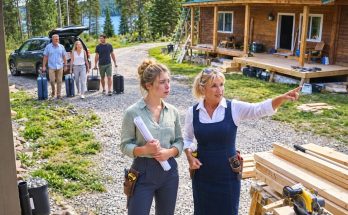
They stacked up, bumper to bumper, at the closed iron gate. Twelve bodies climbed out onto the scorching gravel, stretching their legs, laughing, expecting salvation.
Nadine confidently strutted to the keypad first. She punched in her code.
Beep. Red light.
Earl frowned, pulling his old electronic fob from his pocket and swiping it across the sensor.
Red light.
Gretchen huffed in annoyance, marched up, tried her cloned fob, and openly slapped the heavy steel post when the light stayed stubbornly dead.
Earl pushed her aside and tried the numbered keypad again, punching the digits significantly slower this time, as if extreme patience could somehow bully a dead lock into reopening.
Red light. A third time.
Earl’s face morphed from smug confidence to mild irritation, and finally to the furious, bewildered look of a master contractor who had somehow arrived at the wrong job site.
Then, Nadine looked past the iron bars. She finally saw the yard.
The photographer’s massive white box truck sat parked directly on the expensive stone pavers. Heavy black sandbags and C-stands littered the pristine landscaping. Six crew members in matching black polo shirts were rapidly running thick power cables away from the Palo Verde tree. A frantic producer in a wide-brimmed straw hat stood in the center of it all, holding a clipboard and shouting directions. The custom pool cover was securely locked on. The luxury patio furniture was aggressively stacked and zip-tied together.
Nothing about the scene looked like a welcoming, nine-day family reunion. It looked like a hostile corporate takeover.
Nadine made a sound I had never, in thirty-four years, heard escape her throat. It was high, sharp, and entirely unhinged. And then she screamed. Not words. Just a raw, visceral shriek of shock at finding a dozen strangers occupying the sanctuary she had so confidently promised to the Coburns.
Earl recovered his senses first. His face flushed a dangerous crimson. He grabbed the iron bars and shouted across the gate at the producer, demanding he pack up his gear and get off “his build” immediately.
The producer didn’t flinch. He didn’t back up. He calmly walked to the iron bars, pulled a printed contract from his clipboard, and slid it through the narrow gap.
The bold header read: LOCATION AGREEMENT.
The renter line read: Karen Holstead.
The dates explicitly covered the next ten days.
Earl stared at the paper, his eyes frantically searching for his own name, finding only empty white space.
Joan Coburn had elegantly stepped out of the third car by then. She didn’t scream. She didn’t shout. She adjusted her sunglasses, stepped gracefully to the heavy steel post, and noticed the weatherproof acrylic sleeve. She pulled my attorney’s formal notice out and read it aloud in the blistering heat.
“Owner has not authorized guest access. Property is held in a private trust. Trespassers will be removed. Contact the owner for any other arrangement.”
Joan’s mouth tightened into a thin, bloodless line. She looked from the legal paper, to Earl’s sweating face, to the bustling photography crew, and she did not ask Earl to explain. She simply turned to the producer and asked, in a voice like crushed ice, if the contract was current.
He politely confirmed it was fully paid and legally active.
My phone lit up. Nadine was calling. I let it ring twice, enjoying the digital vibration, then pressed the button to open the two-way gate speaker. I kept my voice flat, broadcasting directly out into the 104-degree heat.
“I told everyone the house was unavailable,” I announced.
Nadine didn’t offer a motherly greeting. “Karen! Open this gate right now! We drove four hours!”
“I told you not to.”
Earl pushed his face right into the camera lens, his breath fogging the glass. “Enough of this nonsense. Open it.” He sounded deeply, personally offended, as if I had changed the locks on his own primary residence.
“The code was changed because you all decided to come after being explicitly told not to,” I said, my voice echoing over the gravel. “And because strapping a wooden sign with your name on it to the roof of a car does not magically make you the owner of my deed.”
Nadine whipped around, staring at Earl. “What is she talking about?”
Earl waved a dismissive hand, refusing to look at his wife. “She’s just being dramatic. She’s making a patio pour into a ridiculous speech.”
“Mom,” I said over the speaker. “Check the family group chat.”
I had meticulously scheduled one final digital drop for the exact moment of their arrival. Three images simultaneously pinged on every phone in the driveway.
Ping. Gretchen’s text writing that I would complain, give in, and to use the old fob if I was sleeping.
Ping. Earl’s deceptive email to Joan, calling the house a “build” he could show off.
Ping. The official county deed page. Featuring exactly one name. Mine.
A dozen cell phones came out of pockets and purses. The driveway went completely, deathly quiet. It was the specific, horrifying quiet that descends when a massive, foundational family lie is brutally split open in broad daylight, in front of wealthy strangers.
Nadine turned on Gretchen, her voice trembling. “You told me she agreed to this!”
Gretchen didn’t even blink, her entitlement a permanent armor. “She always agrees eventually! She’s just throwing a tantrum!”
Drew, who was standing quietly by the rear hatch of the SUV, finally spoke up. “That is not the same thing as getting permission, Gretch.”
Gretchen hissed at him to keep family business off the gravel in front of the Coburns.
I leaned closer to my kitchen microphone. “Arriving first and asking later has been your method for a decade. The road just ran out.”
Earl, realizing his architectural masquerade was crumbling, tried a desperate new angle, playing to the audience. “So, you are going to leave your entire family outside to suffer in the desert heat because you’re throwing a fit at me?”
“No, Earl,” I said coldly. “I am leaving twelve adults outside because all twelve adults were explicitly told the house was closed, and you decided to gamble and come anyway.”
Carrie Boon, who had ridden in Gretchen’s car, looked frantically from face to face. “Wait… why wasn’t I on the official list if this was supposed to be a family week?”
Gretchen muttered something about Carrie being a “plus one” and how it wasn’t the right moment. Carrie didn’t look like a plus one. She looked like a woman who had packed nine days’ worth of outfits based on a promise that didn’t have her name on the lease.
Clem Darby, Earl’s girlfriend, didn’t say a word. She calmly walked to the trunk, put her Louis Vuitton suitcase back inside, and slammed the lid shut without asking anyone for a vote. That single, metallic slam did more psychological damage than my speaker ever could.
Uncle Floyd nervously glanced at Aunt Edna. Cousin Paty just sat down on the bumper, looking defeated. Joan Coburn carefully folded my legal notice, slid it into her Prada bag, and kept it.
Nadine cut in again, her voice shrill with panic. “Karen, this is humiliating!”
“For who?” I asked. “You drove here after a closed notice was posted in the chat, and you tried to make this week my problem anyway.”
Nobody had an answer for that. The desert wind howled slightly.
Earl broke the silence, demanding to know where twelve people were supposed to stay.
“Wherever twelve adults who aggressively ignore a closed house usually stay,” I replied. “It’s peak tourist season in Oro Valley. Hotels cost money. I suggest the person who told everyone this trip was handled pulls out their credit card and solves it.”
Every single head in the driveway slowly turned toward Earl.
I had intentionally arranged zero backup rooms. If I had booked them a block of rooms and paid for a continental breakfast, I would still be managing them, just down the highway. I was done managing.
Nadine frantically opened a hotel booking app on her phone and stared at the screen, her face draining of color. “The cheapest decent option has four rooms left. And because of the desert festival weekend, they all require a mandatory two-night minimum.”
Earl puffed out his chest. “Fine. We’ll just split it twelve ways.”
Nadine looked at him as if he had just suggested she pay him for a roof he never built. “Absolutely not,” she snarled, dropping all pretense in front of the Coburns. “You promised everyone lodging. You explicitly told Joan this was your build. You fix it.”
The photography producer stepped forward, tapping his clipboard. “Excuse me, folks, but my crew needs the drive cleared for the lighting truck. Now.”
Earl’s jaw locked so tight I thought his teeth might shatter. He began furiously loading bags back into the SUV. He looked straight up into the camera lens, his eyes burning with a toxic mixture of hatred and embarrassment.
“You think you proved something here today, Karen?” he spat.
“No, Earl,” I said, my finger hovering over the mute button. “I think you did.”
Four luxury hotel rooms went directly onto his credit card. Gretchen tried to argue for upgraded suites and failed miserably. Reed stood completely still near his mother, refusing to even look at Gretchen, and noticeably did not offer to help carry the wooden sign. Clark Coburn took the legal notice from Joan, read it once in silence, and handed it back to her with a grim nod.
Carrie Boon asked Gretchen again, her voice deathly quiet, why her name had never been included in the hospital count. Gretchen snapped at her to just get in the damn car.
The vehicles aggressively reversed out onto Oracle Road in a messy, chaotic line. In his haste and fury, Earl left the massive wooden sign standing upright in the gravel beside my gate post, the routed letters facing the empty road like a tombstone for his ego.
The box truck stayed. The crew went back to work. The camera feed showed an empty turnaround and a perfect rectangle of shade that did not include a single member of my family.
I set the phone down. My hands were shaking violently. It was the specific, adrenaline-fueled tremor that happens after you successfully hold a line you spent your entire life dropping. The gate stayed shut. The sign stayed on the stones. The driveway went beautifully quiet, save for the crew packing a light stand that had blown over in the heat.
I had survived the hospital. Now, I had survived the siege.
But the war was far from over.