Chapter 6: The Unraveling
The fallout was not swift, but it was absolute.
By the first week of January, Children and Youth Services slapped Brooke with a strict no-contact order regarding Piper. My mother was legally barred from acting as a conduit between us. Brooke’s immediate response was to post a meticulously crafted, victim-playing manifesto on Facebook, blaming “outdated historical architecture” and lamenting how a “family squabble” was ruining her philanthropic small business. She thanked her guests for braving the “unnecessary hysteria.”
I didn’t reply in the comments. I sent the link to the prosecutor.
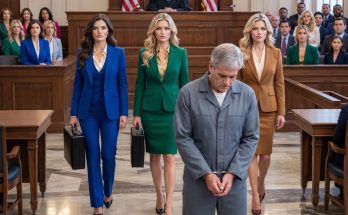
The true unraveling of Brooke’s social currency occurred on February 14th, during a disciplinary hearing held by the Bellweather Historical Preservation Society. We convened in the very mahogany-paneled library where Brooke had spent a decade lecturing people on civic duty. Piper stayed safely at home; she had survived enough without needing to perform her trauma for an audience.
Brooke sat at the defense table, flanked by a high-priced attorney, looking every bit the aggrieved aristocrat. Elaine sat three rows back, staring at her shoes, unable to look either of her daughters in the eye.
The municipal code officer read the damning litany: Elevated CO levels. A severed tamper-seal. A manually opened gas valve. A gutted safety alarm.
A board member leaned forward, peering over his reading glasses at my sister. “After the technician explicitly tagged the system as a critical hazard, who authorized it to be restarted?”
Brooke lifted her chin, adopting a tone of long-suffering patience. “The estate was freezing. I made a judgment call as the property owner. The technician found zero gas in the ambient air on his first pass. I believed he was operating out of an excess of caution, trying to squeeze me for an emergency upcharge.”
“You made a judgment call that hospitalized a child,” the board member retorted sharply.
Then came the witnesses. Mara Quinn took the microphone, her hands shaking violently. She didn’t look at Brooke; she looked directly at me.
“Brooke told us Piper had a psychiatric fixation,” Mara confessed, her voice cracking. “I saw Piper stumble near the staircase. I saw her legs give out. When I went to help her, Brooke intercepted me. She said intervening would only ‘reinforce the teenager’s dramatic behavior.’ I… I wanted to believe Brooke because it meant I didn’t have to confront the host of the event. I chose convenience over a sick child.”
Brooke scoffed loudly. “Mara is just trying to cover her own liability.”
“I am responsible for my cowardice,” Mara shot back, tears spilling down her cheeks. “But that doesn’t change the fact that you handed us a script to ignore her suffering.”
The final nail in the coffin was the projection of Brooke’s 10:14 PM email on the library wall. The board read the instructions demanding volunteers ignore Piper’s “fears of gas leaks”—an email sent before the tour even began, before the alarm sounded the second time. It proved premeditation. She hadn’t reacted to a panic; she had actively engineered the conditions for a cover-up.
“She ruined my life over one bad night!” Brooke finally snapped, slamming her hands on the table, her polished veneer cracking to reveal the terrifying narcissism underneath. “I had obligations to this property! I needed this event to be perfect!”
The room fell into a horrifying, echoing silence. Brooke had just admitted, on the record, that the aesthetics of Harland House mattered more than the breath in my daughter’s lungs.
The board voted unanimously to strip Brooke of her leadership role, terminate her membership, and permanently ban Harland House from all Society affiliations.
When the hearing adjourned, Brooke cornered me near the elevator banks. Her lawyer had vanished. She looked small, desperate, and vicious.
“You destroyed my future, Dana,” she spat.
I hit the elevator call button, my expression colder than the winter air outside. “No, Brooke. You built your entire life on making my daughter unbelievable. The truth just finally caught up to your fiction.”