PART 5 — WHAT THEY FINALLY UNDERSTOOD
Two years passed.
Emily and Mark got married in a small garden ceremony.
There was no ballroom.
No extravagant decorations.
No pressure.
No competing families.
Just people who genuinely loved them.
I gave Emily away.
Not because she belonged to anyone.
But because she asked me to walk beside her.
After the ceremony, she hugged me.
“Mom.”
“Yes?”
“Do you remember that dinner?”
I laughed softly.
“How could I forget?”
“I used to think that was the worst night of my life.”
“And now?”
She looked at Mark.
“Now I think it was the night my life changed.”
I smiled.
“You learned something important.”
“What?”
“That walking away isn’t always losing.”
She nodded.
“Sometimes it’s how you finally find yourself.”
The wedding reception was small.
At one point, Mark stood and raised his glass.
“I want to say something about Emily’s mother.”
I looked at him, surprised.
He continued.
“When I first met her, I heard stories about how protective she was of Emily.”
People laughed.
“But what I learned was that she isn’t protective because she wants control. She’s protective because she believes love should make people stronger, not dependent.”
Emily squeezed my hand.
Mark continued.
“And I learned another thing.”
He looked at me.
“Never tell this woman to pay the bill and leave.”
Everyone laughed.
Even I did.
Emily leaned against my shoulder.
Later that night, when most guests had gone home, she and I sat together beneath the garden lights.
“Mom?”
“Yes?”
“Would you change anything?”
I thought about it.
“I would have spoken up sooner.”
She nodded.
“Me too.”
“I should have told you how much I was doing.”
“No.”
I looked at her.
“You think so?”
“Yes.”
She smiled.
“If you had told me, I might have stayed dependent longer.”
That made me laugh.
“You’re probably right.”
She leaned her head against my shoulder.
“I’ve been thinking about something else.”
“What?”
“Daniel.”
I hadn’t heard his name in a long time.
“What about him?”
“I don’t regret leaving.”
“Good.”
“But I hope he learns something.”
“What?”
“That love isn’t entitlement.”
I nodded.
“That lesson is harder than it sounds.”
Emily looked at me.
“Do you think Patricia learned it?”
I smiled.
“I think she’s trying.”
And she was.
A year later, Patricia sent Emily a letter.
She apologized again.
She admitted that she had spent years believing financial support gave her authority over other people.
She admitted that she had treated kindness like weakness.
And she wrote one sentence Emily kept.
“The people who pay the bill aren’t always the people who owe you something. Sometimes they’re simply the people who loved you enough to help.”
Emily showed it to me.
I read it twice.
Then I handed it back.
“What will you do with it?”
“Keep it.”
“Why?”
“So I never become like her.”
I smiled.
“You won’t.”
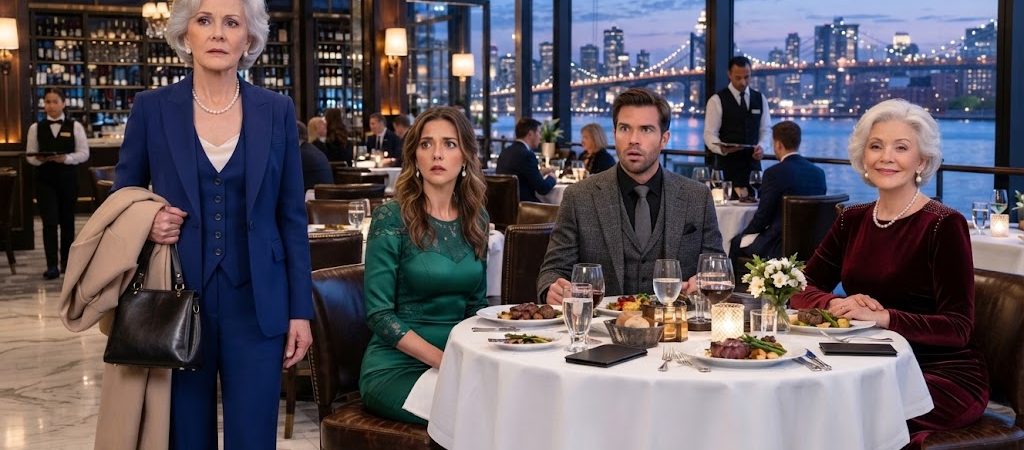
Years after that dinner, I still remembered the moment Daniel looked at me and said:
“If you don’t appreciate my mother’s remarks, pay the bill and leave.”
At the time, those words felt humiliating.
But eventually I realized something.
He had accidentally given me exactly what I needed.
Permission to stop.
Stop paying.
Stop explaining.
Stop fixing.
Stop protecting adults from the consequences of their own choices.
Stop confusing love with endless sacrifice.
I had paid the bill that night.
Every dollar.
And then I walked out quietly.
Three days later, I changed the things they had taken for granted.
I removed my guarantees.
I stopped financing their lifestyle.
I returned responsibility to the people who had always expected me to carry it.
And in doing so, I discovered that I hadn’t abandoned my daughter.
I had given her something far more valuable than money.
I had given her the chance to stand on her own.
Years later, Emily once asked me:
“Mom, what was the biggest thing you changed?”
I thought about the apartment.
The car.
The wedding.
The money.
Then I shook my head.
“None of those.”
She frowned.
“Then what?”
I smiled.
“Your understanding of love.”
She looked at me.
I continued:
“Love isn’t paying someone’s bill so they can keep disrespecting you.”
She nodded.
“Love isn’t rescuing someone from every consequence.”
Another nod.
“And love certainly isn’t allowing someone to make you feel small just because you helped them.”
She smiled.
“So what is love?”
I looked at my daughter.
“Love is sometimes having the courage to step back.”
“And let someone grow.”
“And let someone choose.”
“And let someone discover what they can do without you.”
Emily hugged me.
“I finally understand.”
I held her tightly.
And I realized that the dinner I once believed had broken our family had actually revealed the truth.
Some people only appreciate what you provide.
Some people appreciate who you are.
And the moment you stop providing everything, you discover which kind of people are standing beside you.
I had paid the bill.
I had walked out quietly.
But I hadn’t lost my daughter.
I had finally helped her find herself.
And that was worth far more than anything that had ever appeared on a restaurant receipt.