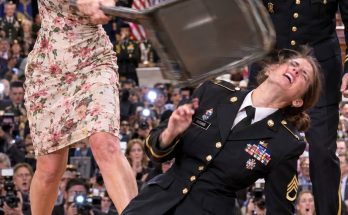
“You were the one we could afford to lose!”
Chapter 7: What Ashford Keeps
The living room went completely, terrifyingly still.
Dale closed his eyes, his jaw muscles flexing. Pete stared intensely at the floorboards. Frank, the veterinarian, slowly shook his head in profound, quiet disgust. Marian didn’t twitch a single muscle.
I remained seated in the chair positioned by the window—the exact spot in the house Henry had built with his own two hands. I felt the immense, crushing weight of that sentence—a sentence I had originally heard muffled through the glass of a Buick a decade ago—now explicitly hurled at me in front of the people who actually constituted my family.
I didn’t stand up. I didn’t raise my voice. I didn’t offer her the satisfaction of a tear.
I looked my mother dead in the eye and delivered a response as cold and hard as the steel I had learned to weld.
“He already said no, Diane. And he put it in writing.”
The room collectively exhaled.
Marian offered a microscopic nod of approval and cleared her throat. “There is one final, highly personal provision I am explicitly directed to read.” She turned to the final page of the thick portfolio.
“To my granddaughter, Iris, to whom I physically transferred my father’s ring on the evening of November eleventh. This iron ring, bearing the inscription Ashford Keeps, is both a personal heirloom and an irrefutable legal confirmation of my intent. I bestowed it upon Iris because she is the singular entity who stayed, who bled, who worked, and who definitively earned the absolute right to carry this name. Let the physical presence of this ring on her hand stand as a permanent testament that my wishes were communicated directly, personally, and utterly without coercion. I was of profoundly sound mind. I was entirely uninfluenced. And I was immensely proud.”
Marian lowered the document.
I slowly, deliberately raised my right hand, resting it heavily on the arm of the chair. The harsh morning sunlight caught the dull, scratched iron of the band.
March 14th, 1962. Ashford Keeps.
That was exactly what his final whisper—Keep it where they can see it—had meant. It wasn’t a boast. It was an engineering failsafe. It was a receipt. Proof of delivery. Documented, witnessed, and specific.
Glenn’s head sank into his hands. His attorney was already backing toward the front door. Brian hadn’t moved a muscle, his eyes locked onto the iron ring on my thumb with an expression I couldn’t entirely parse. It might have been profound anger, or crushing shame, or perhaps the slow, agonizing dawn of realization that the parents who had chosen to keep him had been lying to him about the nature of the world his entire life.
Diane stood paralyzed beside her overturned chair, the lace tissue crushed into a tight ball in her fist, the tears streaming down her face no longer a calculated performance, but the raw byproduct of total defeat. She had screamed the quiet part out loud, and no amount of revisionist history would ever erase it from the public record.
Henry Ashford, operating from beyond the grave, had successfully engaged his final, magnificent machine. And it had functioned flawlessly, neutralizing the threat with devastating precision.
The formal reading concluded at 9:52 AM.
Glenn’s attorney was the first to evacuate, offering a clipped, professional nod to Marian before speed-walking to his vehicle at a pace suggesting he knew a lost cause when he saw one.
Glenn followed him out like a beaten dog, not sparing me a single glance.
Diane lingered in the center of the room. Her eyes darted frantically across the wood-paneled walls, the massive windows, and the stone mantle where Henry’s engineering awards sat proudly framed in glass. She was surveying the property with the specific, agonizing despair of a buyer who had just been informed the bank had denied the loan.
“This is not over,” she hissed to the empty air.
But it was. She knew it in her bones. I knew it. Every witness in the room knew it.
Brian was the last to exit. He paused at the heavy oak door and looked back at me. It was a long, complex, entirely unreadable look. Then, he shoved his hands deep into the pockets of his expensive coat and followed his bankrupt parents out to their rented SUV.
The heavy engine roared to life. The tires violently crunched the gravel, and the black vehicle disappeared down the exact same dusty road the Buick had taken ten years prior.
I remained in my chair. The iron ring felt incredibly warm against my skin. Outside, the windmill continued its steady, rhythmic rotation. The house was finally, beautifully quiet.
They never filed the lawsuit.
Two weeks post-reading, Glenn’s attorney dispatched a single, half-hearted letter to Marian inquiring about “potential mediation avenues.” Marian responded with a devastating three-line email summarizing the no-contest clause, attaching the psychiatric affidavits, and offering a polite, icy invitation to proceed to the courthouse if they felt suicidal. The letter was never answered. The five-thousand-dollar token payments sat in an escrow account, entirely uncollected, until the statutory window expired, at which point the capital automatically reverted back into my trust.
I do not know how Glenn navigated his crushing debt. I do not know if Diane ever confessed the truth to her country club friends. I do not know what Brian ultimately chose to believe once they returned to the ashes of their life in Portland. They never reached out again.
I did not liquidate the ranch. Henry hadn’t explicitly demanded I keep it, but even if he hadn’t, selling it was never an option. Ashford Stables expanded. Dale and Pete remained as senior foremen, and I utilized the trust capital to hire additional hands and a full-time veterinary staff to manage our exploding boarding operations.
I completed my mechanical engineering degree remotely. I launched my software company from the very same concrete-floored workshop where Henry had taught me how to weld, successfully filing three of my own patents in the first twenty-four months.
But the achievement that brings me the most profound pride isn’t the software firm or the patents.
Eighteen months after the reading, I formally established the Henry Ashford Hope Foundation. We provide aggressive trade apprenticeships, secured housing, and intensive mentorship programs for teenagers who are aging out of the state foster care system.
Every single July, the ranch hosts an intensive six-week summer program. Eight kids. Complete immersion. Hands-on labor with the quarter horses, industrial welding, and foundational mechanical engineering. It is the exact same brutal, beautiful curriculum Henry forced upon me, merely stripped of the toxic abandonment.
The workshop still smells heavily of saddle leather, raw ozone, and machine oil. The windmill still turns against the desert sky.
And every single teenager who walks through the heavy doors of that barn receives the exact same initial instruction I received twenty-two years ago. I do not offer them a speech about emotional resilience. I do not hand them a pamphlet on self-esteem.
I hand them a heavy steel wrench, point them to a wooden stool, and echo the only advice that ever mattered.
“You will work. Working is how you stop drowning.”
My grandfather never simply handed me a single thing in this life. He taught me how to bleed, how to build, and how to earn the absolute right to keep it. And then, he taught me the most agonizing lesson of all: how to pass that strength forward.
That is the only inheritance that possesses any real value.
That is the chronicle of my survival. A cheap plastic suitcase at nine, an iron ring at nineteen, and a legacy I earned the right to keep.
If someone stepped up to raise you when they possessed zero legal obligation to do so, pick up the phone and tell them today. If this story of engineered vengeance and earned legacy resonated with you, share it with someone who needs to hear it. Thank you for being here. Drop a comment below if you are Team Iris, hit subscribe, and I’ll see you in the next Grand Revenge tale.
Disclaimer: This fictional story was created with AI assistance for entertainment. Names, characters, dialogue, and events are fictional. Any resemblance to actual people or events is coincidental.