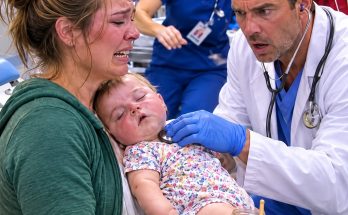
You learn the nocturnal grammar of an oncology ward very quickly. At 2:00 AM, the soft squeak of the rubber-soled nurse checking vitals. At 4:00 AM, the gentle rattle of the blood-draw cart. At 5:30 AM, the harsh fluorescent glare in the hallway as the nursing shift turned over.
I became fluent in the language of his survival: absolute neutrophil counts, platelet levels, liver enzymes, cyclosporine toxicity. When the chemotherapy wiped his white blood cell count down to zero to prepare his system for the donor graft, his mouth erupted in agonizing mucositis ulcers. He couldn’t swallow his own saliva. I spent hours dipping foam swabs into ice water, gently dabbing the inside of his cracked lips.
Georgette visited every Saturday at 1:00 PM precisely. She wore immaculate knit cardigans and brought insulated thermoses of homemade chicken soup that the nurses had to politely confiscate because unpasteurized home broth was a mortal infection risk for an immunocompromised patient.
Georgette sat on the visitor’s stool, folded her hands over her leather handbag, and watched cooking shows on the wall-mounted television.
“He looks dreadfully thin, Kora,” she remarked once, smoothing an imaginary wrinkle from her slacks. “Are you quite sure they’re giving him the proper nutrients? His father always maintained that positive visualization does more than medication.”
“He has no immune system, Georgette,” I said from my broken chair, my eyes burning from forty-eight hours without real sleep. “Right now, the medication is the only thing keeping him on this side of the dirt.”
Georgette had pursed her lips, offended that I would use such vulgar phrasing in mixed company.
By August, the donor cells had officially colonized Owen’s marrow. His labs rose like an incoming tide. By October, his hair had begun to return in soft, dark curls. By December, Dr. Sterling walked into the clinic, clicked off his pen, and declared: “Complete donor chimerism. One hundred percent of your circulating blood cells are donor-derived. You are in full remission, Owen. Go live your life.”
We went home to our rented townhouse. I thought the nightmare was over. I didn’t realize the real monster was just waking up.
The change didn’t arrive with an explosion; it arrived like dry rot inside a wall.
Owen returned to the gym. He regained his weight, his tan, his blinding smile. The lacrosse team welcomed him back with a banquet where they gave him a framed jersey and a three-minute standing ovation. He stood at the podium, basking in the warm light of their adoration like a man stepping out into the midday sun after years in a cave.
I sat at Table 14, wearing a three-year-old dress, feeling invisible.
At home, he grew restless. He began picking fights over absurd trivialities—the way I folded the laundry, the brand of coffee I bought, the fact that I preferred quiet evenings on the back patio instead of going out to crowded sports bars with his coaching friends.
“You look at me like I’m still sick,” he snapped one Tuesday in November, slamming a kitchen drawer shut.
“I look at you like you’re my husband who almost died,” I replied, stunned.
“No,” he said, turning on me, his eyes cold and defensive. “You look at me like I’m a project you completed. Like you own me because you ran around with those stupid flyers.”
Eleven months after his final clear biopsy, on an unseasonably warm evening in November, Owen sat down at the dining table. He had already printed out the uncontested dissolution forms from the Wake County clerk website.
“I need a clean slate, Kora,” he said, looking past my shoulder at the wall. “Every time I look at you, I remember the hospital. I remember the vomit basin. I remember being helpless. I can’t be that man anymore. I have to find out who I am on the other side of this, and I can’t do it while I’m still tethered to my sickbed.”
“Tethered?” I whispered. “I’m your wife, Owen. I was the one who sat in that room.”
“And I’ll always be grateful,” he said, using that smooth, practiced tone he used with angry parents at lacrosse matches. “Truly. But this marriage belongs to the sick Owen. And that guy is dead.”
He offered to take over the lease on our car. He let me stay in the rental townhouse until the spring. He wanted everything signed and filed before the new tax year.
I signed the papers because my pride was the only thing I had left, and I refused to give him the satisfaction of watching me beg a second time.
On January 8th, a judge stamped the dissolution decree. Owen walked out into the Raleigh sunshine, hopped into his SUV, and drove away without looking back.