Chapter 2: The Architecture of Collusion
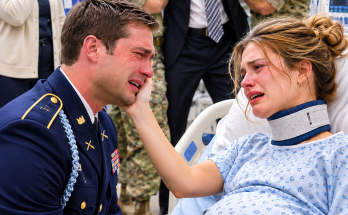
To understand why my younger brother was laughing while my only child was rushed into reconstructive surgery, one must understand the toxic, iron-clad hierarchy of the Lawson household.
I grew up as the designated shock absorber of the family. My father, Warren, was a commercial real estate developer whose entire worldview was shaped by dominance, financial leverage, and raw, theatrical aggression. To him, weakness was not a vulnerability to be protected; it was a defect to be purged. Brody, born three years after me, was Warren’s pride and joy—not because Brody had accomplished anything of substance, but because he was loud, unapologetic, and completely devoid of empathy. Warren mistook that lack of conscience for executive leadership.
My mother, Ashton, was the architect of our domestic mythology. Her life was an endless campaign of public relations, designed to present our family as an immaculate pillar of high society. Whenever Brody drove his car into a neighbor’s stone wall, cheated on his high school exams, or ran up thousands of dollars on my father’s corporate cards, Ashton would swoop in with homemade pastries, polite excuses, and substantial checks.
“Be the bigger person, Evelyn,” my mother would sigh whenever I dared to object to Brody stealing my belongings or destroying my school projects. “He’s your little brother. He looks up to you. Don’t make a scene and give your father a headache.”
The disparity wasn’t just emotional; it was structural. When it came time for university, the substantial college fund my grandparents had established for both of us was liquidated in its entirety to send Brody to an elite private university out of state—an institution he was unceremoniously expelled from during his junior year for academic dishonesty and reckless behavior.
I, on the other hand, was told that military service would “build my character.” I accepted an ROTC scholarship, earned my degree while marching at five in the morning, and spent my twenties managing high-stakes logistical supply chains for the military. I built a career with sweat, discipline, and sleepless nights. I bought my own home, managed my investments, and eventually transitioned into civilian logistics management, earning every single dollar without a handout.
Brody, meanwhile, failed upward on a cushion of parental bailouts. He floated from one disastrous business venture to another: an artisanal beverage distributorship, a cryptocurrency mining operation, and a luxury vehicle rental service. Each venture collapsed within eighteen months, leaving behind a trail of angry creditors and unpaid taxes that Warren and Ashton quietly resolved by refinancing their commercial real estate. To them, Brody wasn’t a reckless grifter; he was an “entrepreneurial visionary waiting for the right market conditions.”
Everything shifted the year I gave birth to Fiona.
My marriage to her father didn’t survive the transition from military to civilian life; we parted ways amicably, establishing a cooperative, drama-free custody schedule that prioritized our daughter above all else. From the moment she could focus her dark, curious eyes, Fiona was my entire universe.
She was unlike anyone in the Lawson lineage. Where the Lawson men were loud, boastful, and aggressive, Fiona was quiet, deeply empathetic, and possessed an extraordinary artistic gift. By the time she was eight, she would sit for hours under the willow tree in my backyard, capturing the subtle play of light across the leaves with graphite pencils.
She also had significant sensory sensitivities. Sudden, concussive sounds—thunderclaps, car horns, slammed doors—sent her nervous system into distress. She wasn’t fragile; her brain simply processed the physical world with intense, acute fidelity.
Brody despised her for it.
To my brother’s twisted, insecure mind, Fiona’s quiet gentleness was an indictment of his entire existence. He viewed her sensitivity as an invitation to torment, disguising his cruelty beneath the convenient shield of “toughening the kid up.”
He would hide behind doors to scream in her face until she wept. He would intentionally pop balloons next to her ears at family gatherings. When I confronted him, physically placing myself between my brother and my daughter, my parents would inevitably intervene.
“Stop being so overprotective, Evie,” Warren would bark from his leather recliner. “The girl jumps at her own shadow. Brody is just trying to give her some grit. The real world isn’t going to coddle her.”
And I, burdened by thirty years of conditioning, had tried to keep the peace. I told myself that maintaining family ties was healthy for Fiona. I told myself that as long as I was there to shield her, no permanent damage would be done.
I was wrong. My restraint had not been maturity; it had been an abdication of my duty to protect my child from the predators inside our own house.
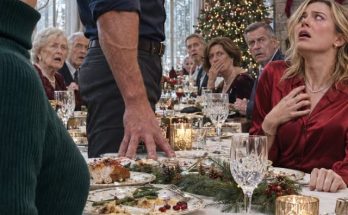
The Sunday of the incident had been suffocating from the start. The family had gathered to celebrate my father’s latest commercial land acquisition. Fiona had retreated to a solitary corner of the sunroom with her sketchbook and her new smartwatch—a birthday gift I had bought her to help track her walking routes and allow her to record quick audio notes about her art.
At dinner, Brody had made multiple snide remarks about Fiona’s “antisocial behavior.” Toward the end of the meal, my mother had asked Fiona to carry an antique crystal punch bowl down into the sunken dining area.
“Use both hands, darling,” Ashton had instructed sweetly. “That piece belonged to your great-grandmother. It’s irreplaceable.”
The transition from the kitchen to the dining room involved three steep, polished oak steps leading directly down to an expanse of uncarpeted hardwood. Fiona had carefully lifted the heavy glass vessel, holding it tightly against her small frame, her eyes focused intently on her feet.
Brody had slipped into the hallway ahead of her.
I had been at the sink, my back turned for a fraction of a second, when I heard my cousin, Tucker Hayes, mutter nervously from the corridor:
“Brody, man, don’t. Not on the stairs. She’s holding the crystal.”
I had dropped the plate in my hands. The instinct born of military service—the sudden, visceral awareness of an imminent threat—surged through my veins like lightning. But by the time I cleared the kitchen threshold, Brody had already stepped out from behind the decorative pillar.
He had raised that yellow, industrial foghorn, leveled it directly at Fiona’s face from three feet away, and depressed the valve.
The concussive blast had echoed through the enclosed space like a detonation. Fiona’s flinch had been violent, an involuntary biological reflex. Her heel had caught the edge of the polished oak tread, her balance instantly obliterated.
The image of her falling—the terrifying suspension of gravity, the antique crystal shattering against the hardwood like an artillery shell, and her small body plummeting directly into the carpet of razor-sharp shrapnel—was branded into my retinas forever.
Now, standing in the cold fluorescent glow of the surgical ward, holding the crushed smartwatch in my hand, I realized that Brody’s reckless narrative had one fatal flaw. He believed there were no witnesses other than a complicit family that would always circle the wagons to protect him.
He didn’t know the watch had been running.