I should have known the moment I saw the robe. It was a calculated territorial claim.“My room now,” she had announced, her voice as smooth and cold as polished marble.
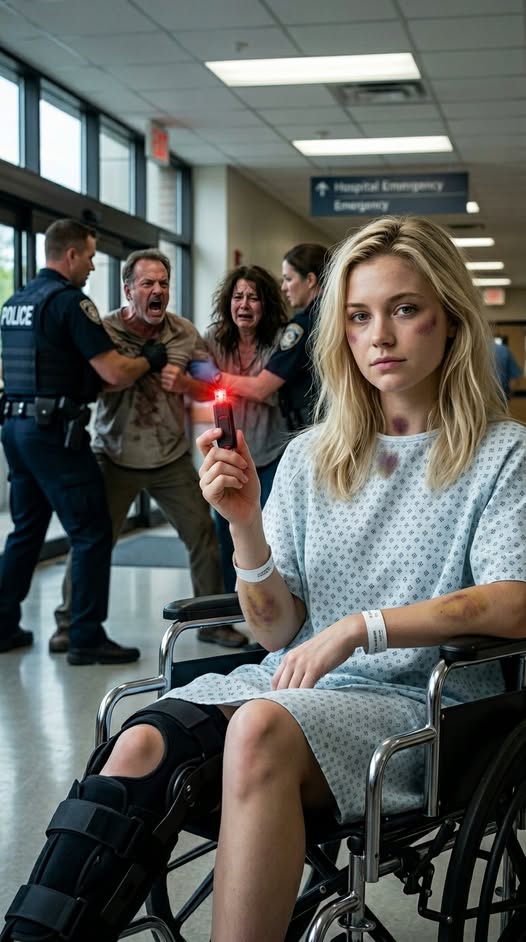
I had blinked through the haze of heavy narcotic painkillers and the cold sweat of travel. I leaned heavily on the crutches, my injured leg suspended in its bulky brace. “Excuse me?”
Margaret looked at my brace, then traveled her gaze up to my bruised face, and finally settled on the plastic hospital bracelet still fastened around my wrist. Her expression was one of profound distaste, as if looking at a piece of trash that had blown onto her pristine lawn. “You heard me, Eleanor. The master bedroom is entirely too far for you anyway. You’re a liability. The stairs are dangerous.”
“There are no stairs to the master bedroom, Margaret,” I said, my voice trembling with exhaustion. “It’s on the ground floor.”
Her mouth curved into a razor-thin smile. “Exactly. It’s much too comfortable for someone in your condition. You need a utilitarian space.”
I turned my head to look at the man I had married five years ago. “Harrison. Tell her to stop this nonsense. I need to lie down in my own bed.”
He didn’t look at me. He was staring intensely at the intricate pattern of the Persian rug, his jaw tight, his shoulders hunched. He looked exactly like a frightened little boy waiting for his mother’s permission to take his next breath.
“Harrison,” I pleaded, the dull ache in my leg beginning to throb in warning.
Margaret stepped closer. Her signature perfume—a sharp, suffocating blend of heavy florals and synthetic musk—invaded my personal space, making my stomach turn. “You’ve been relentlessly dramatic since the car accident, Eleanor. Always making everything about your pain. Always demanding attention.”
“The orthopedic surgeon explicitly said I cannot put an ounce of weight on this leg for six weeks,” I replied, my knuckles turning white around the rubber grips of the crutches. “I need my bed.”
“And I said, move,” she hissed.
I squared my shoulders, tightening my grip. “This is my house, Margaret. My grandmother left it to me. You are a guest.”
Her pale blue eyes flashed with a sudden, violent malice.
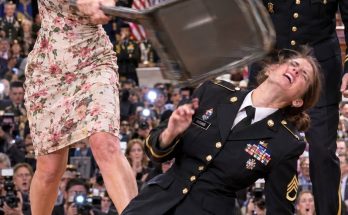
Before I could register the shift in her posture, her velvet slipper swept sideways in a vicious, practiced arc. It struck the base of my right crutch. The aluminum pole flew out from under my arm, clattering wildly across the floor.
My body twisted as it fell. The hardwood came up hard and fast. My injured leg contorted beneath my weight, sending a blinding shockwave of fire shooting from my hip straight down to my ankle. I screamed so loudly I tasted copper in the back of my throat. The pain was absolute, eclipsing my vision with bursts of dark static.
Harrison finally moved.
Through the blur of tears and agony, I reached a trembling hand toward him, expecting the man I loved to fall to his knees and help me.
He didn’t.
He grabbed me by the throat.
His fingers pressed firmly just beneath my jawline. His gold wedding ring was freezing against my flushed skin. He leaned down, his face entirely devoid of the warmth I had known for half a decade, until his breath tickled my ear.
“Mom wants the master bedroom, Eleanor,” he whispered, his voice devoid of any human empathy. “So you’re sleeping in the garage.”
For a terrible, breathless second, the excruciating pain in my leg was replaced by a profound, hollow silence. It wasn’t because the physical agony had stopped. It was because something fundamental and irreplaceable inside my soul had just died.
Margaret laughed, a soft, tinkling sound that echoed off the high ceilings. “Look at her, Harrison. Staring at you like a betrayed dog. She still actually thinks she matters.”
They didn’t give me time to process the betrayal. They grabbed me by the fabric of my sweater, one on each arm, and dragged me across the hallway floor. My heavy cast bumped violently against the doorframe of the kitchen, and a fresh wave of nausea washed over me. I nearly blacked out. Harrison kept his face turned away, unable to meet my eyes. Margaret, however, didn’t look away once. She watched my face, seemingly savoring every sharp gasp of pain that escaped my lips.
The door to the garage was shoved open. The space smelled of old motor oil, damp cardboard, and the bitter chill of winter concrete.
They dumped me onto the hard floor like a broken piece of furniture being discarded for garbage day.
I lay there, curled on my side, gasping for air. “My… my meds,” I rasped, my throat aching from Harrison’s grip. “My phone. Please.”
Margaret casually reached into the pocket of my discarded coat, pulled out my smartphone, smiled down at me, and dropped it into her designer purse.
Harrison stood lingering in the doorway, a silhouette against the warm light of the house. “Don’t make this any uglier than it has to be, Eleanor. Just sleep it off.”
I stared up at the dark shadow under his chin, my breathing shallow and ragged. “You already made it as ugly as it can get, Harrison.”
His facial muscles twitched. A flash of something—guilt, perhaps, or cowardice—crossed his features.
Then, he reached out and grabbed the heavy steel door.
Slam.
The deadbolt turned with a heavy, metallic finality. The lights were killed from the inside switches. Darkness swallowed me whole, absolute and terrifying, leaving me completely alone with the agony of my shattered bones and the agonizing realization that my entire life had been a meticulously constructed lie.
And as the silence of the garage settled heavily over me, a terrifyingly clear thought emerged from the chaos in my mind: I am entirely at their mercy, and they have none.
<hr>
Pain possesses a distinct vocabulary. It is not merely a scream. Screams are temporary; they run out of breath and eventually end.
Real pain—the kind of pain that rewires your neural pathways and erases your memory of what it felt like to be whole—is the wet, desperate bite of breath caught between your teeth. It is the frantic scrape of your fingernails against rough concrete as you search for an anchor. It is the tiny, pathetic, animalistic noise you make deep in your chest when your physical body begs you to surrender, but the darkest, most stubborn corner of your soul screams at you to survive.
For a long time—perhaps twenty minutes, perhaps an hour, time had become a black, windowless room—I lay exactly where they had dropped me. The icy chill of the concrete floor seeped through my thin hospital sweatpants, freezing the sweat that coated my skin. Every single time my chest expanded to draw a breath, the vibration scraped against the splintered fragments of my femur, sending fresh, sickening jolts into my nervous system.
Upstairs, faint but distinct, music began to play. It was Madame Butterfly. Margaret’s favorite opera. Harrison absolutely despised opera; he found it pretentious and grating. But he would endure anything, tolerate any discomfort, if it meant he didn’t have to confront his mother. He had always been a man composed entirely of compromises and moral shortcuts.
I closed my eyes, pressing my cheek against the gritty floor, and let the memories wash over me.
How had I been so blind? I was a forensic accountant, for God’s sake. My entire career was built on finding anomalies, tracking discrepancies, and uncovering the truths that people tried to bury under mountains of paperwork. I audited municipal fraud cases. I brought down corrupt city officials. Yet, I had missed the massive, glaring fraud sleeping in my own bed.
It had started three months ago. A misplaced file on Harrison’s home office desk. Sterling Custom Holdings, his supposedly thriving logistics company, had been bleeding money on paper. But when I cross-referenced his quarterly statements with the digital ledger I found unlocked on his laptop, the picture changed entirely. There were invoices from shell vendors that didn’t exist. Payroll entries for dozens of employees who had no social security numbers. Massive, untraceable offshore transfers to accounts in the Cayman Islands.
He was embezzling from his own investors, laundering the money, and hiding it from the IRS.
When I finally confronted him, he had broken down in tears. He fell to his knees, burying his face in my hands. He swore it was a terrible mistake, a snowball effect of bad investments he was just trying to fix. He claimed Margaret had pushed him into it, demanding a lifestyle he couldn’t afford to provide. Because I loved him—or rather, the illusion of him—I gave him a choice. I told him he had to self-report. I told him I would help him untangle the mess, hire the lawyers, and stand by him, but only if he came clean.
He promised he would. He chose silence instead.
And tonight, I realized with a sickening clarity, he had chosen something far worse than silence.
I opened my eyes to the pitch-black garage. They thought I was helpless. They thought I was just a broken woman crying in the dark.
But Harrison was a man who never paid attention to the fine details. He noticed expensive watches, leased luxury cars, flattery from strangers, and ledger numbers that made him appear infinitely wealthier than he actually was.
He never noticed me.
That had been his first, and most fatal, mistake.
Because ten feet away from where I lay shivering, hidden beneath a heavy, oil-stained rubber mat, concealed beneath a custom-cut square of loosened concrete, was the heavy-duty floor safe Harrison had completely forgotten existed. We had installed it the year we moved in, back when the house still felt like a sanctuary. He found it too tedious to use, preferring a wall safe upstairs. I had repurposed it.
And inside that safe was the encrypted flash drive he had begged me, with tears in his eyes, to destroy three months ago.
I took a deep, ragged breath, filling my lungs with the scent of motor oil and dust.
I dug my elbows into the concrete. I braced my uninjured left leg.
I dragged my body forward.
One agonizing inch.
The pain flared, brilliant and blinding. I bit down on my own lip so hard I tasted blood, stifling the scream that threatened to alert them upstairs.
I dragged myself again. Another inch.
My cast scraped against the floor, a loud, abrasive sound that seemed to echo like a gunshot in the quiet garage. I stopped, panting, listening for footsteps above. Only the soaring soprano of the opera drifted down.
Inch by inch, weeping in the dark, bleeding, and consumed by a fury colder and purer than the concrete beneath me, I moved across the floor.
I reached the edge of the rubber mat. My fingers were raw and trembling. I gripped the thick rubber and pulled it aside.
The square beneath it looked identical to the rest of the floor—stained, cracked, and thoroughly ordinary. I pressed my thumbs against the hidden latch mechanism along the seam. It was stiff from disuse. I pushed with all the remaining strength in my upper body.
With a soft, gritty click, the concrete panel lifted half an inch. I hooked two bruised fingers under the heavy slab and hauled it backward. The physical strain tore through my abdomen and shot down my shattered leg. I gagged, nearly vomiting from the sheer intensity of the pain, resting my forehead against the edge of the hole to breathe.
There it was.
The safe. Small. Fireproof. Bolted directly into the foundation of my grandmother’s house.
I reached down into the dark recess. My fingers found the keypad. I pressed the ‘wake’ button, and a faint, ghostly green light illuminated the numbers, casting a sickly glow over my sweaty, bruised face.
I needed the code. Harrison’s code.
I paused, my mind racing through the fog of pain. What was it?
Before I could punch in the first number, a sharp, metallic sound echoed through the garage.
It wasn’t the opera upstairs.
It was the distinct, terrifying sound of the deadbolt on the garage door slowly sliding open.
<hr>
I froze, my hand hovering inches over the glowing green keypad. My heart hammered against my ribs like a trapped bird. Had they heard me? Was Harrison coming back to finish what his mother started?
I held my breath, waiting for the heavy steel door to swing open, waiting for the sudden, blinding flood of the hallway lights.
The deadbolt clicked back into place. The door didn’t open.
Instead, I heard the faint murmur of voices filtering down through the thin aluminum grating of the central air vent located just above the doorframe. They weren’t coming in; they were standing in the hallway, right on the other side of the door, speaking in hushed, conspiratorial tones.
I carefully pulled my hand back from the safe and dragged myself closer to the vent, ignoring the fresh wave of agony shooting up my thigh. I pressed my ear toward the cold metal grating.
“She’ll learn proper gratitude by morning,” Margaret’s voice drifted through the vent, laced with a smug, toxic satisfaction. “A night on the concrete works wonders for a rebellious attitude.”
Harrison’s voice answered, muffled and laced with his trademark cowardice. “Mom, this is crazy. What if she tells someone? The doctors, the neighbors?”
“Tell them with what, Harrison? Her imaginary phone?” Margaret scoffed. “Besides, by tomorrow afternoon, we’ll have her sign the master deed transfer. Pain makes people remarkably cooperative.”
My blood went colder than the winter air seeping under the garage door.
The master deed.
So, this wasn’t just a spontaneous act of cruelty born of Margaret’s petty jealousy. This was a calculated, premeditated siege. The house—this beautiful, sprawling, historic property that my grandmother had painstakingly restored and bequeathed solely to me—was their ultimate prize. Harrison had never contributed a single dime to the mortgage or the property taxes.
“And after she signs it?” Harrison asked, his voice trembling slightly.
“Once the property is legally in our LLC, we initiate the medical power of attorney,” Margaret said brightly, as if discussing plans for a summer vacation. “We move her to that long-term rehabilitation facility. You know, the ugly, state-run one outside of town boundaries. The one with the terrible reviews. We claim she’s suffered a psychological break from the trauma of the car accident. You deserve a wife who actively helps the family, Harrison, not a liability who asks too many questions.”
I closed my eyes, resting my forehead against the freezing steel of the door.
They hadn’t just snapped tonight. They had orchestrated this. The timing of my discharge, the confiscation of my phone, the physical abuse to ensure my compliance—it was all a strategy to steal my inheritance and lock me away in a psychiatric ward where no one would believe a word I said.
“But she found things, Mom,” Harrison muttered, pacing the hallway. I could hear his dress shoes clicking on the hardwood. “My company files. The tax returns. The offshore vendor accounts.”
A long pause stretched between them.
Then, Margaret let out a sharp, dismissive laugh. “That limping little mouse? Please, Harrison. Look at her. She can barely reach a toilet on her own. You think she has the spine to take on a corporate legal battle? She’s weak. She’s entirely dependent on you. By the time we’re done with her, she won’t even remember what a ledger looks like.”
My eyes snapped open. The fear that had been paralyzing my chest suddenly evaporated, replaced by a crystalline, hyper-focused rage.
That limping little mouse.
There it was. The fundamental, catastrophic mistake that cruel, arrogant people inevitably make. They consistently confuse silence with ignorance, and they mistake kindness for weakness.
I had been quiet because I had genuinely loved Harrison once. Because when I first discovered the fake invoices, I desperately wanted to believe he was just a frightened man in over his head, not a corrupt, manipulative sociopath. Because I believed in redemption.
He chose silence. He chose fraud. And tonight, he chose to throw me away.
I pulled myself away from the door and crawled back to the open hole in the floor.
The green keypad was still waiting. I didn’t hesitate this time. I punched in the numbers with my thumb.
0-8-1-4.
Our wedding date.
I didn’t use it because I was a sentimental fool. I used it because Harrison was fundamentally lazy and profoundly predictable. He used the same four digits for his ATM, his laptop, and the security system. I knew he would never think to check a safe locked with a date he had long since ceased to respect.
The heavy internal bolts clunked back. The thick fireproof door swung open with a whisper of well-oiled hinges.
I reached inside.
There were exactly three items resting on the velvet bottom. A thick stack of fifty-dollar bills totaling five hundred dollars. A cheap, prepaid burner phone I had purchased in cash two months ago when my suspicions first began. And a sleek, silver flash drive, innocuously labeled Holiday Photos 2022 in black marker.
I grabbed the phone. My hands were shaking so violently I nearly dropped it back into the hole. I pressed the power button, holding my breath.
The screen flickered, illuminating the dark space.
In the top right corner, a tiny red battery icon glared back at me.
3%.
I almost cried. Not from the pain in my leg, and not from the fear of my abusers upstairs. I almost cried from the sheer, agonizing cruelty of timing. I had exactly one chance, one call, before my only lifeline to the outside world died completely.
I frantically swiped the screen to unlock it and pulled up the keypad. My thumb hovered over the numbers. Who do I call? If I call a friend, they might not make it in time. If I call Harrison’s family, they’ll side with him.
I needed a strike force.
I dialed 9-1-1.
The phone pressed against my ear, I listened to the hollow ringing. One ring. Two rings.
“County emergency dispatch,” a calm, authoritative woman’s voice answered. “What is the location of your emergency?”
“My name is Eleanor Sterling,” I whispered, cupping my hand around the mouthpiece to muffle the sound. “I am locked inside my own garage at 442 West Elm Drive. My husband violently assaulted me. I have a freshly shattered femur. I need police and immediate medical help.”
The dispatcher’s voice instantly sharpened, losing its robotic cadence. “Ma’am, are you in immediate physical danger?”
“Yes,” I breathed, glancing up at the vent. “But they think I’m trapped and helpless.”
“Who is ‘they’?”
“My husband, Harrison, and his mother, Margaret.”
“I am dispatching officers to your location right now, Eleanor,” she said. “Can you get to a window or another door?”
“No. It’s a solid steel security door and there are no windows,” I replied. Then, the screen flashed against my cheek. A low battery warning popped up. 2%.
My heart plummeted. The screen was dimming. I was running out of time.
And then, I heard the doorknob rattle again.
<hr>
“Eleanor? Are you awake in there?” Margaret’s voice slithered through the door, dripping with false sweetness.
I froze, the burner phone clamped tightly to my ear. I didn’t answer. I slowed my breathing, trying to make myself perfectly silent in the dark.
“She’s probably passed out from the pain meds,” Harrison muttered.
“Good. Let her sleep. Tomorrow is going to be a very long day for her,” Margaret replied. Their footsteps slowly retreated back down the hallway, fading toward the living room.
I let out a shaky exhale. I brought the phone back to my mouth.
“Eleanor? Are you still there?” the dispatcher asked, her voice tight with concern.
“I’m here,” I whispered, my voice turning remarkably steady. The panic was receding, replaced by the cold, calculating logic of the forensic accountant I was trained to be. “Please tell me you are recording this emergency call.”
“Yes, ma’am. All 911 calls are recorded on a secure server.”
“Excellent.”
I shifted my body, gritting my teeth against the fire in my leg, and held the phone as close to the air vent as my arm could reach. I wanted to capture the faint sounds of the opera, the ambient noise of the house, establishing an undeniable timeline of my captivity.
“Officers are approximately four minutes away,” the dispatcher said. “I need you to stay on the line with me. Do not hang up.”
“I can’t stay on. My battery is dying,” I said quickly. “But before it dies, you need to relay a specific message to the responding officers.”
“Okay. Go ahead.”
“Tell them to approach quietly. No sirens until they are in the driveway. And please, contact Detective Arthur Reynolds in the Financial Crimes Division at the downtown precinct.”
The line went completely still for a second. The background clatter of the dispatch center seemed to pause.
“You want me to contact a specific Financial Crimes detective for a domestic assault call?” she asked, clearly confused.
“Tell Detective Reynolds that Eleanor Sterling has the internal ledgers, the offshore routing numbers, and the fake payroll records from Sterling Custom Holdings,” I said, my voice gaining strength with every word. “Tell him the Caymans account is wide open.”
Another pause. A heavy one.
“Ma’am, how do you know Detective Reynolds?”
“Because before I married that man upstairs,” I said, looking down at the flash drive gripped in my bloody palm, “I used to audit municipal fraud cases for Reynolds’s unit. He knows exactly who I am, and he has been trying to build a case on my husband’s shell companies for six months.”
The dispatcher’s tone shifted instantly. Gone was the gentle, soothing voice reserved for panicked victims. It was replaced by a sharp, professional respect. “Understood, Ms. Sterling. I am routing this directly to Detective Reynolds’s personal line while patrol approaches. Hold tight.”
The phone gave two short, pathetic beeps. The screen flashed bright white, then faded entirely to black.
The battery was dead.
I lowered my arm, dropping the useless plastic square onto the concrete. I was plunged back into total, isolating darkness. But I wasn’t afraid anymore.
Margaret wanted the master bedroom. Harrison wanted the historic house and his freedom.
But I had the encrypted books, the irrefutable audio recordings on a secure police server, and the one dangerous thing neither of them had ever respected or planned for.
A working, analytical brain.
I carefully wrapped the lanyard of the flash drive around my neck, letting the cool metal rest against my collarbone like a talisman. I leaned back against the heavy wooden legs of Harrison’s forgotten workbench, ignoring the throbbing agony in my cast.
I sat in the dark, waiting.
Four minutes passed. Then five. The silence in the garage was deafening, save for my own ragged breathing.
Then, it happened.
Not a siren. Not a loud crash.
It was the elegant, polite chime of the front doorbell echoing through the house above me.
Ding-dong.
The opera music upstairs was abruptly muted. I heard the sharp, frantic click of Margaret’s heels on the hardwood above.
“Who on earth is at the door at this hour?” she hissed.
“Don’t answer it,” Harrison said, his voice laced with sudden, acute panic. “Just pretend we’re asleep. Leave the lights off.”
“Don’t be an idiot, Harrison. The porch light is on. If we don’t answer, they’ll just keep knocking,” Margaret snapped. “Let me handle this. You stay out of sight.”
Footsteps moved toward the foyer. The heavy front door squeaked open.
“Good evening, officers. Can I help you?” Margaret’s voice drifted down, utilizing her perfectly practiced, high-society ‘church voice.’ It was the tone she used when speaking to service workers she deemed beneath her.
“Good evening, ma’am,” a deep, authoritative male voice replied. “We received a distressing report of an injured person being held against their will at this address.”
A perfect, theatrical pause.
Then, Margaret let out a light, dismissive laugh. “Oh, my heavens. That is utterly absurd. There must be some sort of prank or misunderstanding. My daughter-in-law was in a terrible car accident recently. She just came home from the hospital today. She is resting comfortably.”
“Resting?” the officer asked. “Where exactly?”
“In the guest room, of course. She’s heavily medicated.”
I had to admire her speed. She was a pathological liar of the highest order.
Another voice spoke. Older. Calmer. Infinitely more dangerous.
“Then you won’t mind showing us to the guest room, Mrs. Sterling.”
It was Detective Reynolds. He had made it.
I heard a sudden scuffle of footsteps. A door opening.
“Officers, wait, there’s been a massive misunderstanding here,” Harrison’s voice cracked, sounding like a terrified teenager.
The heavy footsteps didn’t stop. They moved past the living room, down the hall, directly toward the garage.
“Sir, step aside,” the officer commanded.
I heard the distinct jingle of keys. The deadbolt on the garage door began to turn.
<hr>
The heavy steel door unlocked with a loud, metallic clack.
The door swung outward.
The sudden influx of bright, warm hallway light sliced into the pitch-black garage, temporarily blinding me. I raised a dirt-streaked hand to shield my eyes, squinting through the glare.
As my vision adjusted, the tableau before me came into sharp focus.
Harrison stood in the doorway, his face as pale as parchment, his eyes wide with a terror I had never seen in him before. Margaret was directly behind him, her arms folded defensively across her chest, her face set in a hard, calculating mask of indignation.
They looked down, expecting to find a broken, weeping woman begging for mercy.
Instead, they saw me.
I was not unconscious. I was not crying. I was not begging.
I was sitting perfectly upright against the greasy legs of the workbench. My hospital gown was torn at the shoulder, revealing the dark purple bruises blooming around my neck. My hands were coated in grey concrete dust. And resting perfectly center on my chest, catching the hallway light, was the silver flash drive hanging from its black lanyard.
Margaret’s eyes darted from my face to the drive, and her mask slipped. Her eyes narrowed into slits of pure venom.
“You little—” she started, taking a menacing step forward.
“Careful, Margaret,” I rasped. My throat felt like sandpaper, but my voice carried the heavy weight of absolute authority. “Everything you say right now just keeps becoming federal evidence.”
Detective Arthur Reynolds stepped smoothly around Harrison, entering the garage. He looked older than I remembered from our days working the municipal corruption desks. He had more silver at his temples, but his eyes were the same—dark, analytical, and entirely unreadable.
He took in the scene with the clinical precision of a veteran investigator. He noted the bulky leg brace, the awkward angle of my shattered femur, the vivid fingermarks bruising my throat, and the open, empty floor safe ten feet away.
“Eleanor,” he said quietly, his voice a steady anchor in the chaos.
“Detective Reynolds,” I nodded, keeping my gaze locked on my husband. “It’s been a while.”
Margaret, realizing she was losing control of the narrative, snapped. “Why on earth is a Financial Crimes detective responding to a noise complaint? This is harassment. I know the mayor.”
Reynolds turned to her slowly, tucking his thumbs into his belt. “That is a very interesting first question, ma’am. Most people would ask why their severely injured daughter-in-law is sitting on a concrete floor next to an open safe.”
Harrison finally found his voice. He tried to step past the detective, his hands raised in a placating gesture. “Eleanor, please. Baby, tell them this just got a little out of hand. We were just having an argument about the bedrooms. You fell. It was an accident.”
I looked at him. Really looked at him.
Once, looking at that handsome face had made me feel incredibly safe. It had represented a future, a family, a partnership. Now, stripped of my illusions, I saw every single lie, every manipulation, every cowardice sitting just beneath his skin like a parasitic infection.
“You put your hands around my throat, Harrison,” I said, my voice ringing clear and loud.
His mouth opened, but no sound came out. It snapped closed.
“Your mother stole my cell phone to prevent me from calling for help. You locked me in a freezing garage without my prescribed medication. And you explicitly discussed a plan to force me to sign over the master deed to this house while I was incapacitated.”
Margaret pointed a manicured finger at me, her face flushing an ugly, mottled red. “She’s completely unstable, officer! Look at her! The trauma of the accident has made her paranoid and delusional. She’s making all of this up!”
Reynolds calmly reached into his suit jacket and pulled out his smartphone, tapping the screen. “We have the emergency dispatch recording, Mrs. Sterling. You were quite vocal about your plans for the master deed.”
Margaret’s outstretched hand dropped to her side as if she had been shot.
Harrison swayed on his feet. “Recording?” he whispered, his eyes darting wildly for an exit.
I lifted the silver flash drive from my chest, holding it up into the light. “And this.”
Harrison stared at the small piece of metal as if it were a loaded gun pointed directly between his eyes.
“Two hundred pages of invoices from your fake shell vendors,” I stated, my voice echoing off the concrete walls. “Payroll ledgers for forty-two employees who do not exist. Seven quarters of banking statements showing massive, untraceable offshore transfers to the Cayman accounts. I even have the deleted emails where you explicitly asked your accountant how long before the IRS notices the discrepancies. I made encrypted copies of everything before I ever confronted you three months ago.”
Margaret’s face twisted into a mask of pure, unadulterated hatred. She looked cornered, vicious. “You think anyone is going to believe a bitter, hysterical wife over a respected businessman?”
Reynolds nodded toward the two uniformed patrol officers waiting in the hallway. “We already have more than enough probable cause for domestic assault, unlawful restraint, coercion, and grand theft. The tax records on that drive will be handed directly to the IRS Criminal Investigation division first thing in the morning.”
Harrison’s knees finally gave out. He collapsed against the doorframe, sliding down to the floor.
“Mom,” he whimpered, a pathetic, broken sound. “Mom, what do we do?”
Margaret looked down at her son. The golden boy. The vessel for all her ambitions.
She raised her hand and slapped him across the face.
Hard.
“You absolute idiot,” she hissed, her voice vibrating with rage.
The sharp crack of her hand striking his cheek echoed through the garage like a judge’s gavel slamming down to deliver a final sentence.
I laughed.
It was a small, sharp, final sound. The last ounce of grief leaving my body.
And then, Margaret turned her furious gaze toward me, her eyes wild, and she lunged.
<hr>
Margaret didn’t make it two steps.
Before her clawed hands could reach my face or snatch the flash drive from my neck, Detective Reynolds stepped effortlessly into her path. He caught her by the wrist, twisting her arm behind her back with practiced, fluid efficiency.
“That’s a very bad choice, Mrs. Sterling,” Reynolds said calmly, forcing her against the drywall of the hallway.
The two uniformed officers rushed in. Harrison didn’t even attempt to fight. He stayed slumped against the doorframe, his shoulders shaking, looking at me with wet, pleading, pathetic eyes while the officer roughly pulled his arms behind his back and secured the steel handcuffs.
“Eleanor, please,” Harrison sobbed, the metallic clicks echoing in the space. “I was just scared. I didn’t want to go to prison. I love you.”
I looked at the man I had promised my life to. I felt nothing but a cold, vast emptiness where my heart used to break for him.
“No, Harrison,” I said quietly. “You weren’t scared. You were greedy. And you are a coward.”
Margaret, true to her nature, fought like a cornered animal.
She screamed about her property rights. She shrieked about family loyalty, demanding they unhand her. She called my shattered leg a “dramatic little injury designed for attention.” She kicked backward, trying to strike the officer securing her cuffs, spitting curses that would have made a sailor blush.
They turned her fully against the wall, pressing her cheek into the floral wallpaper she had picked out herself, and cuffed her tight. The overhead fluorescent light buzzed loudly as she shrieked my name like a demonic curse, promising to ruin me.
“Take them to the precinct. Separate cars,” Reynolds ordered.
As they dragged Harrison and Margaret down the hallway and out the front door, the heavy silence of the house finally returned. Reynolds crouched down beside me, taking off his jacket and draping it over my shivering shoulders.
“The paramedics are pulling into the driveway now,” he said softly. “You did good, Eleanor. You did really good.”
I closed my eyes, leaning back against the workbench. “I just want my house back, Arthur.”
“It’s yours. It always was.”
A few moments later, the paramedics rolled a heavy gurney into the garage. As they carefully lifted my battered body off the concrete, the movement shifted my femur. The pain tore through my nervous system again, a blinding flash of white heat.
But this time, I did not scream. I bit my lip and focused on the doorway.
As they wheeled me out of the garage and down the main hallway, I watched the flashing red and blue lights painting the walls of my foyer. Through the open front door, I saw Harrison and Margaret being shoved into the back of separate squad cars.
My house.
The historic home my grandmother had lovingly restored. The home Harrison had never paid a single mortgage payment on. The home Margaret had actively tried to steal with expensive perfume, calculated cruelty, and a locked steel door.
Just before the officer pushed Harrison’s head down into the cruiser, he looked back toward the stretcher.
“I loved you, Eleanor!” he shouted into the night air.
I rested my head back against the thin pillow of the stretcher, watching the rain begin to fall on the driveway.
“No,” I whispered, though he couldn’t hear me. “You only loved what I let you hide.”
Six months later.
My femur is now reinforced with a state-of-the-art titanium rod and twelve surgical screws. My physical therapy is brutal, but I walk with a cane, and every step is a testament to my survival.
My divorce decree, finalized with extreme prejudice, bears a judge’s bold signature. My bank accounts are frozen to his name, and my historic home has a brand-new, top-tier security system with locks that I solely control.
Harrison took a desperate plea deal for massive financial crimes and felony domestic assault. Sterling Custom Holdings collapsed entirely before he even reached sentencing, his investors stripping the carcass bare. He is serving eight years in a federal penitentiary.
Margaret refused a plea deal, arrogant to the bitter end. A jury found her guilty of felony assault, unlawful imprisonment, and attempted coercion. She received a harsh sentence, ensuring she will spend her twilight years wearing a uniform she cannot accessorize.
The bleak, state-run rehabilitation facility she had intended to bury me in actually sent me a lovely bouquet of flowers after reading the sensational details in the local news.
I took a leave of absence from the municipal fraud desk. I needed time to heal my own books before auditing anyone else’s.
Instead, I focused on the house.
I completely gutted the garage. I ripped out the drywall, painted the space a brilliant, sterile white, and installed massive, wall-to-wall windows. Sunlight now permanently replaces the dark. Custom-built wooden shelves overflowing with books and thriving plants replaced the greasy oil stains and tool benches. I turned the space where I almost died into a bright, airy art studio.
The heavy floor safe stayed exactly where it was.
It is empty now, its green keypad permanently dead, resting quietly beneath a vibrant, hand-woven Turkish rug.
Sometimes, when the weather turns cold and the titanium rod in my leg aches, I stand over that rug with my wooden cane. I look down and remember the freezing chill of the concrete. I remember the smell of the dust, the agony of the bone, and the terrifying finality of that deadbolt turning.
I don’t look back with fear. I don’t wake up screaming.
I look down at that spot with a profound, unshakeable gratitude.
Because that dark, dirty corner of the world was exactly where they left me, fully expecting me to break and disappear.
Instead, it was the exact place where I finally found the weapon that set me free.
<hr>
If you want more stories like this, or if you’d like to share your thoughts about what you would have done in my situation, I’d love to hear from you. Your perspective helps these stories reach more people, so don’t be shy about commenting or sharing.