At 71, I won $89 million and told no one. Then, one evening at his own dinner table, my son looked at me and asked when I was finally moving out. He did not lower his voice. He did not wait until the children were gone. He leaned back in his chair, looked at me like I was just another bill in his house, and said, “Mom, when are you finally going to move out?”
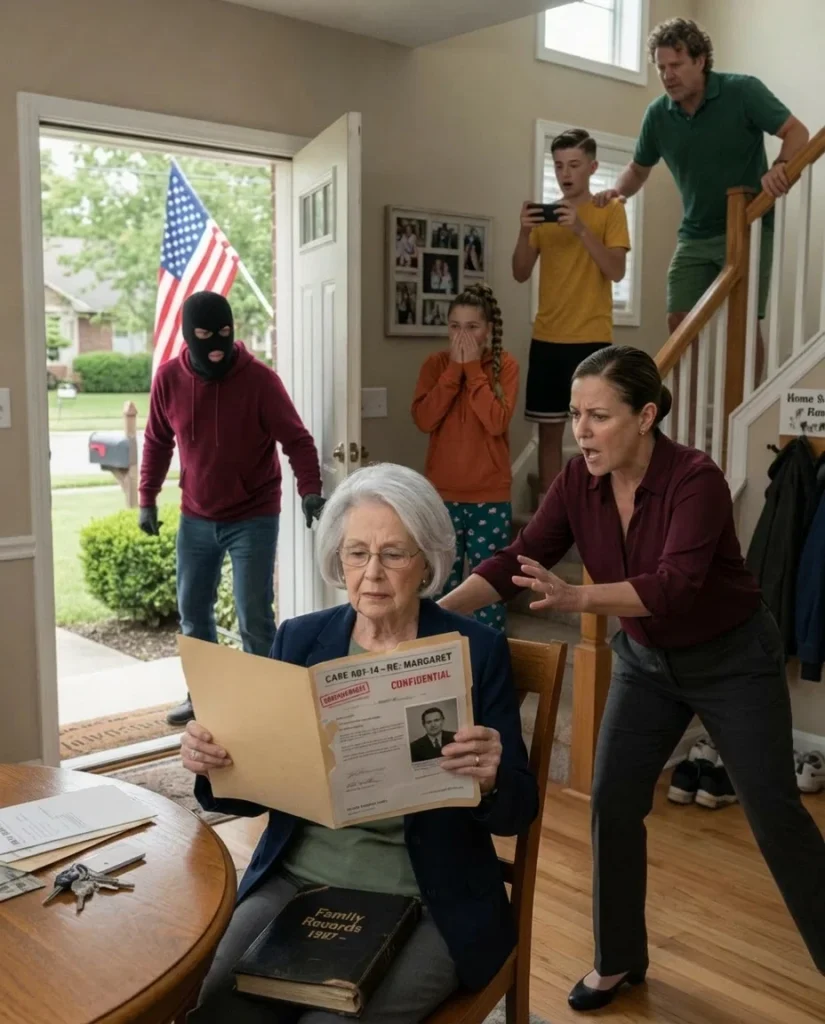
I was handing around the dinner rolls at 6:18 p.m. That is what stayed with me most. Not only his tone. Not Renee’s expression, though I still remember the tight little twist near her mouth. I remember the rolls because the basket was warm in my hands, while the polished table beneath my wrists felt cold. Roast chicken sat cooling beside the mashed potatoes. The green beans smelled of garlic. Ice cracked sharply in Renee’s glass, and for one second, it sounded like something breaking.
My name is Margaret Briggs. I was seventy-one when my son asked me to leave the home he had once begged me to move into. Two years earlier, my husband Harold had died in Tucson. We had been married forty-seven years. Harold was not a loud man, but he made every room feel safe. He made tea before sunrise, checked the tires before every long trip, and wrote grocery lists on old envelopes because he believed good paper should not be wasted on onions.
After he passed, my house sounded different. The hallway still creaked. The refrigerator still hummed. But every normal sound carried emptiness beneath it. Daniel noticed. At least, I believed he did. “Mom, you shouldn’t live alone,” he told me after the funeral. Renee stood beside him in a cream dress, holding a casserole someone from church had brought. “For a little while,” Daniel added. That phrase made the move sound temporary, the sacrifice sound reasonable, and my grief feel like something the family could organize as long as I cooperated.
So I sold the house Harold and I had owned for thirty-four years. I sold the yellow kitchen where he measured coffee with the same bent spoon every morning, the hallway where our son had taken his first steps, the rosebushes Harold trimmed badly but proudly, and the porch where he drank tea at sunrise. I told myself this was what family did. They adjusted. They made space. They carried one another.
Daniel’s house in Scottsdale looked like a magazine no one was allowed to touch. White cabinets, black fixtures, a covered pool, three garage doors, and a refrigerator filled with almond milk, string cheese, and routines that had no room for me. Renee called the spare bedroom “the guest room.” The first week, when I called it my room, she corrected me. “It photographs better as a guest room,” she said. That should have warned me, but loneliness teaches you to make excuses.
I told myself Renee was just particular, Daniel was busy, and the children were teenagers who drifted in and out of rooms like smoke. So I made myself useful. I folded towels, packed lunches, signed permission slips, drove my grandson to soccer and my granddaughter to piano. I learned which pan Renee preferred for eggs, which mug Daniel wanted beside the coffee maker, and not to leave my crossword book on the counter. I learned that in their house, help was welcome only as long as it did not look like belonging.
PART 2
At first, the insults were small enough to question. A brunch invitation that did not include me. A family photo where Renee said, “Let’s take one of just us first,” then forgot to take another. A conversation that stopped the moment I entered the kitchen. Then one Sunday, they left a note by the coffee maker: Gone to brunch. Back later. No invitation. No apology. No “Do you need anything?” Just a sticky note in an empty kitchen.
Another afternoon, I passed their bedroom and heard Renee behind the door. “She eats our food, uses our utilities, and contributes what exactly?” Some sentences you hear with your ears. Others land in your entire body. I waited for Daniel to correct her. I waited for him to say, “That is my mother.” I waited for the son I raised to remember who paid for his braces, sat through his fevers, packed his dorm room, and cried in the driveway when he left home. He said nothing.
In February, after a Medicare appointment, I bought a lottery ticket at a gas station. It was not dramatic. There was no heavenly sign. I bought it because Harold used to say luck sometimes came wearing dirty shoes. The ticket stayed in my purse for four days. On Monday morning at 9:42, while the house was empty and my coffee had gone cold, I checked the numbers once, then again. Then I sat very still at the kitchen island while the refrigerator hummed behind me. $89 million.
I did not scream. I did not call Daniel. I did not run through the house laughing like people do on television. I folded the ticket and slipped it into my Bible between Psalms and a church bulletin Harold had kept. Then I washed my coffee cup. Money does not always make you loud. Sometimes it makes you cautious. Sometimes it gives you the one thing no one can take away: options.
By March, the money had not changed how Daniel looked at me, but it had changed how I looked at Daniel. I noticed everything: Renee sighing when I opened the pantry, Daniel staying silent when she complained about the water bill, the way they discussed “downsizing” me without saying the word, and the way they treated my presence like a service they were tired of paying for. Then came that dinner.
When Daniel asked, “Mom, when are you finally going to move out?” the table went still. My grandson stopped scrolling. My granddaughter froze with her fork above her potatoes. Renee stared down at her plate, but her mouth tightened like she had helped rehearse the question. For one ugly heartbeat, I wanted to tell them. I wanted to say, “Your mother has $89 million, Daniel.” I wanted to watch Renee’s face change. But dignity is not revenge.
So I placed the basket down, folded my napkin once, then again. “Excuse me,” I said. Outside, the Phoenix evening smelled of chlorine, dry dirt, and an expensive candle burning somewhere through an open door. No one followed me. I looked at the covered pool and thought of Harold setting tea outside the bathroom door when I woke up sad. He never needed me to explain my grief before he cared for it. That was how I knew this was not care.
At 2:13 a.m., I opened the notepad in my nightstand and wrote five lines: Keep quiet. Hire an attorney. Claim privately. Separate assets. Find a home. Not a room. A home. The next morning before sunrise, I showered and put on my gray church blazer, the one Harold said made me look like I could fire a banker. By 7:30 a.m., I had appointments with three estate attorneys under my maiden name.
PART 3
My attorney, Patricia Holloway, was sharp-eyed and calm enough to make panic feel unnecessary. Before she touched a document, she asked, “Have you told anyone?” I said no. “Good,” she replied. “Keep it that way.” Within days, the trust was created, the private claim was handled, and every account authorization was separated. Every paper Daniel might have believed he could one day touch now had a wall around it.
Then I found the house. Four bedrooms. An east-facing sunroom. A real yard. A quiet street. Shade trees. A porch wide enough for morning tea. It was the exact kind of house Daniel and Renee always described when they talked about their “next chapter.” I toured it alone at 10:05 a.m. The front hall smelled faintly of cedar and lemon oil. Sunlight warmed the old floorboards. A brass key lay on the counter for the showing. I touched it with two fingers and remembered who I was before grief taught me to ask permission.
The next morning, I made a full-price cash offer through the trust. Clean closing. No Daniel. No Renee. No explanation. When the offer was accepted, I sat in a grocery store parking lot and laughed until I had to press a napkin under my eyes. Not because I had defeated them, but because, for the first time in two years, I could imagine a morning that belonged entirely to me.
By the end of that week, breakfast appeared before I asked. Renee smiled too warmly. Daniel asked if I needed anything from Target. The grandchildren were encouraged to spend more time with Grandma. Kindness that arrives too suddenly usually has paperwork behind it. I did not know what they had discovered, but I knew they had found something.
Saturday at 8:11 a.m., Renee walked into my room without knocking. Her eyes dropped to the envelope on my dresser. The brass key was half hidden beneath my Bible. “You bought a house?” she asked. Then the doorbell rang. On the porch stood a man in a suit holding a folder with Renee’s name on it. Daniel came downstairs barefoot. The man opened the folder and showed only enough. There was my maiden name, the trust name, and a delivery confirmation stamped 8:11 a.m.
Daniel looked from the folder to the key. “Mom,” he asked quietly, “whose house did you buy?” I stood slowly. The room became quiet in the way I had waited two years to hear. Not the quiet of people ignoring me, but the quiet of people realizing the woman they dismissed had been making decisions while they underestimated her. “The one you wanted,” I said. Renee’s face lost all color. “You bought our house?” she whispered. “No,” I said. “I bought my house.”
Daniel wanted to talk then, but conversation had been available for two years. It had been available when Renee called me a utility cost, when I ate lunch alone in a kitchen I cleaned, and when Daniel asked me to leave in front of his children. “I already talked,” I said. “You simply weren’t listening.” When Daniel finally asked where I got the money, I knew what mattered most to him in that moment. Not whether I was hurt. Not whether I was okay. The money.
I moved out three days later. No shouting. No drama. Daniel apologized later on my new porch, and some of it was real. Some of it was fear. People are rarely only one thing. I listened, then told him, “I love you, but you will never again decide where I sleep.” That was not forgiveness yet. But it was a beginning.
In the months that followed, I learned how to live in a home where I did not have to be useful to be welcome. I bought a porch swing, planted roses Harold would have trimmed badly, and invited my grandchildren for dinner every other Sunday. My grandson put his phone away at dinner. My granddaughter helped me choose curtains for the sunroom. Slowly, the house became more than quiet. It became mine.
The $89 million changed my accounts, my address, and the way certain people smiled when they learned I had choices. But the real change happened at 6:18 p.m., at a polished table with cooling chicken and garlic green beans. That was when my son showed me what my silence had been costing. And that was when I stopped paying.
I still love Daniel. A mother does not simply turn love off. But love without self-respect becomes a room someone else can rename. For two years, Renee called mine the guest room. Now I have a home, a porch, a brass key, and a sunroom bright enough for morning tea. Every time I turn that key in the lock, I remember the lesson Harold taught me for forty-seven years: care is not what people say when they want something. Care is what they do when they believe you have nothing left to give.