My sister revealed the betrayal like it was some harmless family prank.
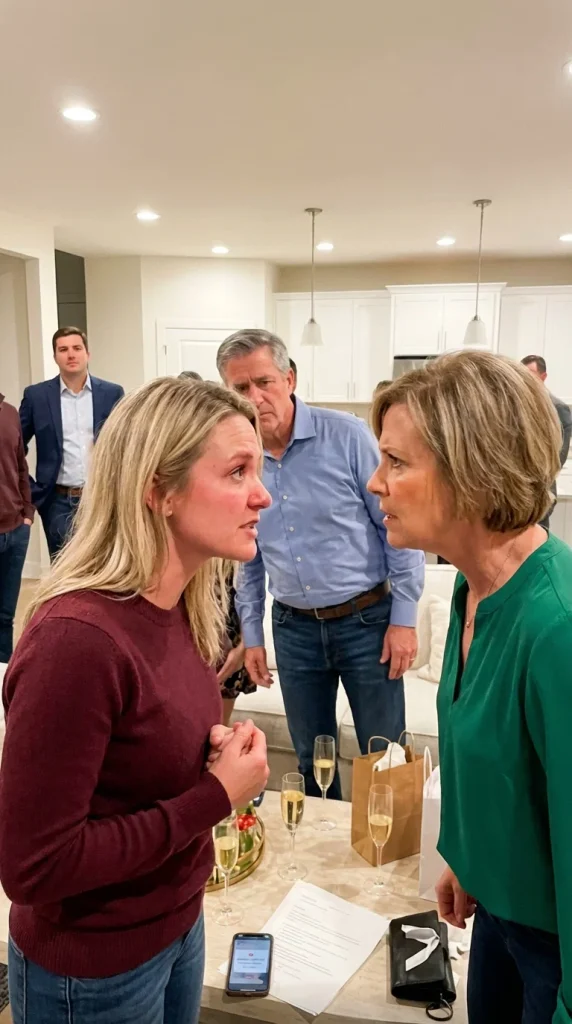
We were gathered in my parents’ kitchen in Scottsdale, Arizona, where Sunday dinners always meant dry roast chicken, strained smiles, and my mother pretending my younger sister’s chaos somehow belonged to me. I’m Lauren Whitaker, thirty-three, a financial compliance manager, and apparently the only person in my family who believed debt was something serious instead of an inconvenience.
My sister, Sabrina, drifted into the kitchen wearing a flowing white linen dress, waving her phone excitedly.
“Guess what?” she chirped. “We got the house!”
Mom started clapping before she even knew which house Sabrina was talking about, while Dad lifted his wineglass like he was celebrating a graduation.
“That’s amazing, sweetheart,” Mom said. “Your dream home?”
Sabrina flashed me a smile across the table, and something about it made my stomach knot.
“Oh, it’s incredible,” she said. “Four bedrooms, a pool, this giant kitchen, and the cutest office space for my content studio.”
I forced myself to smile. “Congratulations. How did you get approved so quickly?”
Sabrina laughed like I’d asked the dumbest question imaginable. “Well, technically, we had a little help.”
Dad suddenly became fascinated with his drink, and Mom focused very hard on slicing more chicken.
Then Sabrina leaned toward me, her diamond bracelet sparkling beneath the kitchen light.
“Sis, I used your credit cards to buy my dream house,” she announced proudly. “Mom and Dad said you’d understand.”
The room didn’t spin, but everything sharpened. I could hear every tiny sound with painful clarity: the refrigerator humming, Dad scraping his fork against his plate, the quiet gasp Mom failed to hide.
“My credit cards?” I repeated.
Sabrina waved dismissively. “Not all of them. Just enough for closing costs, some furniture, and a few deposits. Your limits are amazing, and Mom said you hardly use them anyway.”
I looked at my parents.
Dad wouldn’t meet my eyes.
Mom gave me that soft warning look she always used whenever she expected me to quietly accept betrayal.
“Lauren,” she said gently, “your sister is finally building a future. Don’t destroy this over money.”
Money.
She said it like Sabrina had borrowed twenty bucks instead of committing fraud in my name.
I carefully placed my napkin beside my plate and smiled, because anger would have entertained them, and crying would have pleased them.
“Congrats,” I said.
Sabrina squealed and threw her arms around me like I’d just given my blessing.
I hugged her lightly while already thinking about fraud alerts, frozen accounts, and the housewarming invitation she’d sent for the following Saturday.
Because Sabrina mistook my silence for forgiveness.
She had no idea it meant evidence…..
Part 2
For the next six days, I let Sabrina live inside the fantasy she had bought using my identity.
Every morning she uploaded videos from the new house, wandering barefoot through rooms she called her “answered prayers.” She proudly showed off the velvet sectional, marble dining table, gold pendant lighting, and even a nursery she said she would “need someday.” Every clip made my phone feel heavier, not because I envied the house, but because I recognized nearly every purchase from transaction alerts I’d originally assumed were banking mistakes.
By Monday, I had pulled my complete credit report. Tuesday was spent speaking with every card issuer. Wednesday, I filed official fraud claims and froze my credit. On Thursday, my attorney, Evelyn Grant, sent preservation notices to the mortgage lender, escrow company, furniture retailers, and the contractor Sabrina hired for a backyard renovation funded through a cash advance from one of my accounts.
The worst part wasn’t even the money.
It was how carefully planned everything had been.
Sabrina hadn’t simply grabbed a card from my wallet. Someone had opened an entirely new credit line using my Social Security number, an old address, and employment information only my parents would’ve known. Years ago, my mother kept copies of my tax records “for safekeeping,” and my father knew enough about my career to make the income figures believable.
When Evelyn reviewed the paperwork, she removed her glasses and said, “Lauren, this is not a misunderstanding. This is identity theft.”
I already knew that, but hearing it from someone outside my family made the truth feel less isolating.
By Friday evening, my parents had called nine times—not to apologize, but to remind me how important Sabrina’s housewarming party was.
“Please don’t embarrass your sister,” Mom said in one voicemail. “She’s worked so hard for this.”
I listened to the message twice before saving it with the others.
Saturday afternoon, I arrived at Sabrina’s new house carrying a wrapped gift box. The place looked beautiful in the shallow, staged way expensive things often do before anyone has actually paid for them. Guests wandered through the kitchen holding champagne flutes, admiring the tile backsplash, the pool, and the oversized portrait of Sabrina and her husband Mason posing beside the sold sign.
Sabrina spotted me immediately and hurried over glowing with victory.
“You came,” she said loudly enough for everyone nearby to hear. “I knew you’d get over it.”
“I brought you something,” I replied.
Her eyes lit up as she looked at the box. “Aw, Lauren, you really didn’t have to.”
“No,” I said softly. “I really did.”
She carried the gift to the center of the room, probably expecting crystal glasses or some extravagant peace offering she could post online. Mom stood beside her already tearing up, like she had scripted the scene beforehand and cast me as the forgiving older sister.
Sabrina untied the ribbon, lifted the lid, and froze.
Inside were printed fraud reports, disputed transaction records, notices from my credit card companies, and a letter from my attorney demanding repayment and full cooperation.
The entire room fell silent.
Then the doorbell rang.
Through the glass front door, I saw two police officers standing on the porch.
Sabrina looked at me, suddenly pale beneath her flawless makeup.
I held her stare and said, “You wanted a housewarming, Sabrina. I brought consequences.”
Part 3
The officers didn’t drag Sabrina away in handcuffs, which probably disappointed a few guests and spared the family from an even uglier spectacle, but they did ask her to step outside and answer questions while half the neighborhood watched from behind manicured hedges.
Mason followed after her, confused and angry, because apparently he’d believed Sabrina’s story that our parents had provided “family assistance.” When one of the officers asked if he knew my credit cards had been used without authorization, he looked at Sabrina with an expression I had never seen before.
Not anger toward me.
Fear of her.
“What did you do?” he whispered.
Sabrina’s voice cracked instantly. “I did what I had to do. We deserved a real beginning.”
Mom rushed toward me, her pearl necklace bouncing against her blouse. “Lauren, stop this right now. Tell them it’s all a misunderstanding.”
I looked at her and, for the first time, clearly saw how much of Sabrina’s entitlement had been nurtured by my mother’s protection.
“You knew,” I said.
Mom opened her mouth, but nothing came out.
Dad tried pulling me aside near the hallway, lowering his voice as if privacy could still save dignity.
“Lauren, we’ll handle this as a family.”
“No,” I replied. “You handled it as a family when you used my personal information to help Sabrina steal from me. I’m handling it legally.”
His expression hardened. “You’d destroy your sister over credit cards?”
“I’m not destroying Sabrina,” I said steadily, even while my hands shook. “I’m refusing to let Sabrina destroy me.”
The sentence spread through the room like cold air. Guests began quietly collecting purses and jackets. Sabrina’s influencer friends, who’d spent all afternoon filming countertops and champagne glasses, suddenly wanted nothing to do with the story behind them.
Within a week, the mortgage company launched an internal investigation. The credit card issuers confirmed fraud, reversed the charges, and opened their own cases. Furniture stores repossessed several unpaid pieces after discovering the purchases were tied to disputed accounts. The contractor stopped work immediately, leaving Sabrina’s dream backyard half-excavated beneath orange safety fencing.
For the first time in her life, Sabrina couldn’t cry her way out of consequences.
Mason moved out before the month ended, not because of the house itself, but because he had signed paperwork built on lies. Later, he emailed me—formal and embarrassed—saying he genuinely believed my parents were helping financially and apologizing for never questioning things more carefully.
My parents blamed me for everything until Evelyn sent them a formal letter warning they could be considered participants in identity theft if they continued pressuring me to withdraw the claims. After that, the calls became less hostile, then less frequent, and eventually stopped altogether.
The legal process moved slowly, because real life rarely delivers neat endings in seven days. Sabrina didn’t go to prison, but she was charged, forced into a repayment arrangement, and placed on probation after pleading down to lesser offenses. The house eventually returned to the market under financial pressure, and when it sold, there was nothing left for her to celebrate.
My parents contributed a painful amount toward the settlement, not out of generosity, but because investigators confirmed my personal information came from documents stored in their home. Dad sold his boat. Mom sold jewelry she once promised Sabrina would inherit someday. Neither of them spoke about fairness anymore.
Six months after the housewarming party, my mother asked to meet me at a coffee shop near my office.
She looked smaller than I remembered, sitting with both hands wrapped around a paper cup, makeup carefully done but exhaustion written all over her eyes.
“I thought I was helping your sister get ahead,” she said quietly.
“You helped her steal my identity.”
Her eyes filled with tears. “I never wanted it to become this serious.”
“It became serious the moment you decided my life was available for someone else’s dreams.”
She flinched, and for once, she didn’t accuse me of being dramatic.
Dad mailed me a written apology later, the kind that clearly took multiple drafts and probably legal advice. It wasn’t enough to repair everything between us, but it proved he finally understood the scale of what they’d done.
Sabrina didn’t apologize for almost a year.
When she finally did, it came in a plain email without emojis, excuses, or demands for immediate forgiveness. She admitted she’d wanted to appear successful so badly that she convinced herself I would survive the damage because I always had before.
I reread that sentence several times.
Then I answered: I hope you become someone who never needs to destroy another person to feel important.
We never became close again, because forgiveness and access are not the same thing.
Two years later, my credit was repaired, my savings rebuilt, and I bought a townhouse in a quiet Phoenix neighborhood lined with citrus trees. Sitting at the closing table, when the agent handed me the keys, I felt something tighten painfully in my throat.
Not because I’d won.
Because every document carried my name, and this time nobody had used it without permission.
At my own housewarming party, there were no dramatic speeches and no police cars waiting outside. My friends brought plants, wine, and ridiculous kitchen towels. Evelyn showed up carrying champagne and toasted, “To owning your life in your own name.”
I laughed, even as my eyes burned.
Later that night, after everyone had gone home, I stood alone in the doorway of my new house watching warm light spill across the floor.
My sister once believed a dream home could be purchased with stolen credit.
I learned that a real home costs something much more valuable.
Boundaries.
Truth.
And the courage to stop smiling when people confuse your kindness with permission.