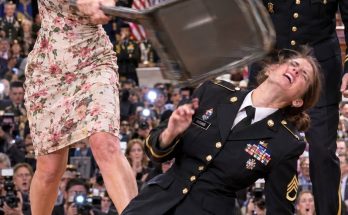
Graduation day was supposed to be the day Camila Reed finally stopped feeling like a receipt in her mother’s purse.
The stadium was bright enough to hurt.
May sunlight bounced off the metal bleachers, off the white folding chairs, off the polished shoes of people who had dressed carefully because their daughters and sons were walking across a stage.
The air smelled like sunscreen, hot grass, and burnt coffee from a paper cup somebody had set under their seat.
Every time a family cheered, the sound moved across the field in a wave.
Camila felt it before she heard it.
It hit her in the ribs and left behind a hollow little space.
When the announcer called, “Camila Elaine Reed, Master of Data Analytics,” she lifted her chin and looked toward the family section.
She did it before she could stop herself.
It was instinct.
It was hope.
It was the foolish little reflex that survives even after years of being punished for having it.
The seats were empty.
Not temporarily empty.
Not the kind of empty where someone is parking the car, running late, stuck near the wrong gate, or standing in the concession line with flowers wrapped in grocery-store plastic.
Empty.
Camila smiled anyway because the photographer was crouched in front of her.
Her diploma folder pressed slick and stiff against her palm.
Behind the camera, strangers shouted names that were not hers.
Someone’s grandmother cried into a tissue.
A father lifted his daughter off the ground.
A little boy in a collared shirt waved both hands at his sister like he was trying to pull the whole sky down for her.
Camila crossed the stage with her back straight and her smile fixed.
Some habits are harder to break than locks.