My Parents Invited 20 Guests to Their House and Expected Me to Stock the Entire Fridge—When I Finally Refused to Pay for Everything, They Had No Idea the One Thing I Revealed Next Would Leave the Whole Family Speechless.
My Parents Invited 20 Guests To My Lake House Until I Refused To Fill The Fridge
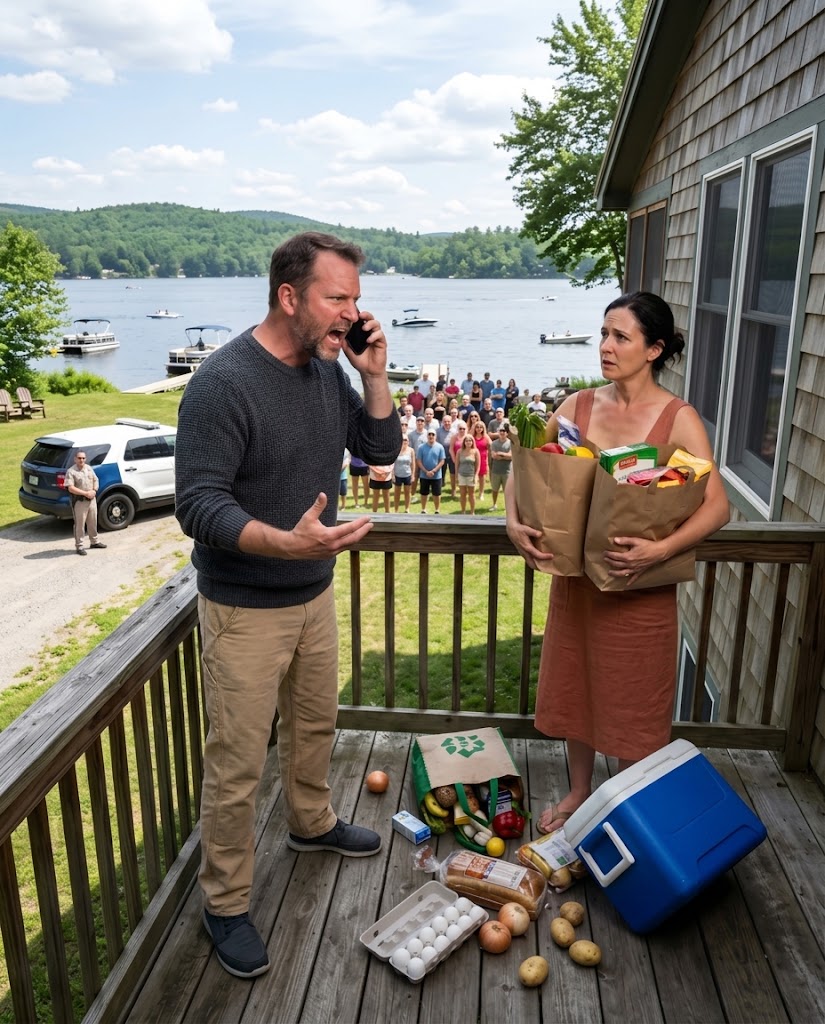
I had worked twelve hours at St. Mercy Medical Center, most of it on my feet, most of it watching people beg for one more breath under fluorescent lights. By the time I parked outside my apartment in Portland that evening, my scrubs smelled like antiseptic and coffee and the particular exhaustion of a shift that
doesn’t end so much as it simply stops. My phone had been buzzing for twenty minutes. I already knew from the rhythm of it that it was the family group chat.
Dad had tagged me three times.
The messages were brief and decisive in the way of people who have never considered that their decisions might require your agreement. Dad: We’re using your lake house this weekend, twenty guests. Mom: Fill the fridge and behave. My younger brother Kyle had added a row of laughing faces,
which told me everything I needed to know about how seriously the situation was being taken.
I sat in the parking lot and read the messages until the letters blurred. Then I typed one word and sent it.
No.
My mother replied within seconds. You really think you can stop us?
My father sent a voice message. I did not play it. I already knew the tone: command wearing the costume of family love, the version that dresses entitlement as obligation and expects the recipient to receive it as warmth.
Let me tell you about the lake house, because it matters.
I bought it after six years of double shifts, overtime, and living with roommates who stole my groceries and forgot to pay their share of utilities. I was a nurse who had learned to stretch a paycheck the way you learn any skill under pressure: with repetition and a clear understanding of what failure costs.
Six years of saving meant six years of bringing lunch in a paper bag and skipping vacations and buying furniture from estate sales and declining every purchase that was not either necessary or deeply considered. My family knew none of this in detail.
They knew I worked hard in the abstract way that families know things they have not paid close attention to, meaning they knew the category without the specifics, and so they had formed the impression that the house had arrived easily, the way things arrive easily for people who are doing
better than expected.
It had not arrived easily.
The house near Devils Lake was small and imperfect: a kitchen that still had the previous owner’s linoleum, a porch that needed new boards in the northwest corner, a bathroom faucet that dripped if you didn’t turn it all the way off. It also had five acres of privacy, a dock, and a view of the water at morning
that I had been imagining for three years before I signed the papers. I bought it so I could sleep without noise, breathe without someone else’s schedule, and not hear my mother comment on my life choices over breakfast. I bought it so I had somewhere to go after twelve-hour shifts when the fluorescent-lit
world of the hospital had used up every reserve I had. I bought it for myself, which is a complete sentence and did not require anyone else’s approval.
It was not family property. It was not shared. It was mine.
I did not argue with my parents that night. There was no speech, no long message explaining my position. I took a shower, made one phone call to my neighbor Margaret Harper, who lived across the gravel road from the lake house and who had watched my family treat the property like a rental unit they had reserved without paying for.
“If any cars show up this weekend,” I told her, “they do not have permission to enter.”
She paused briefly. “Your parents again?”