My husband, Aaron, had passed away the year before. My parents were my last resort.
“Mom,” I whispered into the phone, my voice trembling as a fresh wave of agony pulsed through my hips. “I need you and Dad to take the twins until I can stand. Just a few weeks. Please.”
Through the receiver, my mother, Eleanor, released a heavy, theatrical sigh, as if I had just asked her to donate a lung.
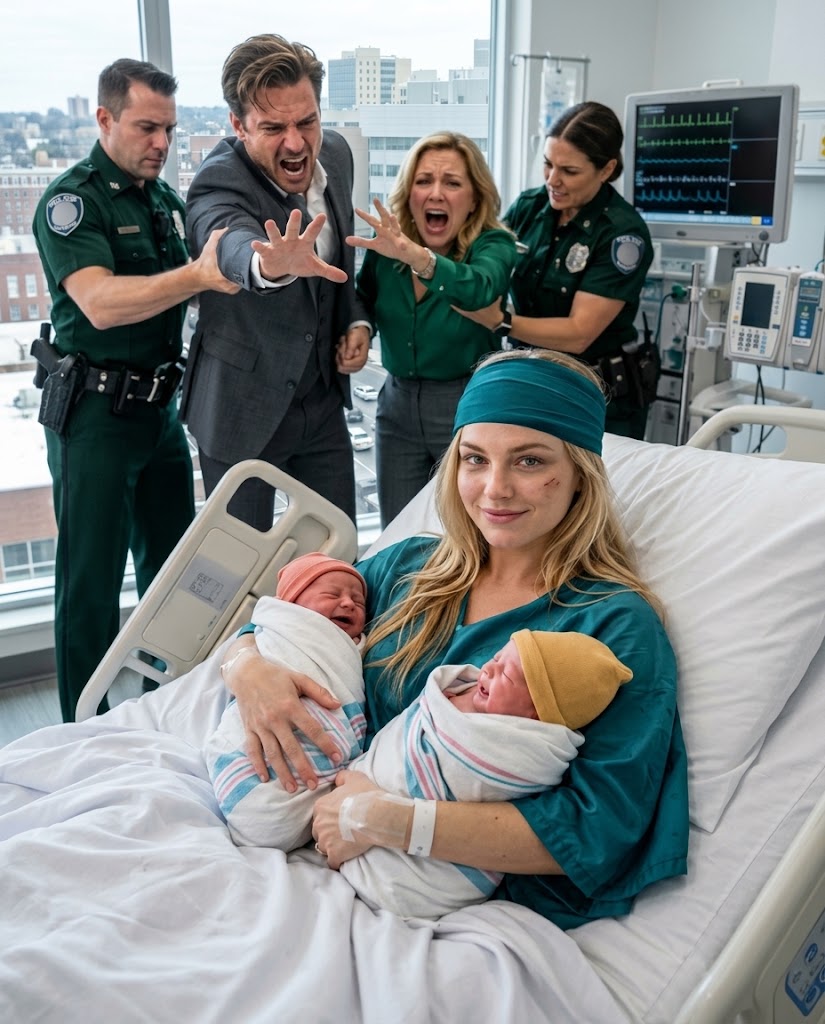
“I still need time for pickleball, Mara,” she snapped. “Your sister never bothers us the way you do.”
“Mom, I was almost killed last night.”
“And we are not built-in babysitters. Figure it out.”
The line went dead. The silence in my hospital room was deafening, broken only by the rhythmic, mocking beep of my heart monitor. I stared at the ceiling panels, and suddenly, every payment I had ever made marched through my mind in a bitter procession. The mortgage on their sprawling suburban home. The lease on my father’s luxury SUV. Their country club dues. My sister Claire’s endlessly failing business ventures.
For eight years, I had been the family bank. Claire had been the family princess.
Outside my room, I heard Lily begin to cry. I couldn’t lift her. I couldn’t even roll over to look at her. The physical helplessness burned, but beneath it was something harder, colder. A crystalline certainty that I was done purchasing the illusion of a family.
A nurse named Elena stepped in, catching my phone before it slipped from my numb fingers. She took one look at my face and asked, “Who can I call?”
“Daniel Cho,” I said. “My attorney.”
Daniel, Aaron’s former college roommate and my fiercest protector since his death, answered on the first ring.
“I want every family payment stopped tonight,” I told him, my voice stripped of all emotion. “Cards, insurance, club fees, allowances, everything. No exceptions.”
He paused. “Including the residence?”
“Yes.” My holding company owned their home. They had lived there rent-free for years.
“They will panic, Mara.”
“They should have thought of that before abandoning my babies.”
At midnight, the automated transfers vanished. Authorized cards froze. The SUV lease was flagged for repossession. Claire’s exorbitant monthly “consulting fee” evaporated.
By morning, my phone was a battleground. Thirty-seven missed calls from Eleanor. Fourteen from my father, Richard. Twenty-two from Claire. A flood of enraged texts accusing me of being childish, cruel, and narcissistic. Not a single message asked if I was in pain.
Daniel arrived at 6:30 AM, looking like a man ready to burn a city to the ground. After securing private caregivers and a temporary guardianship transfer to Aaron’s sister, Rebecca, he sat beside my bed, his jaw tight.
“The financial cut-off is complete,” Daniel said, his voice dangerously low. “But Mara, there’s something else. Your mother called my office at 7:12 this morning.”
“Why?” I asked, a cold dread coiling in my gut.
“She demanded copies of your estate plan. She said since you were incapacitated, they needed to know what happens with the children—and the trust.”
The room seemed to tilt. They wouldn’t take my children for a week, but they wanted to know who controlled the money if I was deemed unfit.
“We filed the updated guardianship for Rebecca,” Daniel assured me. “But your mother also asked my paralegal a very specific question before I got on the line.”
I swallowed hard. “What did she ask?”
Daniel looked me dead in the eye. “She asked exactly what it takes to have someone declared legally insane.”
By 2:00 PM, the storm arrived.
I heard Eleanor’s sharp, commanding voice in the hallway before she even crossed the threshold. She swept into my room wearing pristine tennis whites and a pale blue visor, her pickleball bag still slung over her shoulder. Claire followed closely behind, her designer sunglasses pushed back on her head, lips pursed in practiced victimhood.
They didn’t look at me with fear or relief. They looked at me with deep, simmering irritation.
“You have caused a complete disaster,” Eleanor announced, stopping two feet from my bed.
“My payroll didn’t clear,” Claire chimed in, stepping forward. “I have vendors waiting, Mara.”
“You closed your boutique eighteen months ago, Claire,” I said, my voice weak but laced with steel.
“I have projects,” she flushed angrily. “You get into one little accident and suddenly everyone has to suffer? Freezing accounts is abusive.”
Abusive. The word hung in the sterile air. I had paid their debts, funded their lifestyles, and absorbed their failures. Now, from a hospital bed, paralyzed by pain, I finally saw them for what they were. Parasites.
“You can leave,” I said quietly. “You didn’t come for me. You came for the credit cards.”
Eleanor’s mask of maternal concern evaporated, revealing the ruthless calculation beneath. “You owe us, Mara. For being your family. When you come home, don’t expect us to be waiting.”
“I’m not coming home to you,” I replied. “Consider our accounts settled.”
They turned to leave, heels clicking sharply against the linoleum. But just before exiting, Claire paused. “You look terrible, Mara. So pale.”
She walked over to my bedside table. “Let me at least get you some fresh water. You need to stay hydrated for the psych evaluation.”
I frowned. “What psych evaluation?”
“Oh, standard protocol after a trauma, I’m sure,” Claire said breezily. She poured a cup of water from the plastic pitcher, her back turned to me for just a fraction of a second. She handed it to me with a tight, unnatural smile. “Drink up.”
My throat was parched from the pain medications, so I took the cup and drank it down. Claire watched me swallow, her eyes glinting with something I couldn’t quite name. Then, she and my mother walked out.
Ten minutes later, Elena the nurse came in. “The hospital social worker and the psychiatric evaluator are here to see you, Mara. Standard check-in to ensure you’re coping and the babies have a safe discharge plan.”
“Send them in,” I said, shifting slightly against the pillows.
But as the door opened and two professionals in crisp suits walked in, the edges of my vision began to blur. A sudden, violent wave of nausea crashed over me. The fluorescent lights overhead seemed to strobe, blinding and aggressive. My heart hammered wildly against my ribs.
“Ms. Rossi?” the social worker asked, her brow furrowing. “Are you alright?”
I tried to answer, but my tongue felt like lead. The room spun on a sickening axis. The walls seemed to breathe. I looked down at my hands and they were trembling violently.
“I… I don’t feel…” I stammered, my voice sounding distant and warped.
The psychiatrist clicked his pen, his eyes narrowing as he took in my dilated pupils and erratic breathing. “Ms. Rossi, are you currently under the influence of any unprescribed substances?”
I tried to shake my head, but a terrifying hallucination gripped me—the IV stand looked like it was bending toward me, reaching out. A scream clawed its way up my throat, but only a desperate, unhinged sob came out.
As the psychiatrist began scribbling furiously on his clipboard, a single, horrifying realization pierced through the chemical fog in my brain: Claire hadn’t just poured me water. She had poisoned me.
The next few hours were a descent into a pharmaceutical hell. I was locked in a terrifying loop of paranoia and physical sickness, unable to string a coherent sentence together while the hospital staff hovered, observing me with clinical suspicion.
When the fog finally began to lift, it was evening. The room was dim, and a familiar, comforting presence sat beside my bed. Rebecca.
She had flown in immediately, her hair messy, mascara smudged, clutching a plush gray elephant she had bought for Lily at the airport. She had already been to the nursery, holding the twins, doing what my own mother had refused to do.
“Hey,” Rebecca whispered, seeing my eyes open and focus. “You gave us a scare. They ran a tox screen, Mara. They found high levels of an obscure, heavy-duty hallucinogenic muscle relaxant in your system. It wasn’t in your chart.”
Tears of helpless rage pricked my eyes. “Claire,” I croaked, my throat raw. “She poured my water. She put something in it. The evaluator… he saw me lose my mind.”
Rebecca’s face hardened. “Daniel is trying to do damage control, but the social worker flagged your file. They’re questioning your competency.”
“It’s my word against hers,” I whispered, despair threatening to pull me under. “There are no cameras in the patient rooms.”
Rebecca looked down at the plush elephant resting on the edge of my bed. She blinked, her expression shifting from sorrow to a sudden, sharp realization.