PART 2
The first time Daniel abandoned Ethan for Rebecca’s son, Ethan was five.
The kindergarten hosted a family field day every spring.
For an entire week, Ethan practiced the three-legged race in our living room, tying one ankle to mine with a scarf and laughing whenever we collapsed against the couch.
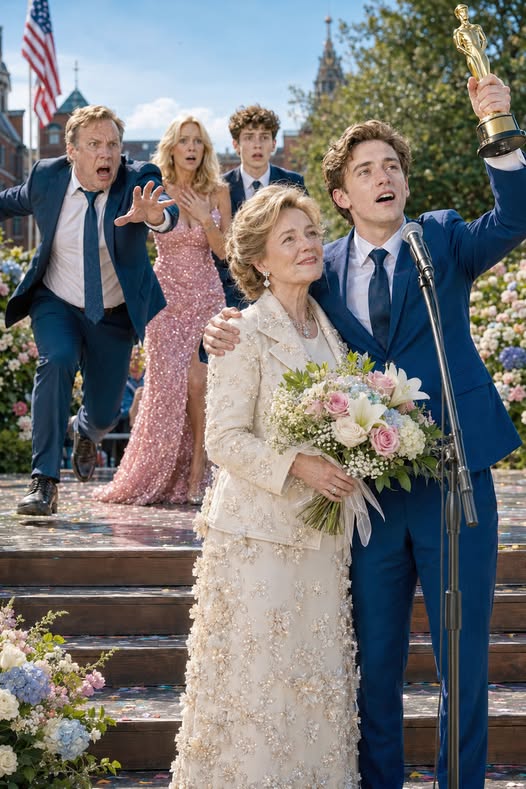
“Dad and I are gonna win,” he kept saying.
Daniel promised he would be there.
That morning, he even wore sneakers.
We were halfway to school when Rebecca called.
I didn’t know she had returned to Boston until I heard her crying through Daniel’s Bluetooth speaker.
“Mason has a fever. I don’t know what to do. His dad won’t answer. Daniel, I’m scared.”
Daniel immediately turned the car around.
“What are you doing?” I asked.
“Taking them to urgent care.”
“Ethan’s field day starts in twenty minutes.”
“Mason has a fever.”
“And your son has been waiting all week.”
Daniel looked at me as though I were heartless.
“Laura, don’t be selfish. Rebecca is alone.”
That became his favorite word for me whenever I asked him to choose us.
Selfish.
Ethan and I took a rideshare to school.
He kept staring behind me when we entered the playground.
“Where’s Dad?”
“Something came up.”
His smile faded.
“Oh.”
Two adults were required for the race, so the gym teacher filled in.
Ethan finished third.
He held his little bronze-colored medal against his chest and waited beside the fence until almost everyone had gone home.
Daniel never came.
That night he brought expensive fruit and pastries.
I thought they were for Ethan.
“They’re from Rebecca,” he explained. “She feels terrible for causing trouble.”
I stared at him.
“You left your son’s event because she called.”
“Her kid was sick.”
“You promised Ethan.”
“He’ll have other races.”
I should have understood then.
But Daniel had not always been that man.
When we married, his first business was failing. We lived in a two-bedroom apartment above a laundromat in Somerville. I handled invoices while pregnant and helped him negotiate with creditors.
When Ethan was born, Daniel cried harder than I did.
He held our newborn son and whispered, “I’m going to give you everything I never had.”
For years I used that memory as evidence that the real Daniel still existed somewhere.
But gradually, everything tender he once gave us seemed to migrate toward Rebecca and Mason.
When Ethan was seven, he received his first academic achievement certificate.
Daniel promised to attend.
That afternoon, Mason got into a fight at school.
Rebecca called.
Daniel ran.
Ethan stood beneath a banner holding his certificate while other children posed between both parents.
“Did Dad get lost?” he whispered.
“No, sweetheart.”
“Will he still come?”
“I think so.”
We waited until the janitor began taking down the balloons.
Daniel returned home at ten that night.
Ethan had fallen asleep at his desk with the certificate beneath his arm.
I showed it to Daniel.
He glanced at it.
“Great. I’ll buy him something tomorrow.”
“He wanted you.”
“He had you.”
“He wanted his father.”
Daniel rubbed his forehead.
“Laura, don’t raise him to be needy.”
That sentence stayed with me.
Rebecca’s son could be frightened.
Rebecca could be overwhelmed.
Daniel could be stressed.
But Ethan was expected to be strong enough not to need anything.
By third grade, Ethan had learned the lesson.
Daniel promised to drive him to a statewide math competition.
At 7:05 that morning, Rebecca called because Mason had forgotten an English project at home.
Daniel grabbed his keys.
I blocked the front door.
“Ethan’s competition begins at eight.”
“I’ll drop off the project and come back.”
“You won’t make it.”
“Then take an Uber.”
Ethan was sitting at the kitchen table with a sharpened pencil in his hand.
“Dad?”
Daniel turned.
Ethan swallowed.
“It’s okay. Mom can take me.”
Daniel smiled, relieved.
“That’s my boy.”
After he left, Ethan put the pencil back into his case.
Then he said something no eight-year-old should have needed to say.
“Mom, you don’t have to invite Dad to my stuff anymore.”
I turned away because I couldn’t let him see me cry.
Children do not suddenly become mature.
Sometimes they simply stop reaching for a hand that never reaches back.
Years passed.
Daniel’s company grew.
The two-room office became an entire floor downtown.
His suits became custom-made.
His car became German.
People told me how lucky I was.
“He became successful and still stayed with his family.”
Stayed.
Technically.
He remembered Mason’s birthday without reminders.
He researched Mason’s tutors.
He attended counseling meetings when Mason struggled.
He knew Mason hated shellfish, loved baseball, feared public speaking, and wanted to study business.
When Ethan once spent a night in the ER with a 103-degree fever, Daniel texted:
On a business trip. Keep me posted.
I later learned he was thirty minutes away helping Rebecca move apartments.
Still, I stayed.
I told myself Ethan needed a father.
I told myself twenty years of marriage meant something.
I told myself Daniel wasn’t technically having an affair.
And then, when Ethan was eighteen, I watched him announce to an auditorium that his father was dead.
That was when I finally understood.
A marriage does not need another woman in your bed to become a betrayal.
Sometimes betrayal is watching your husband give someone else the husband and father you spent years begging him to be.
PART 3
Daniel arrived outside Emerson Hall twenty minutes after the ceremony ended.
He was running.
For once.
His tie was crooked, his face was flushed, and his phone was still in his hand.
Someone had apparently sent him the video.
He didn’t apologize.
He didn’t hug Ethan.
He didn’t even congratulate him.
“What the hell was that?” he demanded.
Ethan stopped walking.
Daniel pointed toward the building.
“Do you understand what you just said in there? There were professors, donors, state officials—people I know!”
Ethan’s expression barely changed.
“So?”
“So? You told hundreds of people your father is dead!”
“I explained what I meant.”
“You humiliated me!”
There it was.
Not I hurt you.
Not I’m sorry.
His reputation.
I stepped between them.
“Daniel.”
His eyes snapped toward me.
“You did this.”
I almost laughed.
“What?”
“You poisoned him against me.”
Ethan’s jaw tightened.
“Mom didn’t have to.”
Daniel ignored him.
“You’re angry because I missed one ceremony, so you let our son destroy me publicly?”
“One ceremony?”
My voice became strangely calm.
“Do you remember Ethan’s first parent-teacher conference?”
Daniel frowned.
“What does that have to do with anything?”
“Do you remember his first academic certificate?”
“That was eleven years ago.”
“His third-grade math competition?”
“Laura—”
“His tenth birthday?”
He looked away.
“The eighth-grade science fair?”
No answer.
“His freshman awards banquet?”
“Stop.”
“His hospital stay at thirteen?”
“Stop dragging up ancient history!”
I nodded.
“That’s the problem, Daniel. To you, it’s ancient history. To Ethan, it was his childhood.”
Ethan stood beside me holding the award.
Daniel finally looked at him.
“I admit I missed things. But I worked for this family. The house you live in, the car, your school, your life—who do you think paid for that?”
I opened my purse.
For months, I had carried copies of documents I thought I might someday need.
That day had come.
I removed a folder.
“What’s that?” Daniel asked.
“Reality.”
The first page showed Ethan’s tutoring and competition expenses.
“Paid from my account.”
The second listed summer science programs.
“My account.”
Medical costs.
Application fees.
College visits.
Transportation.
Extracurricular programs.
I had returned to part-time financial consulting years earlier, quietly rebuilding a career Daniel barely noticed.
“You paid the mortgage,” I said. “And transferred money for groceries. That was your great sacrifice.”
Daniel scoffed.
“I paid for plenty.”
“Yes.”
I pulled out another set of statements.
“You did.”
His face changed.
Transfers to Rebecca.
Private school fees for Mason.
Tutoring.
Summer camps.
Medical bills.
Rent assistance.
Restaurant charges.
Hotel charges Daniel had once explained as “business travel.”
Hundreds.
Then thousands.
Then tens of thousands.
Page after page.
Daniel reached for the papers.
“Where did you get these?”
“They were available through our joint financial records.”
“You’ve been spying on me?”
Ethan stepped forward.
“Don’t touch her.”
Daniel froze.
Our son was now taller than him.
Something flashed across Daniel’s face.
Maybe shock.
Maybe the realization that the little boy he had once pacified with Lego sets was gone.
Daniel softened his voice.
“Ethan, I love you.”
Ethan looked at him as if studying an equation with an obvious answer.
“You know what’s weird?”
“What?”
“You know Mason’s baseball position.”
Daniel said nothing.
“You know he hates chemistry. You know he’s allergic to shellfish. You know when his counseling appointments are. You know which colleges he toured.”
“Ethan—”
“What college am I attending?”
Daniel opened his mouth.
Nothing came out.
Ethan smiled without humor.
“Exactly.”
Daniel looked toward me.
I could see panic beginning behind his anger.
“Laura, tell him.”
“Tell him what?”
“That I’m his father.”
Ethan answered for me.
“Biologically.”
Daniel flinched.
“Don’t talk to me like that.”
“Why? Because it embarrasses you?”
Daniel stared at him.
Ethan lifted the crystal award slightly.
“I stopped needing your explanations a long time ago.”
“Son—”
“Don’t.”
The word was quiet.
Devastating.
“You didn’t arrive late today,” Ethan said. “You chose not to come. Just like all the other times.”
Then he put one arm around my shoulders.
“Mom, let’s go.”
Daniel stood on the sidewalk watching us leave.
That night, when he finally came home, a large white envelope was waiting on the dining table.
Inside were divorce papers.
He stared at them for nearly a minute.
Then he laughed.
“You’re serious?”
“Yes.”
“Because of today?”
I poured myself a glass of water.
“No.”
I looked directly into his eyes.
“Because of the last eighteen years.”
For the first time since I had known him, Daniel Bennett had no excuse ready.
PART 4
Daniel spent the first hour insisting there had been no affair.
“Rebecca and I never crossed that line.”
I sat across from him at the dining table.
“You still think that’s the point.”
“What else could the point possibly be?”
“You gave another woman the emotional partnership that belonged in this marriage. You gave her son the fatherhood Ethan kept waiting for.”
“That’s ridiculous.”
“Is it?”
“She was alone.”
“So was I.”
The sentence stopped him.
For years, whenever Rebecca called herself a single mother, Daniel behaved as though I had a husband beside me.
But having a husband’s name on a tax return is not the same as having a husband.
“When I was seven months pregnant,” I said, “do you remember the hospital appointment?”
He blinked.
I knew immediately that he didn’t.
“My doctor was worried about premature labor. You promised to come.”
Daniel’s eyes lowered.
“Rebecca called because Mason had a fever.”
“That was—”
“You left fifty dollars on the table and told me to get a cab.”
His face tightened.
“I was young.”
“So was I.”
Silence.
“I sat alone in that clinic surrounded by husbands holding their wives’ hands. The doctor told me to stay on bed rest. I called you. You didn’t answer because you were driving Rebecca and Mason home.”
Daniel’s lips parted.
“I had forgotten that.”
“I didn’t.”
He sat back.
For the first time, he looked smaller.
“I can fix this.”
I actually smiled.
“How?”
“I’ll change.”
“Can you give Ethan back his kindergarten field day?”
“No.”
“His first award?”
“Laura—”
“His birthday when we replaced the candles three times because he kept believing you were coming?”
Daniel closed his eyes.
“Can you put yourself into the empty side of his graduation photographs? Can you sit beside his thirteen-year-old hospital bed retroactively?”
“Stop.”
“No. You spent eighteen years telling us not to make a big deal out of things. Now you’re finally going to understand how many small things create a childhood.”
The next afternoon, Rebecca contacted me.
She asked to meet at a café in Brookline.
I almost refused.
Then I decided I wanted to see whether she could look me in the eye.
She arrived in an ivory coat, immaculate makeup, exhaustion hidden badly beneath concealer.
“Laura, I heard about the divorce.”
“We’re not friends, Rebecca.”
Her expression stiffened.
“I only want to explain.”
“Go ahead.”
She folded her hands.
“Daniel and I were never having an affair.”
“He attended your son’s school conference while his own son received the highest honor of his life.”
“Mason needed him.”
“So did Ethan.”
“Ethan has you. He’s brilliant. He’s independent.”
I stared at her.
It was almost funny.
She and Daniel had rehearsed the same lie so many times they no longer needed to coordinate.
Because Ethan performed well, he deserved less love.
Because I could handle life, I deserved less help.
“I have records of Daniel paying Mason’s tutors,” I said.
Rebecca paled.
“Helping with your rent. Medical bills. Camps. Restaurants.”
“He wanted to.”
“I know.”
I placed another copy on the table.
“And this school authorization form lists Daniel under ‘Father or Guardian.’”
Rebecca’s fingers trembled.
“Mason considers him a father.”
“My son considered him one too.”
Her eyes filled with tears.
“I never meant to destroy your family.”
“You didn’t.”
She looked surprised.
“Daniel did most of that himself.”
Rebecca swallowed.
“I just wanted Mason to have a male role model.”
“Then you should have asked Mason’s father to become one. Or found a mentor. Or built a life where your son didn’t depend on somebody else’s husband.”
Her softness disappeared.
For the first time, I saw something sharp underneath.
“You know Daniel and I almost married, right?”
“Yes.”
“If my parents hadn’t interfered, he never would’ve married you.”
There it was.
The truth she had been waiting years to use.
“He always loved me.”
I studied her.
Then I laughed.
She looked offended.
“What’s funny?”
“You think a man refusing to choose either woman is proof of great love?”
Her face changed.
“If Daniel truly wanted you, Rebecca, he could have chosen you eighteen years ago. Instead, he married me and kept you close enough to feel needed.”
She stared at me.
“And you accepted crumbs because calling them destiny felt better.”
I stood.
“If you want him now, take him. Openly.”
“Laura—”
“But never again tell me your loneliness justified my son’s.”
I left her sitting there.
That afternoon, I met with an attorney named Michael Grant.
He reviewed the marriage, the company interests, the house, investment accounts, and the transfers to Rebecca.
“These third-party expenditures matter,” he said. “Especially if they came from marital assets without your agreement.”
“I don’t want revenge.”
“Good.”
He closed the folder.
“Then what do you want?”
I thought of Ethan onstage.
My answer came easily.
“I want the waiting to stop.”
PART 5
Daniel’s panic became real when the formal divorce filing arrived.
Until then, he had assumed I was punishing him.
He brought flowers.
He came home before six.
He started cooking.
He bought Ethan a high-end laptop for college.
The box sat outside Ethan’s bedroom for two days.
Finally Daniel carried it inside.
“You’ll need this at MIT.”
Ethan glanced up from his desk.
“I already bought one.”
“This one is better.”
“I’m good.”
Daniel forced a smile.
“It’s from your dad.”
Ethan looked at the unopened box.
“That’s exactly why I don’t want it.”
Daniel’s smile disappeared.
“Why do you have to make everything so difficult?”
Ethan turned back to his computer.
“I’m not. I said no.”
Watching Daniel stand in the hallway holding that expensive box, I briefly saw the mirror image of our son at seven years old, clutching a wrinkled certificate and waiting for him.
I felt no satisfaction.
Only certainty.
Daniel’s mother, Carol, came next.
She sat in my living room with tea in both hands.
“Men get distracted, Laura.”
“For eighteen years?”
“Daniel never brought another woman into your home.”
“No. He took himself out of it.”
Carol frowned.
“He provided for you.”
“Do you know Ethan’s favorite subject?”
She hesitated.
“Physics?”
“Daniel doesn’t.”
“He’s busy.”
“Do you know Mason’s?”
Carol looked uncomfortable.
I continued.
“Daniel does. He knows Mason struggles with algebra. He knows his food allergies. He knows the name of his guidance counselor.”
Carol sighed.
“That boy didn’t have a father.”
“Neither did mine, apparently.”
She had no answer.
The divorce took months.
Daniel fought hardest over the company, not because I wanted to destroy it, but because he hated discovering that the years I had spent helping him establish it mattered legally and financially.
I had handled payroll during his first disastrous year.
I had negotiated with vendors.
I had covered household expenses when cash flow disappeared.
I had taken care of Ethan while Daniel worked eighteen-hour days.
His success had not appeared in a vacuum.
Neither had my sacrifices.
My attorney documented substantial marital funds Daniel had diverted toward Rebecca and Mason.
The settlement negotiations became ugly.
Then something unexpected happened.
Rebecca began pressuring Daniel.
One evening, my attorney played me a recording Daniel’s own team had produced while trying to explain several transfers.
Rebecca was crying.
“You can’t cut us off now. Mason starts college next year.”
“I’m dealing with a divorce,” Daniel said.
“Because Laura is forcing you!”
“Don’t talk about her like that.”
Silence.
Then Rebecca’s voice sharpened.
“Now you defend her?”
Daniel sounded exhausted.
“My own son stood onstage and told seven hundred people I was dead.”
“Mason sees you as his father!”
Daniel was quiet for several seconds.
Then he said something I never expected.
“That’s the problem. I was busy being a father to Mason while my actual son stopped believing he had one.”
The recording ended.
My lawyer looked at me.
I felt nothing.
Five years earlier, that sentence might have saved our marriage.
Now it was simply accurate.
Regret can be sincere and still arrive uselessly late.
On a rainy November morning, Daniel and I signed the final agreement.
The house equity was divided.
Retirement and investments were balanced.
I received a fair share tied to the company’s marital growth.
The diverted funds were considered in the settlement.
When the judge finalized the divorce, Daniel stared at the table.
Outside the courthouse, he called my name.
“Laura.”
I stopped.
He stood beneath the gray sky, looking older than the man I had married.
“Did we really have to end like this?”
“We didn’t end today.”
He swallowed.
“We ended a little every time Ethan waited and you didn’t come.”
His eyes reddened.
“Can I still see him?”
“He’s eighteen. That’s his decision.”
“He won’t answer me.”
“That’s also his decision.”
“I’m his father.”
“Then maybe you should have acted like one while he still needed you to prove it.”
Daniel looked away.
Ethan and I moved two weeks later.
Our new condo in Cambridge was smaller but full of sunlight.
On moving day, Ethan stood in the doorway of the old house.
“You okay?” I asked.
He nodded.
“I just realized something.”
“What?”
“When I was little, I thought the house felt broken because Dad wasn’t in it.”
He picked up a box of physics books.
“Now I know home is wherever the people who actually show up are.”
That sentence followed me into our new life.
I placed a desk beside the living-room window.
I returned full-time to financial consulting.
My first major client was a small technology firm whose accounting system looked like it had survived a tornado.
I loved every minute.
For the first time in decades, I wasn’t just repairing someone else’s life.
I was building mine.
And Ethan?
He started MIT that fall.
On orientation day he asked me to come.
“Aren’t mothers embarrassing at college?”
“You’re not.”
Inside the auditorium, another student asked Ethan where he got his discipline.
He pointed at me.
“My mom.”
I laughed.
Ethan didn’t.
“She taught me that strength isn’t pretending something doesn’t hurt.”
Then he smiled.
“It’s knowing when something hurts you enough that you need to walk away.”
For once, the seat beside me did not feel empty.
PART 6
A year after the divorce, Ethan was selected to present a research project at a national student innovation forum held in Boston.
He left one ticket on my kitchen counter.
Only one.
When I arrived at the convention center, I saw Daniel standing near security with a bouquet of white roses.
The guard was checking a tablet.
“I’m his father,” Daniel insisted.
“I understand, sir, but you’re not on the approved guest list.”
Daniel’s face tightened.
Then he saw me.
“Laura.”
I walked closer.
“Can you tell them to let me in?”
“No.”
His eyes widened.
“I only want to watch him.”
“Did you ask Ethan?”
“He won’t answer.”
“Then you have your answer.”
Daniel squeezed the bouquet.
“I’m trying to make things right.”
“Making things right doesn’t mean forcing yourself into someone’s life because you finally feel guilty.”
“I’m his father.”
“You keep saying that like it’s a key.”
His expression collapsed.
For a moment, I almost pitied him.
Then I remembered every door Ethan had watched.
Kindergarten.
Elementary school.
Hospitals.
Birthdays.
Awards.
Daniel had taught his own son what it felt like to stand outside hoping someone would open the door.
Now he was learning the lesson himself.
I entered alone.
Ethan’s project won second place nationally.
When he came outside afterward, Daniel was still there.
The roses had begun to droop.
“Ethan.”
My son stopped.
Daniel stepped forward.
“I’m late again.”
Ethan looked at him.
Daniel attempted a sad smile.
“I guess that sounds familiar.”
“No,” Ethan said.
Daniel’s smile faded.
“What?”
“You’re not late.”
Ethan adjusted the strap of his backpack.
“You missed it.”
Daniel went pale.
“I know I failed you.”
Ethan said nothing.
“Give me a chance to be part of your life now.”
“I don’t need that.”
“Ethan, please. I’m your dad.”
“I know.”
“Then how can you just cut me out?”
Ethan’s expression remained calm.
“I don’t hate you.”
Daniel’s eyes filled.
“That should mean something.”
“It does.”
Ethan took a breath.
“It means I’m not spending my life being angry. But I also don’t want to reserve a seat for someone who taught me he probably won’t come.”
Daniel looked as if those words had physically struck him.
Ethan gently touched my arm.
“Ready, Mom?”
“Yes.”
We walked away.
Months later, Daniel sent Ethan a long message before another research presentation.
He apologized.
He said he had ended whatever relationship remained with Rebecca.
He said he barely slept.
He said losing his son was destroying him.
Ethan showed me the message.
“What do you think?”
“What do you think?”
He scrolled.
“He still talks mostly about himself.”
I read it again.
Ethan was right.
I can’t sleep.
I can’t live with myself.
I need a chance.
Not:
Will seeing me hurt you?
Do you want space?
What would make you feel safe?
Regret can be selfish too.
Ethan answered:
The presentation is private. Please don’t come.
Daniel came anyway.
This time he was waiting outside Ethan’s department with a folder.
Inside was a schedule.
One dinner each month.
A summer trip.
Alternating holidays.
A proposed father-son weekend.
Ethan later described it to me with disbelief.
“He turned our relationship into a business recovery plan.”
Daniel had always believed everything could be repaired if enough money, organization, and urgency were applied.
He had never understood that a human heart does not operate on quarterly targets.
When Ethan refused the folder, Daniel finally asked:
“Why don’t you want to see me? Is it because you hate me?”
Ethan shook his head.
“No.”
“Then why?”
“Because when I’m around you, I become eight years old again.”
Daniel stopped breathing for a second.
“I remember waiting at the window. I remember watching doors. I remember telling myself if I got better grades, maybe you’d come next time.”
“Ethan…”
“I spent years learning your absence wasn’t proof that something was wrong with me.”
Daniel lowered the folder.
“And now?”
“Now I don’t want to become that kid again just so you can feel forgiven.”
Daniel’s voice broke.
“What am I supposed to do?”
“Nothing.”
“Nothing?”
“Live your life.”
Ethan looked him in the eyes.
“And let me live mine.”
After that, Daniel disappeared for almost a year.
Then, shortly before Christmas, an envelope arrived.
Inside was an old photograph.
Ethan at seven, holding his first academic certificate.
I was beside him, fixing his crooked tie.
There was no Daniel.
On the back, he had written:
I finally looked through the old pictures. I didn’t realize how many times he was waiting for me.
I placed the photograph into Ethan’s childhood album.
I didn’t respond.
Daniel was finally seeing what I had spent eighteen years trying to show him.
But recognition does not reverse time.
It only makes the loss impossible to deny.
PART 7
Four years after that first awards ceremony, Ethan graduated from MIT near the top of his class.
He had changed.
Not in the obvious ways.
He was taller.
More confident.
He had become the kind of young man who could walk into a room full of professors and investors without lowering his eyes.
But the most important change was quieter.
His father’s absence no longer controlled the room.
A week before graduation, Ethan stood in my kitchen wearing his cap and gown for a fitting.
“I’m giving a speech.”
“I know.”
“I’m going to mention you.”
“Dangerous choice.”
He laughed.
“I might mention Dad too.”
I stopped adjusting his collar.
“Are you asking permission?”
“I’m asking if it’ll hurt you.”
That question alone told me who my son had become.
“Tell your story,” I said.
Graduation morning was bright and warm.
Thousands of families filled the lawn.
Four years earlier, my son had stepped onto a stage carrying eighteen years of disappointment.
Now he walked toward another podium carrying something else.
Freedom.
“When people ask what got me through school,” Ethan began, “they expect me to say discipline, talent, or ambition.”
He smiled.
“Those things helped.”
Then he looked toward me.
“But I learned perseverance from one person.”
My vision blurred.
“My mother taught me something more useful than any equation I’ve ever solved.”
Laughter moved through the crowd.
“She taught me that love isn’t measured by what someone promises. It’s measured by who shows up.”
Applause.
“She carried our family through years when she was practically doing the job of two parents while being told she should feel lucky because technically there were two names on the marriage certificate.”
More laughter, softer this time.
“She never taught me to hate the people who disappointed us. She taught me something harder.”
Ethan paused.
“To stop letting their choices define my worth.”
I wiped my eyes.
“There was a time when someone’s absence convinced me I must not be important enough. I believed that if I became smarter, quieter, easier, stronger—maybe I would finally be chosen.”
The crowd had gone still.
“I was wrong.”
His voice remained steady.
“When somebody repeatedly fails to choose you, that tells you something about their priorities. It does not determine your value.”
I saw him exhale.
“And sometimes growing up means accepting that an apology can be sincere without obligating you to rebuild the relationship.”
The applause began before he had finished.
After the ceremony, students threw caps into the air.
Families crowded the sidewalks.
Then I saw Daniel.
He stood beyond the main gathering area.
No flowers.
No gifts.
No attempt to enter a restricted section.
He simply stood there.
Ethan saw him too.
For several seconds, father and son looked at each other.
Daniel raised one hand.
Slowly.
Awkwardly.
Ethan did not walk toward him.
But this time, he did not turn away either.
He gave a small nod.
Daniel nodded back.
That was all.
No reunion.
No miraculous forgiveness.
No dramatic embrace repairing eighteen years in thirty seconds.
Just recognition.
You existed.
You hurt me.
I survived.
And then Ethan turned toward me.
“Pictures, Mom.”
“You’re ordering me around on your graduation day?”
“You’ve earned it.”
He placed his graduation cap on my head.
I laughed and immediately pulled it off.
“You’re the graduate.”
“No.”
His expression became serious.
“We both are.”
I stared at him.
“You graduated from all that stuff too.”
For a moment I couldn’t speak.
Then I hugged him.
He was right.
I had graduated from waiting.
From explaining.
From protecting Daniel’s image.
From believing endurance was the same thing as loyalty.
My consulting career had flourished.
Two years earlier, I had partnered with an old colleague and opened my own firm.
For the office opening, Ethan brought me an enormous arrangement of flowers.
The card read:
To Laura Bennett—May the rest of your life belong to you.
I still kept it in my desk.
Daniel eventually wrote Ethan one final letter.
There were no excuses.
He remembered the paper airplane Ethan had made him for Father’s Day.
The medal from kindergarten.
The wrinkled certificate.
The birthday cake.
The science fair.
The hospital.
The countless photographs where everyone stood beside Ethan except him.
At the bottom he wrote:
I spent years believing providing money made me a father. I understand now that children remember who stood beside them when they were scared, who watched them succeed, who kept promises, and who came when they called. I missed too much. I don’t ask you to forgive me. I only hope you never lose the people you love by assuming they will always wait.
Ethan folded the letter.
“Are you going to answer?” I asked.
“No.”
“Do you forgive him?”
He thought for a while.
“Maybe forgiveness isn’t the right word.”
“What is?”
“Peace.”
He looked through the window of my office.
“I don’t want revenge. I don’t want him miserable. I just don’t want a close relationship with him.”
“That’s allowed.”
He smiled.
“I know.”
That mattered more than anything.
As a child, Ethan had no choices.
He could not choose whether his father came to his birthday.
He could not choose whether Daniel attended his competitions.
He could not choose whether he spent Christmas wondering why another boy was receiving his father’s attention.
Now he could choose who entered his life.
And so could I.
Years later, people would sometimes ask whether I regretted waiting eighteen years to divorce Daniel.
Yes.
And no.
I regretted every time I told Ethan, “Dad is busy,” when the truth was that his father had chosen somewhere else to be.
I regretted every time I protected appearances.
I regretted confusing silence with strength.
But I did not regret surviving long enough to finally understand what needed to change.
Families are not always destroyed when divorce papers are signed.
Sometimes they are destroyed years earlier—in unanswered calls, broken promises, empty chairs, and children who slowly stop asking when Dad is coming home.
Divorce merely sweeps away the broken glass.
The most painful thing Daniel lost was not his marriage.
It was not money.
It was not his reputation.
It was the certainty that we would always be waiting.
He had hundreds of chances.
That was what made the ending so cruel.
He did not lose his family because nobody gave him another opportunity.
He lost us because opportunities had been arriving for eighteen years, and every time one appeared, he walked past it to rescue somebody else.
Ethan and I finally stopped standing by the door.
One spring evening, years after the divorce, he visited my condo.
The jasmine on the balcony had bloomed.
Dinner simmered on the stove.
Sunlight covered the table.
Ethan opened the balcony door and inhaled.
“It smells like home.”
I smiled.
“It always did.”
He shook his head.
“No.”
Then he looked around our bright little kitchen.
“Now it does.”
And for the first time in my adult life, I understood exactly what he meant.
Nobody was missing.
Nobody was late.
Nobody was expected.
We were no longer waiting for someone else to choose us.
We had finally chosen ourselves.
THE END