Chapter 7: The Legacy of the Peaches (Epilogue)
The day after the funeral service, while cleaning out her room, I found a small, hand-carved wooden box tucked safely beneath her bed. Inside rested three sealed envelopes—one addressed to David, one designated for Maya to open on her eighteenth birthday, and one with my name written in blue ink.
I took my letter outside, sitting on the dusty wooden steps of the front porch where Mom used to read her novels. I broke the seal.
“Dearest Laura,
If you are reading these words, I have finally moved on to join your father. You are allowed to cry, my sweet girl, but promise me you will remember to eat a good, warm meal today.
I need you to promise me something else. I need you to promise that you will never, ever let that terrible Tuesday afternoon in your bathroom define our entire story. Yes, it hurt me in the moment. But our story is so much bigger, so much grander than a few harsh words spoken in a moment of blind fear.
Our true story is you coming home from elementary school with scraped, bloody knees, demanding a hug from me.
Our story is you studying late into the midnight hours at our kitchen table until you fell asleep on your heavy textbooks.
Our story is watching you walk down the church aisle in your beautiful white wedding dress.
Our story is watching you hold Maya in the hospital for the very first time, looking up at me, and asking me if you were going to be a good mother.
I don’t want you to spend the rest of your beautiful life punishing yourself for not seeing my sickness. I want you to learn from it.
The people you love need you to really, truly look at them—not just when they are being useful to you. Not just when they are cooking your meals, taking care of your children, or appearing strong and invincible. You must look at them when they go quiet. You must ask them gentle questions when their habits change. You must listen to them when they tell you they are tired.
And please, Laura, never teach Maya that love means enduring physical or emotional pain until you break. Teach her that it is beautiful and acceptable to say: ‘I’m hurting,’ ‘I’m afraid,’ or ‘I need help.’
And make absolutely sure that whenever she says those vulnerable words to you, you drop everything in your hands and reply: ‘I am right here.’
Not when your corporate work project is finished.
Not when it’s convenient for your schedule.
Right now.
All my love, forever,
Mom.”
I wept for a long, cleansing time on that wooden porch, feeling a profound, transformative peace finally wash over my fractured soul.
When David, Maya, and I returned to Phoenix a week later, I marched into my corporate office and officially, irrevocably declined the executive promotion I had spent two agonizing years bleeding to secure.
Mr. Vance called me into his glass-walled office, utterly bewildered. “Laura, are you insane? Opportunities like this do not come around twice in a career. You are throwing away your future.”
I looked at him, and for a fleeting second, I thought of my mother, sitting on my kitchen floor, whispering to herself on a security camera that she had to endure her cancer just a little longer so she wouldn’t ruin this exact man’s product launch.
“My life doesn’t come around twice either, Mr. Vance,” I told him smoothly. I handed him my typed resignation letter and walked out without looking back.
Ambition had been my oxygen for so long; now I realized it was just carbon monoxide. I successfully transitioned into a remote, part-time consulting role that allowed me to dictate my own flexible hours. It gave me the actual time and mental space to be physically and emotionally present for my family.
David and I entered intense marriage counseling to dismantle the barriers of communication that had allowed such massive, toxic secrets to fester in the dark corners of our home. And together, we established a strict, non-negotiable rule in our household: No one ever has to pretend they are fine just to make things easier for everyone else.
Exactly one year after Mom’s passing, we drove the SUV back to New Mexico to visit her resting place.
Thomas was still there, working at his roadside fruit stand near the historic plaza. When he saw three-year-old Maya running toward him in the dust, his face lit up. He reached deep into his wooden crate and handed her a massive, perfectly ripe peach.
Maya took it with both tiny hands and offered him a big, bright, toothy smile. “Thank you, Grandpa Thomas!”
Thomas froze mid-motion, his weathered hands trembling. His eyes instantly brimmed with heavy tears. He tipped his silver hat down low to hide his face, clearing his throat quietly.
I didn’t dare correct my daughter.
We walked up the grassy hill to the peaceful cemetery. Maya carefully set a colorful crayon drawing she had made on her grandmother’s smooth granite headstone—a chaotic but beautiful picture of four stick figures holding hands beneath a massive, bright yellow sun.
“This is Grandma Rosa right here,” Maya announced proudly, pointing a sticky finger to the largest figure in the center.
I sat down on the cool grass beside the headstone, closing my eyes and feeling the warm, familiar desert breeze brush against my face.
“I’m still learning, Mom,” I whispered to the quiet wind.
For months after her death, I had actively hated the existence of that home security recording. I had viewed it as the ultimate, damning evidence of my own self-absorbed cruelty. But over time, with the healing grace of hindsight, I realized it had actually been my mother’s final, miraculous gift to my soul.
That pixelated camera footage had forced my eyes wide open. It had forced me to stop running the corporate rat race, stop prioritizing superficial status, and start truly seeing the fragile, beating hearts of the human beings standing right in front of me.
I reached out, picked up Maya, holding her tight and warm against my chest, and took David’s strong hand in mine.
I know, logically, that I will never magically become a flawless mother. I still get incredibly tired. I still get overwhelmed by the noise. There are still chaotic days, endless piles of laundry, and moments where the sheer volume of life feels suffocating.
But now, whenever my little girl calls my name while I’m staring blankly at a screen, I slam the laptop lid shut immediately. I look up. And I really, truly look at her.
Because I finally understand the darkest truth of all: a family doesn’t fall apart in one loud, explosive moment. First, we just stop asking how people are feeling. Then, we stop actively listening to their answers. And eventually, we slowly start treating the people we love most like convenient background scenery in the play of our own busy lives—the mother who cooks the meals, the husband who fixes the broken things, the grandmother who babysits for free, the daughter who never causes trouble.
We label them as strong people. Useful people. People who can supposedly “handle everything.”
Until the terrifying day you wake up and realize they were never handling everything at all. They were just suffering in agonizing silence, waiting desperately for someone they love to finally notice them.
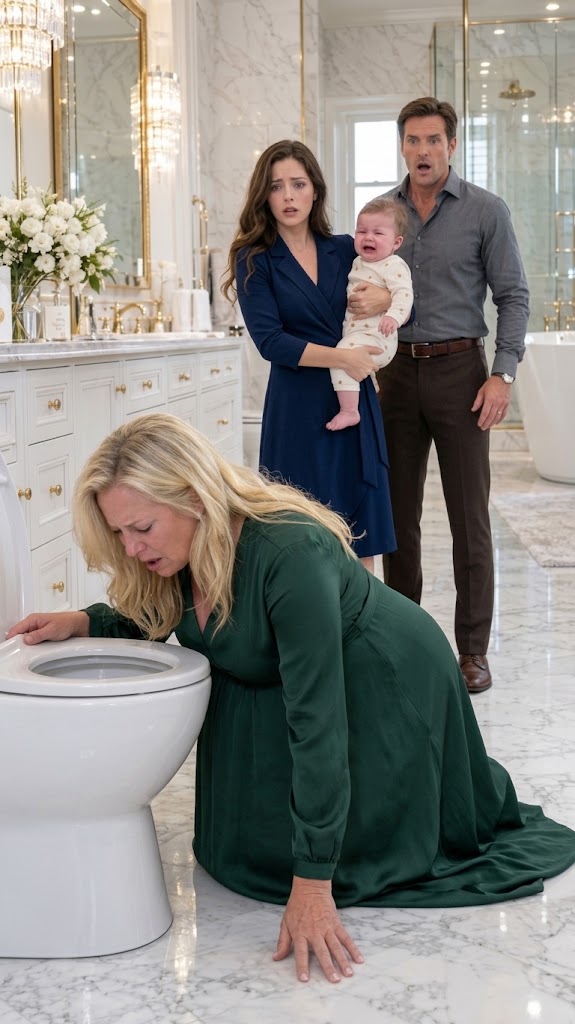
My mother came to my house to help me raise my baby. Six months later, I saw her abdomen swelling and, in my hubris, assumed the absolute worst of her character. I thought she was hiding a shameful, dirty secret. In reality, she was hiding immense, fatal pain.
And the most devastating, heartbreaking part of the entire tragedy was that even while staring into the abyss of her own death, her greatest fear wasn’t dying—it was inconveniencing my schedule.
That is exactly why there is one specific phrase I have violently erased from my family’s vocabulary forever:
“I can handle it on my own.”
No.
The people who love you are allowed to be exhausted. They are allowed to be deathly sick. They are allowed to wave a white flag and ask for help. And they absolutely deserve to be cared for with the exact same fierce, unwavering devotion they so freely give to the world.
Sometimes a mother won’t ask for help twice. Sometimes she won’t even ask once. Sometimes she will simply lean her tired back against a wall, clench her teeth against the pain, and wait in total silence for one of her children to stop looking at their own ambitions—and finally look at her.
Like and share this post if you find it interesting.