Chapter 1: The Architecture of Humiliation
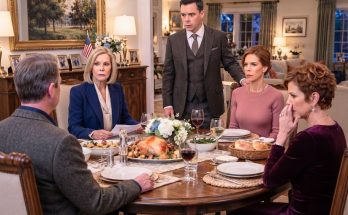
The server—a polished young man whose brass name tag read Julian—lowered a staggering eighty-dollar tower of iced oysters and cracked crab onto the white linen. Sputtering sparkler candles erupted from the center of the crushed ice, casting dancing shadows across the awestruck faces of my six-year-old nieces. Beside me, my eight-year-old son, Tommy, sat in silence. His small fingers hovered over the edge of a laminated children’s placemat he had been explicitly instructed not to touch.
“Order something cheap for your kids, Brian. We are certainly not covering them,” my father, Harold, announced. His baritone voice sliced through the ambient hum of The Azure Room, carrying just far enough to turn the heads of the affluent diners at the adjacent tables.
Across from me, my stepmother, Patricia, offered a smile carved from absolute ice. She delicately adjusted the silk napkin on her lap, a masterclass in composed cruelty. My sister, Amanda, suddenly found the crimson depths of her Pinot Noir utterly fascinating, refusing to meet my eye. I felt the physical weight of Tommy’s disappointment. His small shoulders slumped as he watched his cousins, Sophie and Grace, squeal with delight at the pyrotechnic display of their appetizer. In real-time, beneath the warm, amber glow of the restaurant’s crystal chandeliers, I was watching my son be publicly diminished.
I never envisioned myself as the designated failure of the family, yet here I was at thirty-two. I felt less like a grown man and more like a reprimanded teenager who had missed curfew. The ink on my divorce papers from Jenny had dried eight months ago, a legal formality that had uprooted Tommy and me, depositing us back in Cedar Falls, Minnesota. It was a retreat to a hometown where the toxic familial hierarchies I thought I had outgrown were suddenly, violently relevant again.
Dad had married Patricia three years after my mother succumbed to breast cancer. The tectonic plates of our family had shifted violently during that transition, but Amanda seemed to surf the tremors far better than I did. Perhaps her survival was rooted in her own past struggles; she had clawed her way through single motherhood until she married Marcus, a highly lucrative orthodontist, two years prior. Practically overnight, she traded a life of coupon-clipping for the leather interior of a brand-new BMW. Concurrently, my father’s assessment of her underwent a miraculous transformation. Where he once lamented her reckless choices, he now weaponized her newfound wealth, bragging to anyone within earshot about her spectacular “success.”
I, on the other hand, was the regional manager for Midwest Supply & Logistics, earning a respectable, albeit unglamorous, seventy-five thousand dollars a year. It wasn’t the kind of money that bought vacation homes, but it was honest. It kept a roof over Tommy’s head and, I mistakenly believed, afforded me a modicum of dignity. That illusion was currently dissolving in the smoke of my nieces’ sparkler candles.
This dinner had been initiated by Dad himself. Two weeks ago, Tommy had crushed his very first home run in Little League. I had proudly relayed the news over a Sunday phone call, and Dad had suggested we commemorate the milestone at The Azure Room—an establishment where a bowl of soup cost more than a tank of gas. I should have recognized the tactical error of agreeing to such an opulent venue, but a foolish, hopeful part of me believed he genuinely wanted to crown his grandson a champion.
The initial tremor of warning had vibrated through my phone that afternoon.
“Just a heads up, son,” Dad’s voice had crackled through the speaker, as casual as if he were discussing the humidity. “Patricia and I will be taking care of our own tab tonight. You’ll need to handle yourself and Tommy. Just want to keep the accounting clean when the waiter comes around.”
A cold knot had formed in my gut, but I had swallowed my pride. “Sure, Dad. I can handle our end. But since it’s supposed to be a celebration for Tommy, maybe we could just split the whole thing evenly?”
“You draw your own salary now, Brian. It’s high time you learned to carry your own weight instead of looking for subsidies.”
That conversation had left a metallic taste in my mouth, but I had rationalized it as a clumsy attempt at fatherly tough love. Sitting here now, under the judgmental glare of the chandeliers, the truth crystallized. That phone call wasn’t a lesson in fiscal responsibility; it was the prologue to tonight’s main event.
When Tommy and I had arrived at the restaurant, Amanda’s clan was already entrenched in a circular booth. The twins were draped in matching imported silk dresses that likely cost more than my monthly car payment. Amanda was dripping in delicate gold chains that caught the light with every nervous shift of her posture. Marcus had been conveniently detained by a dental emergency, leaving my sister to navigate the marital minefield alone.
“Uncle Brian!” Sophie and Grace had chanted as we approached. Their affection for Tommy was pure, which only made the ensuing psychological warfare more agonizing to endure.
“Hey there, you two,” I had smiled, rustling their carefully styled hair. Tommy had lingered behind my leg, suddenly shy, still calibrating to the overwhelming presence of his wealthy cousins after months of living hours away.
Patricia had risen to deliver a greeting that possessed all the warmth of a corporate merger. “Brian. You look… adequately rested. And Tommy, goodness, you’re sprouting.” Her tone was that specific, coated octave reserved for interacting with unruly toddlers or exasperating service workers—saccharine on the surface, entirely venomous underneath.
Dad had clapped my shoulder, his grip tightening just a fraction past the point of affection. “There he is. Ready to celebrate our little slugger’s big day.” His eyes, however, lacked any trace of celebratory warmth. They held the same rigid, calculating glint he used when negotiating lumber contracts.
Now, the restaurant hummed with weekend vitality. Laughter cascaded from nearby tables, glasses clinked in toasts, and under any other set of circumstances, it would have been a magical evening. But as we had settled in, I caught Patricia whispering a frantic, hushed directive to Amanda. My sister’s eyes had darted toward me, wide and apologetic, before dropping to her lap.
“Can I get the big steak, just like Grandpa?” Tommy asked, his voice a quiet chime of innocence, pointing a small finger at the dry-aged ribeye section of the leather-bound menu.
Before the words fully left my mouth, Dad’s voice snapped across the linens like a whip. “There are plenty of suitable items on the children’s flyer, sport. Let’s not get ahead of ourselves.”
Tommy’s bright eyes dimmed instantly. He nodded, retracting his hand, and picked up the paper menu featuring a cartoon octopus. A spark of pure, unadulterated rage ignited at the base of my throat, but I clamped my jaw shut. I couldn’t make a scene. Not on his night.
And then Julian arrived with the absurd seafood towers, and Dad issued his decree about “ordering cheap.”
The smoke from the extinguished sparklers drifted toward the ceiling, hanging in the air like mocking question marks. Julian, sensing the sudden drop in atmospheric pressure at our table, shifted his weight uncomfortably. “Good evening, everyone. Can I begin with some beverage service?” His cheerful efficiency was a thin shield against the palpable familial toxicity.
Patricia leaned forward, her eyes glittering with theatrical delight. “Oh, we are in a festive mood tonight! I’d love to peruse your reserve wine list. Something truly spectacular to mark the occasion.” She gestured grandly toward the twins, who were busy dissecting a lobster claw.
“Certainly, ma’am. And for the young champions?” Julian smiled warmly at all three children, offering a momentary reprieve of equality.
“The girls will have the imported sparkling cider,” Amanda murmured. “The one in the glass bottle, please.”
Tommy looked up at me, a desperate hope rekindling in his gaze. “Dad? Can I have the sparkling cider too?”
Patricia’s voice sliced through the space between us before I could draw breath. “Oh, sweetheart, I’m quite certain your father is keeping to a strict budget tonight. A tap water or a generic cola will do just fine, won’t it?”
The condescension was so thick it practically dripped onto the tablecloth. My fingernails bit into the palms of my hands.
“Tommy will have whatever he desires,” I stated, my voice dangerously low, entirely devoid of inflection. “The sparkling cider sounds excellent. Bring him a glass.”
Patricia’s lips thinned into a razor-sharp line for a fraction of a second before the artificial smile snapped back into place. “Well. How terribly indulgent.”
Once Julian vanished with our drink orders, Patricia initiated a masterclass in psychological warfare. “Amanda, darling, you absolutely must order the Chilean sea bass. It’s flown in fresh. Harold, do you recall that divine little bistro we found in Monaco? The ambiance here is so remarkably similar.”
Dad grunted his assent, willfully blind to the blood sport his wife was playing. Amanda shifted, her discomfort radiating in waves. “Maybe we should just order the standard entrees,” she offered weakly. “We’re really just here for Tommy’s baseball game.”
“Nonsense!” Patricia trilled, waving a manicured hand. “We must celebrate properly. You deserve the finest things, Amanda, especially after all the hardships you’ve endured.”
The implication hung in the air, a toxic invisible gas. Amanda had suffered, therefore she deserved luxury. I, apparently, was merely a peasant crashing the royal banquet.
When the menus were collected, the disparity became a physical monument on the table. Patricia and Dad ordered cuts of meat that rivaled my utility bills. Amanda, bullied into compliance, ordered the filet. The twins were granted the “Premium Children’s Experience”—a thirty-dollar extravaganza featuring organic sides and miniature chocolate fondues.
“And what sounds good to you, buddy?” I asked Tommy, shielding him from my own boiling anger.
He studied his paper placemat, tracing the cartoon octopus with a trembling finger. “Could I… could I maybe just have the chicken fingers? But the normal ones. Not the big size.”
My heart fractured. At eight years old, my son was already learning the tragic art of minimizing his own existence to avoid triggering the displeasure of the adults in the room.
“You can have the biggest size they make,” I told him fiercely.
“Jake,” Patricia interrupted, flagging the waiter down. “For the little boy, just the basic grilled cheese. Children’s palates are so unrefined anyway. Best not to waste good food.”
My blood pressure spiked, a roaring sound filling my ears. She had just countermanded me, overriding a father’s authority over his own son’s meal, reducing Tommy to a second-class citizen.
“My son,” I said, locking eyes with Patricia, the pleasantry entirely stripped from my tone, “will have the large chicken tenders. With a double order of fries.”
Patricia’s jaw clenched. “If you insist on overfeeding him, Brian.”
The rest of the meal was a slow-motion execution. The adults dined on culinary masterpieces; the twins feasted on organic fruit sculptures and prime cuts. Tommy sat quietly, pushing processed chicken around a plain white plate, his joy extinguished. When Patricia casually brought up a weekend rental at a luxury lakehouse, actively inviting Amanda and the twins while deliberately looking right past me and Tommy, the message was unmistakable. We were being systematically excised from the family narrative.
When the check arrived, Dad meticulously calculated the bill down to the penny, separating our meager forty-five dollars from their hundreds, demanding I pay my share with the cold precision of a debt collector. I dropped a fifty-dollar bill on the table, took my son by the hand, and walked out without waiting for dessert.
As I strapped Tommy into the backseat of my truck, his small voice echoed in the dark cabin. “Dad? Next time, can we just go to Chuck E. Cheese? People don’t get mad there.”
I gripped the steering wheel until my knuckles turned white. “Yeah, buddy. We sure can.”
My phone vibrated in my pocket as I pulled out of the parking lot. It was a text from Amanda.
Brian, I am so sorry. But that wasn’t just about dinner. I overheard Patricia talking to Dad before you arrived. They are selling the construction company. Patricia wants the cash. They’re signing the papers this week.
I slammed on the brakes at a yellow light, the tires screeching against the asphalt. The humiliation of the dinner instantly evaporated, replaced by a chilling realization. This wasn’t just about excluding us from family vacations. Patricia was moving to liquidate the family legacy, erasing any foothold I might ever have in my father’s world. The war hadn’t just begun; I was already losing.