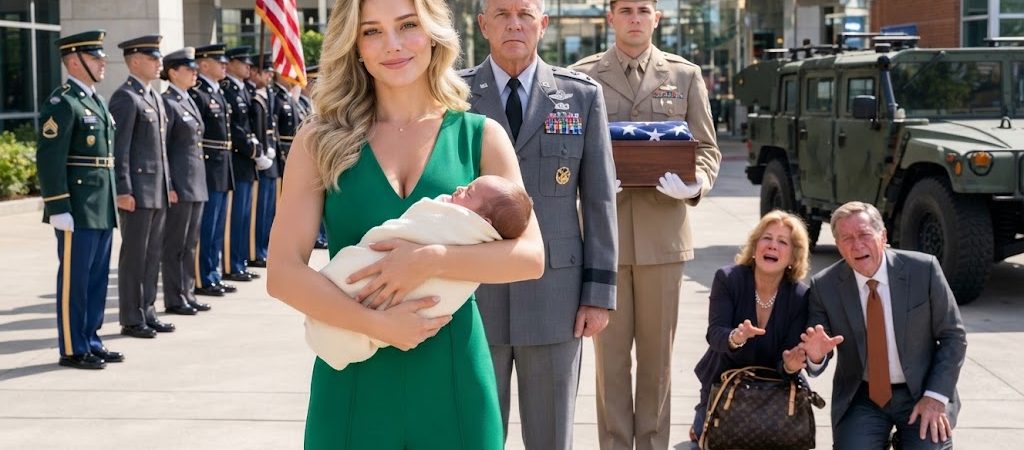
Chapter 4: The Fraud and the Fallout
The silence that followed was absolute. It was the vacuum of space.
I sat immobilized in my hospital bed, clutching my newborn daughter, watching the reality of the situation physically dismantle the man who raised me. I watched the color drain from Walter’s face in real-time, leaving his skin a sickly, mottled grey. Suddenly, the expensive wool coat looked absurdly large on his frame, as if the man inside it had rapidly shrunk.
“I… I was only trying to help,” Walter stammered. The words were reedy, desperate, and poorly rehearsed. He held his hands up, palms out, a gesture of surrender. “I was trying to manage the logistics! Karen has never handled real money. She’s grieving. Someone needed to step in and secure the capital before she made a mistake.”
“Nobody asked you to step in,” I said.
My voice sliced through the room. It wasn’t frail anymore. The shock had burned off, leaving behind a cold, blinding clarity. I shifted up against the pillows, ignoring the searing ache in my spine.
“You stood there twenty minutes ago,” I said, pointing a shaking finger at him, “and told me I was not your responsibility. You told me to take my baby and get out. You cannot have it both ways, Dad. You don’t get to disown me as a burden and then try to steal my dead husband’s blood money to pad your retirement account in the exact same afternoon.”
Diane opened her mouth. Her jaw worked soundlessly for a moment. For the first time in my twenty-eight years of existence, my mother—a woman who possessed a polished, cruel retort for every occasion—had absolutely nothing to say.
Colonel Reeves turned his broad shoulders toward the two officers.
“Gentlemen,” he said, his tone turning to pure gravel. “I will let you finish this interrogation off-post. Mrs. Nelson has been through enough over the last seventy-two hours. She does not need to be a part of this garbage.”
He gestured toward the door. The MPs stepped forward, flanking my parents like towering walls of green canvas and brass.
Reeves turned his back on them and looked at me. When he spoke again, the military commander vanished. The voice that emerged was infinitely gentler—it was the exhausted, compassionate voice of a man who had sat in countless living rooms, drinking bad coffee, holding the hands of shattered widows more times than he cared to remember.
“Karen,” he said softly. “Sergeant Nelson was one of the finest men I ever had the privilege of leading. He talked about you constantly. He talked about this little girl before she even had a name. I am not leaving this hospital until I know for an absolute fact that you have somewhere safe to sleep tonight, and someone to carry your damn bags.”
I looked down at the canvas duffel bag Walter had unceremoniously dropped by my feet like a sack of garbage. Then I looked down at Ren. She was still sleeping, her breathing rhythmic and soft, utterly innocent of the sheer, profound ugliness that had just transpired over her head.
A wave of terrifying reality crashed over me. I had an apartment, but the rent was due. I had a car, but no idea how to safely put my baby in it. I was bleeding, I was exhausted, and I was entirely alone.
“I’ll… I’ll manage,” I whispered to the empty air, the brave front finally beginning to crack. “I have to.”
Colonel Reeves stepped closer to the bed and gently shook his head.
“No, you won’t,” he said.