PART 4 — THE SECOND CHRISTMAS
Patricia’s voice was cold.
“You made Claire homeless.”
I almost laughed.
“Claire has a new apartment.”
“She lost the house.”
“She never owned it.”
“You knew what she believed.”
“Yes.”
“And you let her live there for five years.”
“Yes.”
“So this was planned?”
“No.”
“What are you trying to prove?”
“Nothing.”
Patricia scoffed.
“You think you’re better than Claire.”
“No.”
“You ruined Christmas.”
I leaned against the kitchen counter.
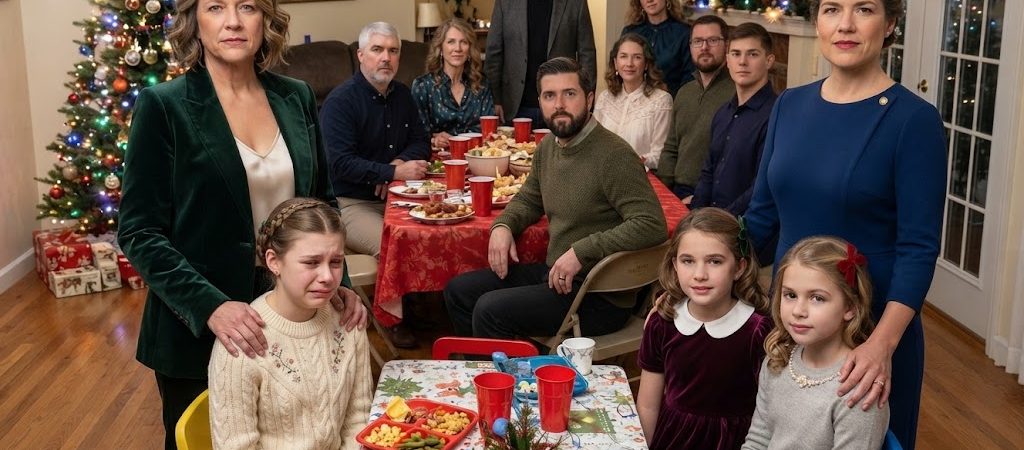
“Patricia, you ruined Christmas when you mocked an eleven-year-old child for wearing a twenty-two-dollar dress.”
Silence.
Then she said, “It was a joke.”
“No.”
“It was.”
“No. A joke is something everyone can laugh at.”
I hung up.
But the call bothered me.
Not because of Patricia.
Because I knew the rest of the family had only heard Claire’s version.
So I did something I’d never done before.
I told the truth.
I sent one message to the family group chat.
It contained three photographs.
The deed.
The occupancy agreement.
The letter Claire had signed five years earlier.
Underneath, I wrote:
I did not take Claire’s house. I never gave it to her. I allowed her to live there because Mom asked me to help her until she could stand on her own. That arrangement ended after Christmas because I could no longer watch my daughter be humiliated in a home I owned. I’m not asking anyone to choose sides. I am asking everyone to stop repeating a story that isn’t true.
Then I put my phone down.
Within minutes, the group chat exploded.
Some people apologized.
Some said they hadn’t known.
Some attacked me anyway.
A few stopped speaking to me.
Oddly enough, I felt lighter.
The truth had finally been said.
A week later, something happened that I never expected.
Ryan, Claire’s oldest son, came to my house.
He was fourteen.
He stood at the door with his hands in his pockets.
“Can I talk to you?”
“Of course.”
He came inside.
“I wanted to say sorry.”
“For what?”
He looked down.
“For laughing at Emma.”
I nodded.
“You were not the only one.”
“I know.”
He looked embarrassed.
“Mom told me afterward that I shouldn’t have.”
I sat across from him.
“Do you know why it was wrong?”
“Because she was eleven.”
“That too.”
He thought.
“Because we were doing it to make ourselves feel important.”
I smiled faintly.
“That’s exactly right.”
He nodded.
Then he pulled a folded piece of paper from his pocket.
“It’s for Emma.”
I opened it.
It was a drawing.
A little girl in a green dress stood under a Christmas tree.
Above her was written:
Sorry, Emma. You looked like a princess.
I gave it to Emma that evening.
She smiled.
Then she asked, “Is Ryan still mad at me?”
“No.”
“Good.”
She folded the drawing carefully and placed it beside her bed.
Months passed.
Claire found work.
She moved into a smaller home.
She began paying her bills herself.
She visited Emma occasionally.
At first, the visits were awkward.
Then they became less awkward.
Claire apologized more than once.
Not with grand speeches.
With actions.
One Saturday, she brought Emma a small gift.
It was a green dress.
Emma looked at the price tag.
Then she looked at Claire.
“Aunt Claire.”
Claire smiled nervously.
“I know.”
Emma touched the fabric.
“It’s pretty.”
“Is it too much?”
Emma shook her head.
“No.”
Claire exhaled.
Then Emma asked the question neither of us expected.
“Can you stay for dinner?”
Claire looked at me.
I nodded.
That evening, the three of us ate at my table.
No twenty-two guests.
No fancy silverware.
No judgment.
Just soup, bread, and roasted vegetables.
Emma told Claire about a science project.
Claire actually listened.
Then she said something quietly.
“I miss that house.”
Emma looked at her.
“You can visit.”
Claire smiled.
“Maybe.”
I watched them.
And I realized that sometimes the strongest boundary wasn’t permanent punishment.
It was giving someone a chance to become worthy of trust again.
But the story didn’t end there.
Because six months later, a letter arrived from an attorney.
It wasn’t about Claire.
It wasn’t from Patricia.
It was about the house.
The property had a hidden problem.
A problem I never knew existed.
A forgotten clause in the original purchase records could potentially affect ownership.
I called Daniel immediately.
He reviewed the documents.
Then he looked at me.
“Your sister wasn’t the only person who thought that house belonged to your mother.”
“Who else?”
He slid an old document across the desk.
“Your mother.”
I frowned.
“What does that mean?”
Daniel pointed to a handwritten note attached to the original closing papers.
It had my mother’s handwriting.
And seven words made my stomach drop.
The house was never meant to be mine alone.