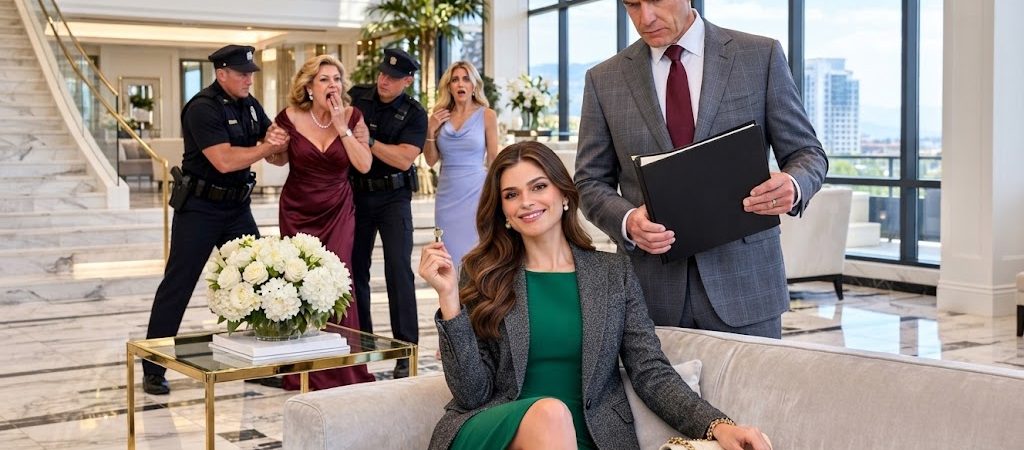
Chapter 5: The Ejectment
I parked my car in the gravel driveway of the farmhouse at 1:45 p.m. The tires crunched loudly, announcing my arrival. Arthur Finley’s pristine sedan was already parked near the road, alongside a white county sheriff’s cruiser.
I stepped out into the damp April air. The front door of the house was propped wide open.
My mother and Curt were hauling the last of their existence out of my home. Curt was carrying a heavy cardboard box labeled Kitchen Décor. He moved with a quiet, terrifying efficiency, his head bowed, his eyes fixed firmly on the ground. He moved like a man who fully understood that he had backed the wrong horse, and that there was absolutely zero leverage left to negotiate.
Yvonne emerged a moment later, dragging a large, rolling suitcase down the porch steps. She looked haggard. The glossy veneer of the successful broker had evaporated, leaving behind a woman whose posture had crumbled under the weight of her own hubris.
Neither of them made eye contact with me. I stood perfectly still in the gravel near the front bumper of my car, my hands shoved deep into the pockets of my coat, my fingers curled tightly around Nana Evelyn’s heavy brass key.
Yvonne loaded the suitcase into the bed of Curt’s idling pickup truck. She slammed the tailgate shut. The metal clanged sharply in the quiet yard. Then, she stopped. She turned around and stared at the front of the farmhouse. She looked at the peeling white paint on the porch columns, the towering magnolia tree, the yellow light filtering through the bay window.
“This is not what Evelyn would have wanted,” Yvonne said.
Her voice wasn’t loud. It was a raspy, venomous whisper. She wasn’t speaking to me, exactly. She was speaking to the universe, to the ghosts, perhaps to the house itself, trying one last, desperate time to spin a narrative where she was the victim.
I didn’t blink. I didn’t flinch. I didn’t offer her the satisfaction of a response. I just stared at her until the silence became unbearable.
She broke first. She yanked open the passenger side door of the truck and climbed in, slamming it shut behind her. Curt put the truck in gear, the tires spinning slightly in the gravel, before lurching forward.
I stood rooted to the spot and watched the red taillights of the truck shrink as it rolled down Mill Creek Road. I watched until the vehicle turned at the stop sign a mile away, disappearing behind the tree line.
A uniformed sheriff’s deputy stepped off the porch and walked toward me. He reached into his tactical vest and pulled out a keyring holding two shiny, freshly cut silver keys.
“Property is secure, Ms. Summers,” he said, his voice carrying the bored, professional detachment of a man who oversaw family tragedies every day of the week. He held out the keys. “Locks were changed an hour ago. She’s gone.”
I took the keys. “Thank you, officer.”
He nodded, walked to his cruiser, and drove away. Arthur Finley gave me a slow, respectful nod from his car window before pulling out, leaving me entirely alone.
I walked up the porch steps. The wood groaned under my boots. I slid the new silver key into the deadbolt. It turned with a satisfying, heavy click.
I pushed the heavy door open and stepped over the threshold.
The house was utterly silent, yet it felt vibrantly alive. The air inside smelled of Murphy’s Oil Soap, aged pine, and the faint, unmistakable lavender spray Nana Evelyn always kept hoarded in the linen closet. Beneath that, woven into the very drywall, was the ghostly scent of dried rosemary and thyme she used to hang from the kitchen rafters every autumn.
I walked slowly through the rooms. The floors were exactly as I remembered them—the wide, uneven pine planks that bore the scars of a century. In the hallway, the pale yellow floral wallpaper was still stubbornly clinging to the plaster, faded and peeling slightly at the seam near the window where the brutal afternoon sun had battered it for forty years.
I walked into the kitchen and stood at the sink, resting my hands on the porcelain rim. I looked out the window over the sprawling back field. It was the exact view she had commanded for four decades. Off to the side, the cedar tomato beds were already bursting with chaotic, brilliant green sprouts. She had meticulously dried those seeds, labeled them, and buried them in the dirt, and the earth had brought them back to life without any of us doing a single thing to earn them.
My phone vibrated in my coat pocket. I pulled it out. The screen was littered with notifications.
Two missed calls from Yvonne. Five frantic text messages from Presley.
I opened the text thread. The final message from my sister read: Bridget, please. I just want you to know that I didn’t think any of this would go this far. I didn’t know what she was doing. Please don’t cut me out.
I read the words twice, scanning them for a pulse of genuine accountability. I found none. I locked the screen and placed the phone face down on the butcher block counter, burying it.
Then, I thought of the email. The one that had arrived in my inbox hours ago, sitting like a landmine waiting to be detonated.