PART 1 — THE GIFT ON THE PORCH
At sixty-eight, I had learned that some wounds did not come from strangers.
The deepest ones came from people whose diapers you had changed, whose fevers you had stayed awake through, and whose first steps you had celebrated as though the whole world had been waiting for them.
My son, Daniel, was one of those people.
For years, I had told myself that no matter how distant he became, no matter how busy he claimed to be, no matter how rarely he called, he was still my son.
And then there was my grandson, Noah.
Noah was turning six.
That mattered to me.
He had inherited his father’s dark hair and stubborn chin, but he had my habit of tilting his head when he was thinking. Every time he did it, I saw a tiny piece of myself in him.
I had bought his birthday gift three weeks earlier.
It wasn’t extravagant.
It was a small wooden train set with hand-painted cars, the kind of toy that required patience and imagination. I had spent nearly an hour choosing it because Noah once told me he wanted to “build a whole town where nobody fights.”
I wrapped it myself.
Then I wrote his name on the card.
For Noah — Build something wonderful. Love, Grandma.
On the afternoon of his birthday, I drove to Daniel’s house.
Or what I had always thought of as Daniel’s house.
It was the same two-story colonial on Willow Creek Lane where my late husband, Robert, and I had raised Daniel. White siding. Dark green shutters. The old maple tree near the driveway that Robert had planted when Daniel was four.
The house had memories in every corner.
Daniel had moved back into it seven years earlier after his divorce from his first wife.
He had told me it was temporary.
“Just until I get back on my feet, Mom.”
I believed him.
For the first few years, he paid me small amounts toward expenses, though never enough to cover the mortgage, taxes, or repairs.
Eventually, even those payments stopped.
But I never pressured him.
It was his childhood home.
I thought keeping it in the family was more important than money.
That day, when I arrived, Daniel’s SUV wasn’t there.
Neither was his wife’s car.
I knocked.
No answer.
I knocked again.
Still nothing.
I called Daniel.
Straight to voicemail.
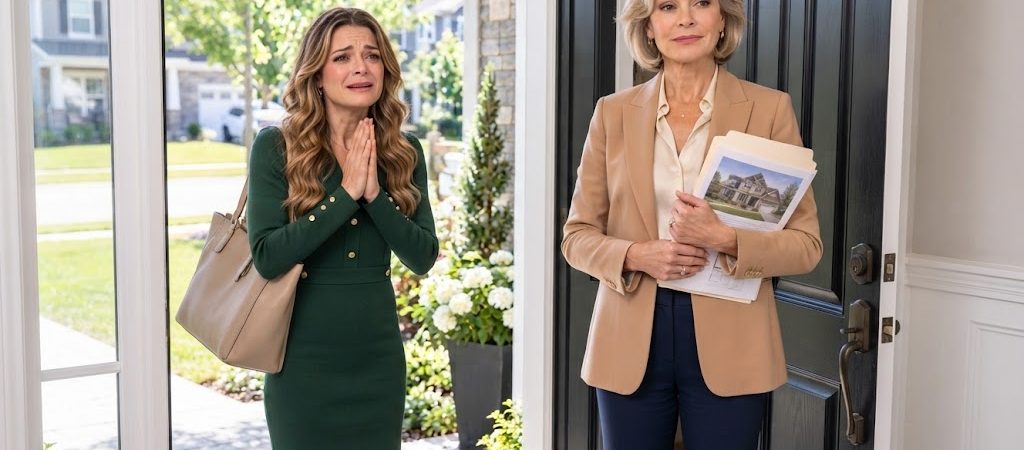
So I carried the gift to the front porch and placed it beside the door.
I had barely reached my car when my phone buzzed.
A text from Daniel.
Why are you here?
I stared at it.
I typed:
I brought Noah his birthday gift. Nobody answered, so I left it by the door. Tell him Grandma loves him.
His reply came almost instantly.
Don’t come here anymore.
My fingers froze.
Then another message appeared.
This is MY home, not yours. Stop showing up whenever you feel like it.
I read it three times.
My stomach tightened.
I wrote back:
Daniel, I wasn’t trying to intrude. I just wanted to see Noah.
The three dots appeared.
Then disappeared.
Then appeared again.
Finally:
You need to understand boundaries. You don’t live here. You don’t own this place. This is my home.
I almost dropped the phone.
That sentence was what broke something inside me.
Not because he said I didn’t live there.
Of course I didn’t.
But because of the last part.
You don’t own this place.
I sat in my car and stared at the house.
The house Robert and I had bought twenty-nine years earlier.
The house where Daniel had learned to ride a bicycle.
The house where we had put blue stars on his bedroom ceiling because he was afraid of the dark.
The house I had paid for after Robert died.
I slowly opened the glove compartment.
Inside was a folder.
Yellowed documents.
Property records.
Tax receipts.
Insurance papers.
A copy of a deed.
I had carried them around for months because I had been preparing to update my estate plan.
I opened the deed.
There it was.
Owner: Margaret Ellis.
My name.
I whispered to the empty car, “Oh, Daniel.”
You forgot.
You forgot one very important detail.
For years, I had protected him from the consequences of his choices.
But now he had just reminded me that legally, he was not the owner of my house.
He was my son.
He was the father of my grandson.
But he was not the owner of that property.
And for the first time in years, I decided I would stop confusing love with permission.
That evening, I called my attorney, Helen Carter.
She had handled Robert’s estate and had warned me more than once that Daniel was treating the property as though it belonged to him.
When she answered, I said, “Helen, I think it’s time we discuss the house.”
There was a pause.
Then she said quietly, “I’ve been wondering when you’d say that.”
The next morning, Helen came to my kitchen with a leather folder.
She placed it on the table.
“Margaret,” she said, “the house is still legally yours. Completely.”
I looked down.
“What about Daniel?”
“He has no ownership interest.”
“But he’s lived there for seven years.”
“Living there does not make him the owner.”
I swallowed.
“He’ll say I gave it to him.”
“Do you have a signed transfer?”
“No.”
“Will?”
“No.”
“Gift deed?”
“No.”
“Trust assignment?”
“No.”
Helen leaned back.
“Then he owns nothing.”
The room suddenly felt very quiet.
I remembered all the conversations Daniel had had with me over the years.
One day, Mom, this house will be mine.
I’m taking care of it, so what’s the difference?
You don’t need to worry about the paperwork.
At the time, I had thought he meant he was building a future.
Now I realized he had been building an assumption.
Helen continued.
“There is something else.”
She opened another document.
“Your estate planning instructions from three years ago state that Daniel inherits the house only after your death, provided certain conditions are met.”
I frowned.
“What conditions?”
“He must maintain the property, remain current on all agreed expenses, and he cannot sell, transfer, or encumber it before your death.”
I stared at her.
“Has he done that?”
Helen gave me a long look.
“No.”
A cold realization settled over me.
Daniel hadn’t simply forgotten who owned the house.
He had been behaving as though ownership was inevitable.
Perhaps he’d already imagined the house sold.
Perhaps he’d already counted its value as his.
Perhaps my kindness had become part of his financial plan.
“What do I do?” I asked.
Helen closed the folder.
“First, we document everything.”
“And then?”
“Then you decide whether you want your son to continue living there.”
I looked out the window.
For six years, I had thought of that house as Daniel’s home.
Maybe that was my mistake.
A home wasn’t simply where someone lived.
It was also the place where they chose to respect the person who had made it possible for them to stay.
That night, I didn’t call Daniel.
Instead, I called Noah.
He answered on the second ring.
“Grandma!”
His voice instantly softened the anger in my chest.
“Happy birthday, sweetheart.”
“Thank you for my present!”
“You got it?”
“Yes! Daddy said I couldn’t open it until he got home, but I peeked.”
I laughed.
“What did you see?”
“A train.”
“I hope you like it.”
“I love it!”
Then his voice became small.
“Grandma?”
“Yes?”
“Are you mad at Daddy?”
I closed my eyes.
“No, honey.”
There was a long silence.
Then Noah asked, “Are you coming back?”
I didn’t know how to answer.
So I told him the truth.
“I’m not sure.”
He whispered, “I want you to.”
After we hung up, I cried.
Not because Daniel had insulted me.
Not even because he had claimed my house as his own.
I cried because a six-year-old boy had just become caught in a fight he didn’t understand.
The next morning, Helen sent Daniel a formal letter.
It was polite.
It was factual.
And it changed everything.
The property remains the sole legal property of Margaret Ellis.
Any continued occupancy is subject to her permission.
Any unauthorized attempt to sell, refinance, transfer, or alter the title will be challenged immediately.
Daniel didn’t answer.
For two days.
Then, on the third day, my phone rang.
It was him.
And his first sentence was not an apology.
It was:
“Mom, what the hell did you do?”
I knew then.
The real fight had begun.