PART 2 — THE HOUSE HE THOUGHT WAS HIS
Daniel arrived at my house twenty minutes later.
He came alone.
He slammed the car door and marched up the walkway as though he owned that property too.
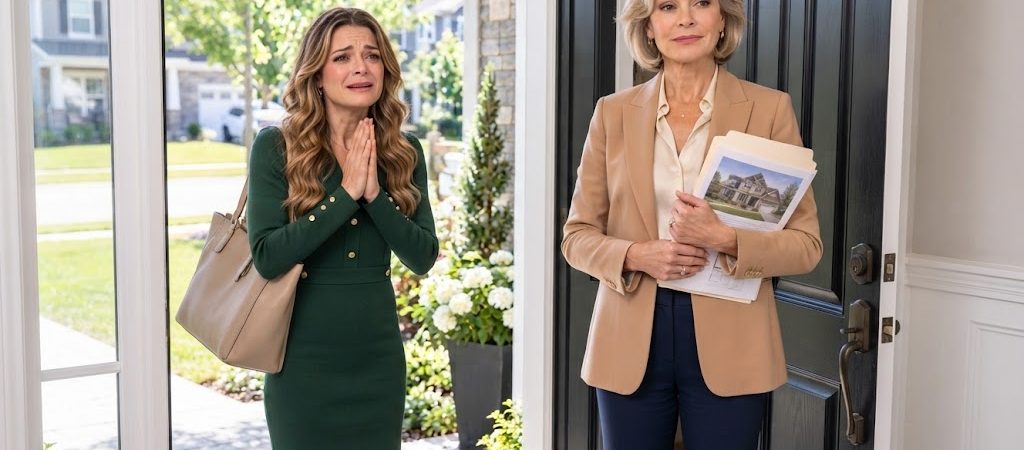
I opened the door before he could knock.
He stood there holding the attorney’s letter.
“You sent this to me?”
“Yes.”
His face was red.
“You threatened to evict me.”
“I asked you to acknowledge the legal ownership of the property.”
“You know what this house means to me.”
“I do.”
“You raised me there.”
“I did.”
“You gave me that house.”
“No.”
He stopped.
“What?”
“I gave you permission to live there.”
His expression changed.
Not much.
But enough.
“That’s not how you always talked about it.”
“I should have been more careful with my words.”
He laughed bitterly.
“So that’s it? You’re taking my house?”
“I am not taking your house.”
“You are.”
“Daniel, it was never your house.”
He stepped closer.
“What kind of mother does this to her own son?”
I looked at him for a long moment.
“The kind whose son tells her she has no right to visit her grandson because she doesn’t own the house.”
His eyes narrowed.
“This is about the birthday?”
“No.”
“It’s obviously about the birthday.”
“It’s about respect.”
He shook the papers.
“This letter says I could be removed from the property.”
“Yes.”
“You’d really do that?”
“I don’t want to.”
“Then withdraw it.”
I shook my head.
“I won’t.”
He stared at me.
For the first time, I could see fear beneath his anger.
“What do you want?”
I answered honestly.
“I want you to understand that living in my house does not make you its owner.”
He crossed his arms.
“Fine. What are your terms?”
“I need you to sign a written occupancy agreement. You will be responsible for the property taxes going forward. You will maintain insurance. You will make the monthly payment you agreed to years ago. And you will stop telling people that the house belongs to you.”
He stared at me.
“You’ve become very controlling.”
“No. I’ve become clear.”
His jaw tightened.
“And what happens if I refuse?”
“Then Helen handles it.”
He walked away without another word.
I thought that was the end of it.
I was wrong.
Two days later, I received a call from the county records office.
A woman explained that someone had recently attempted to obtain a copy of the property’s title documents using my address and Daniel’s name.
The request itself wasn’t illegal.
But it confirmed what Helen had suspected.
Daniel was trying to understand exactly how much control he had.
That evening, Helen came over again.
She looked concerned.
“Margaret, there’s something you need to know.”
“What?”
“Daniel contacted a lender.”
My heart sank.
“What for?”
“They were apparently discussing the possibility of using the property as collateral.”
I went cold.
“But he can’t.”
“Correct.”
“Could he have done it without me?”
“Not legally.”
“But he tried.”
“Yes.”
I stared at the papers on the table.
Suddenly, all the old memories looked different.
The sudden kitchen remodel Daniel had started.
The expensive new furniture.
The contractor he had hired without asking me.
The time he told me he wanted to “unlock the home’s value.”
I had assumed he meant someday.
Maybe he meant now.
Helen said, “There’s more.”
She slid a bank envelope toward me.
“Your property insurance was recently changed.”
I opened it.
The named insured had been altered.
My name was still listed as owner, but Daniel had added himself as an additional insured without my approval.
He had been quietly converting my house into his financial identity.
I felt sick.
“Why?” I whispered.
Helen’s answer was simple.
“Because he believed the house was already his.”
The next morning, I drove to Willow Creek Lane.
I didn’t go inside.
I stood across the street and looked at the house.
The windows glowed warmly.
A bicycle lay in the driveway.
Noah’s sneakers were beside the porch.
It should have looked peaceful.
Instead, it looked like a boundary I had allowed someone else to cross.
Then I saw Daniel’s wife, Erica, come outside.
She spotted me.
For a moment, we stared at each other.
She crossed the street.
“Margaret,” she said quietly.
“Hello, Erica.”
“Can we talk?”
We walked to a bench near the sidewalk.
She looked nervous.
“Daniel is furious.”
“I know.”
“He thinks you’re trying to destroy our family.”
“I don’t want to destroy anything.”
She lowered her voice.
“Do you know what he told me?”
“What?”
“He said the house was going to be ours eventually, so he thought it was already basically ours.”
I said nothing.
Erica looked down.
“I told him that wasn’t the same thing.”
“What did he say?”
“He said you wouldn’t live forever.”
The words hit harder than any insult.
I stared at her.
Erica immediately shook her head.
“I know. It sounded horrible. I told him so.”
“Did he mean it?”
“I don’t know.”
She looked up.
“Margaret, I’m not defending him.”
“But?”
“But I think he’s terrified.”
“Terrified of what?”
“Being poor again.”
I frowned.
“Daniel was never poor.”
Erica smiled sadly.
“That’s not how he remembers it.”
Then she told me something I had never heard before.
When Robert died, Daniel was twenty-nine.
He had been struggling with debt.
He had recently lost his job.
He had watched me sell investments, cancel vacations, refinance my own finances, and spend nearly two years repairing the financial damage left after Robert’s death.
Daniel had interpreted all of that as proof that our family could lose everything.
According to Erica, he had spent years obsessed with financial security.
“The house became a symbol,” she said. “He thinks losing it means going back to being helpless.”
I understood the fear.
But understanding wasn’t the same as excusing.
“I would have helped him,” I said.
“I know.”
“He never needed to lie.”
“I know.”
“He never needed to claim it.”
“I know.”
Erica wiped her eyes.
“There’s one more thing.”
“What?”
“He has been talking to a developer.”
My heart stopped.
“What developer?”
“He says the neighborhood is being bought up. He believes the property is worth far more than you think.”
I stood.
“Has he signed anything?”
“I don’t know.”
I called Helen immediately.
Within an hour, she had begun checking every available filing connected to the property.
Then she called.
“Margaret, you’re going to want to sit down.”
I sat.
“What happened?”
“There’s no sale contract.”
I exhaled.
“Good.”
“But there’s a draft purchase agreement.”
My stomach dropped.
“With Daniel’s name?”
“Yes.”
“How could he do that?”
“Because he represented himself as having authority to negotiate the property.”
I was silent.
“He hasn’t sold it,” Helen continued. “But he came dangerously close to creating a legal disaster.”
That afternoon, I met Daniel at a café.
He arrived late.
He looked exhausted.
I pushed the papers toward him.
“Is this your signature?”
He looked at them.
“Where did you get this?”
“Is it your signature?”
He didn’t answer.
“Daniel.”
“Yes.”
“You tried to sell my house.”
“I didn’t sell it.”
“You negotiated a sale.”
“I was exploring options.”
“You had no right.”
“I thought—”
“You knew.”
He slammed his hand on the table.
“I KNEW you were eventually going to give it to me!”
The café went silent around us.
He lowered his voice.
“You always said it would be mine.”
“I said you would inherit it.”
“You made it sound permanent.”
“I trusted you.”
He stared at me.
Then something unexpected happened.
His eyes filled with tears.
“I’m scared, Mom.”
I didn’t speak.
“I spent my whole life thinking everything could disappear.”
His voice cracked.
“I thought Dad died, then money disappeared, then my marriage fell apart, then I lost my job. The only thing that stayed was that house.”
I softened.
“Daniel.”
“I thought if I could make it mine, nobody could ever take it away.”
I reached across the table.
But he pulled his hand back.
“Don’t.”
He stood.
“I don’t need your pity.”
“I wasn’t giving you pity.”
“What were you giving me?”
“A chance.”
He looked at me.
“To what?”
“To be my son again.”
He stared at me for several seconds.
Then he walked away.
I thought he had rejected me.
But that night, something happened that changed everything.
Noah called me.
He was crying.
“Grandma?”
“What happened?”
“Daddy is packing.”
My heart lurched.
“Packing what?”
“Boxes.”
“Why?”
“I don’t know.”
“Where is your dad?”
“He keeps saying we’re leaving.”
I stood up so quickly my chair fell backward.
“Where are you?”
He gave me the address.
It was my house.
I grabbed my keys.
And for the first time in my life, I drove back to the house I legally owned, knowing I might have to decide whether my own son was welcome inside it.