Chapter 7: The Event That Actually Mattered (The Tribunal of Grace Baptist)
Denise Finch did not believe in private reconciliations.
Denise Finch believed in public ecclesiastical exoneration.
On Sunday morning, December 28th—seventy-two hours after I walked out of her dining room—she scheduled what she described to the family phone tree as a “Spiritual Restoration and Healing Conference” at 2:00 p.m. in the formal parlor of the Huber Heights house.
She had invited:
Pastor Ferris: The senior pastor of Grace Baptist Church, an earnest, seventy-year-old shepherd who had spent twenty-two years nodding along to Denise’s reports on foreign missionary allocations while eating her lemon pound cake.
Peggy and Dale Ror: Cody’s parents, who had driven back up from Cincinnati under the impression that they were attending a high-level diplomatic summit to save their son’s domestic stability.
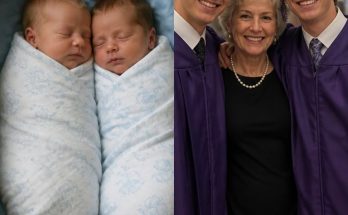
Cody and Ashley: Who arrived with the twins in two four-hundred-dollar car seats that smelled of infant spit-up and unwashed flannel.
Gary: Who sat in the corner armchair by the fake ficus tree, his hands clasped between his knees, staring at the floorboards like a prisoner awaiting a court-martial.
Denise had set the stage with liturgical care.
She had brought her high-backed captain’s chair from the dining room into the parlor, positioning it at the head of the coffee table like a magistrate’s bench. On the table sat a silver service of decaffeinated coffee, a plate of shortbread cookies, and a leather-bound King James Bible opened to the fifth chapter of Galatians.
I arrived at 1:58 p.m.
I did not bring Millie. I had left her next door at Joan Hollis’s kitchen table, eating homemade cinnamon toast and working on a five-hundred-piece jigsaw puzzle of the Oregon coastline.
I walked into the parlor wearing my winter boots and an unzipped parka.
In my left hand, I carried a manila accordion folder containing twenty-eight pages of documentary evidence. In my right hand, I carried my iPhone, which was already connected via a secure, unmuted speakerphone line to Ruth Vance’s bedside in Ocala, Florida.
“Laura,” Pastor Ferris began, standing up from the sofa with his hands outstretched, his face arranged in an expression of profound, pastoral grief. “We are so grateful you chose to join us. Your mother has shared the heavy burden your family has been carrying these past few months. We know that long separations can create… misperceptions. Resentments. But the Lord calls us to lay down our offenses at the foot of the—”
“Pastor Ferris,” I said, sitting down on the edge of the ottoman without taking off my coat. “Before you deliver the homily, we are going to perform the spore test.”
Denise let out a sharp, theatrical titter from her captain’s chair. “Still so dramatic, Laura! Always the medical terminology! Pastor, she’s been under tremendous strain in Florida—”
I opened the manila folder.
I pulled out the first eight sheets of paper—color photocopies of the lined legal pad I had taken off Denise’s refrigerator at 9:30 on the morning after Christmas while she and Ashley were at the Dayton Mall for the after-holiday clearance sales.
I slid the stack across the glass coffee table, stopping it directly in front of Pastor Ferris’s coffee cup.
“These are the nocturnal nutrition logs for Bo and Hattie Finch-Ror from October 14th through December 24th,” I announced, my voice dropping into the flat, clinical cadence of a county coroner presenting an inquest report. “There are fifty-eight recorded feeding events occurring between the hours of 1:30 a.m. and 5:15 a.m.”
Pastor Ferris blinked, picking up the top page. “I… I don’t understand.”
“Look at the column marked Provider Initials, Pastor,” I said. “Forty-three of those fifty-eight shifts are initialed MF. That stands for Millie Finch. A ten-year-old child.”
Peggy Ror sat forward on the sofa, her spectacles dropping to the bridge of her nose. “What?”
“In the last fourteen days of December,” I continued, pointing a finger at the page, “Millie handled both the 2:00 a.m. and the 5:00 a.m. shifts on eleven consecutive nights. Look at the entry for December 19th, in my mother’s handwriting at the bottom: ‘Millie, make sure you burp Hattie over the cloth. Ashley’s duvet is dry-clean only.’“
Denise stood up from her chair, her velour sleeves trembling. “That was a chore! A normal family chore! Children have chores in Christian households, Pastor!”
I reached into the folder and pulled out the second exhibit: three pink, carbon-copy notices from Wayne Local Schools, dated October 28th, November 14th, and December 8th.
I laid them beside the pastor’s saucer.
“These are attendance and academic intervention notices from Mrs. Benton, fifth-grade teacher,” I said. “Millie fell asleep at her desk six times in November. Her grade in reading comprehension dropped from a ninety-six to a seventy-one. On the signature line for the parent is my mother’s signature, Denise Finch. And in the comment section, written three times in her distinctive Sunday-school cursive: ‘Family adjustment. Mother is away. Child will improve.’“
Pastor Ferris stared at the pink slips. His round, cheerful face seemed to collapse inward, the pastoral smile vanishing behind a mask of profound, sickening comprehension.
He looked up at Denise. “Denise… did you sign these without informing Laura?”
“Laura was caring for her grandmother!” Denise shouted, her voice losing its church-organ polish and devolving into a shrill, cornered rasp. “She couldn’t be bothered with every little classroom distraction! We were managing! We were keeping this family functional while Ashley recovered!”
“You weren’t keeping the family functional, Denise,” a voice said from the coffee table.
The room went dead.
My iPhone, resting on the glass beside the shortbread plate, spoke with the dry, ancient clarity of eighty-four years of unvarnished truth.
“Ruth?” Pastor Ferris whispered, leaning toward the speaker.
“It’s Ruth, Thomas,” my grandmother said from Ocala. “On August 11th, my daughter Denise sent me a text message telling me she had arranged for Laura to come to Florida because Laura ‘needed to feel useful.’ When I offered to pay two thousand dollars a month for a licensed nursing agency, Denise texted me: ‘Don’t waste your money, Mother. Laura wants to do it.’“
A collective, sharp intake of air whistled through the parlor.
“Denise didn’t send Laura to Florida to save my hip, Thomas,” Ruth’s voice crackled through the speaker. “She sent Laura to Florida so she could take that ten-year-old child and turn her into an appliance. She did it to Laura in 1997, and she did it to Millie in 2023. She has one trick, Thomas. And it’s time you stopped eating her lemon cake and looked at the kitchen floor.”
Denise lunged for the phone. “Turn that off! That senile old woman has hated me since the day I married Gary! She’s poisoning this room!”
Peggy Ror stood up from the sofa.
She did not look at Denise. She pulled her smartphone from her handbag, unlocked the screen, and thrust it directly into her son Cody’s face.
“Cody Allen Ror,” Peggy said, her voice shaking with an authority that had nothing to do with church committees. “Look at this picture.”
Cody looked.
It was the photograph Peggy had taken at 11:04 p.m. on Thanksgiving night: Millie, standing in her oversized gray sweatshirt on an overturned plastic milk crate, reaching up to the microwave with two bottles of formula while the reflection of the dining room chandelier showed eight adults laughing over pumpkin pie in the background.
“I asked you about this in November, Cody,” Peggy whispered, tears of pure, burning humiliation spilling over her eyelashes. “And you told me it was Denise’s house. You told me you didn’t make the rules.”
She turned and looked at Ashley, who was currently curled into the corner of the sofa, sobbing into a fleece blanket with her hands over her face.
“You let a ten-year-old child get up in the middle of the night to feed your babies, Ashley?” Peggy asked, her voice cracking with disgust. “While you slept in the master bedroom?”
“I was so tired!” Ashley wailed, her face red and distorted. “Mom told me Millie loved it! Mom told me she raised Laura that way and Laura was fine! She said it was how our family worked!”
“It wasn’t how the family worked, Ashley,” I said, standing up from the ottoman and looking down at my sister. “It was how the machinery worked. And the machine just broke.”
Cody stood up. He did not look at Denise. He did not look at his wife. He walked over to the two infant carriers, picked one up in each hand, and looked at his mother.
“Get your coat, Mom,” Cody said, his voice completely flat. “We’re going to Cincinnati.”
“Cody, no!” Ashley screamed, scrambling off the sofa on her knees, reaching for his jacket. “You can’t take the babies! Mom! Tell him!”
“Cody,” Denise ordered, stepping into his path with her arms crossed, attempting to deploy the matriarchal wall one last time. “You will not remove those children from this house during a pastoral conference! We are under the authority of Grace Baptist!”
Pastor Ferris stood up.
He did not touch his Bible. He did not touch his coat. He looked at Denise Finch with an expression of cold, weary sorrow that signaled the absolute, permanent death of her thirty-year social empire.
“The conference is concluded, Denise,” Pastor Ferris said softly. “I will not be introducing your testimony on Sunday. And I believe you and Gary need to spend some time in private prayer. A great deal of private prayer.”
He walked out the front door without looking back.
Dale Ror followed him. Cody followed him, carrying the twins. Ashley ran behind them into the snow, wearing only her socks, sobbing into the cold wind as the taillights of the red Ford F-150 disappeared toward Interstate 75.
Denise stood in the center of the ruined parlor, surrounded by open folders, cold coffee, and photographic evidence of systemic child labor.
She turned on the last person left in the room.
“Gary!” she shrieked, her face contorting into an ugly, purple knot of fury. “You sit there like a wooden Indian! Say something! Tell them! Tell Laura what she’s done to this family!”
My father Gary, who had occupied that corner armchair since 1982, slowly raised his head.
He looked at his wife of forty-two years.
“I left the phone on the counter, Denise,” Gary said.
His voice was rough, rusted from decades of disuse, but every single consonant was carved out of iron.
“What?” Denise whispered.
“I left my phone on the kitchen counter,” Gary repeated, leaning forward, his hands resting on his knees. “Unlocked. Plugged into the charger. Three nights in a row. I sat in the dark dining room at two in the morning, watching that little girl warm bottles with her coat on, waiting to see if she was smart enough to call her grandmother.”
Denise stumbled backward two paces, her hand hitting the edge of the captain’s chair. “You… you helped her?”
“I didn’t have the courage to stand up to you in 1997, Denise,” my father said, his voice cracking into a dry, jagged sob that sounded like dry timber snapping under an ice storm. “And I let you turn Laura into a pack mule. I wasn’t going to watch you do it to Millie.”
He stood up from his chair.
He didn’t take a coat. He walked past his wife, walked through the kitchen, opened the back door to the yard, and stepped out into the gray, freezing drizzle.
For the first time in my life, I did not hear the back door click shut.
He left it wide open, letting the sub-zero Ohio wind blow straight through the house, freezing the coffee in the silver pot, scattering the pink school notices across the carpet, and carrying the smell of forty years of buried rot out into the winter sky.