Chapter 1: The Joke and the Empty Chair
At my sister’s scholarship gala, four hundred people in evening clothes were still settling into their seats, the clinking of crystal goblets and the low hum of monied conversation filling the grand ballroom of the Ridgeback Athletic Club. The air smelled of roasted tenderloin, expensive perfume, and the kind of suffocating expectation I had breathed for thirty-six years.
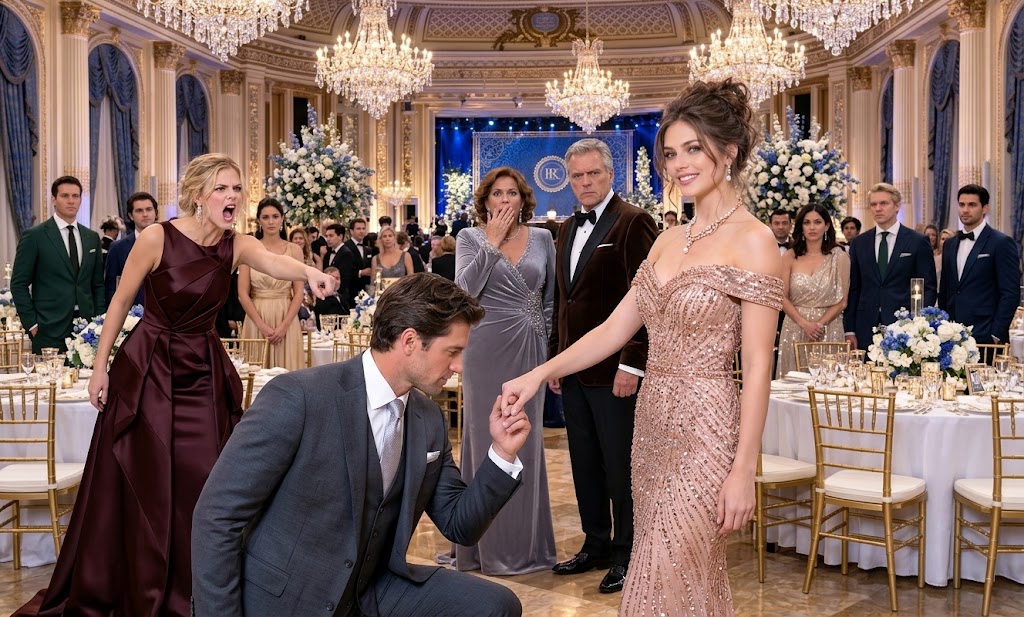
My sister, Alyssa Grissom, raised her champagne glass and tapped the microphone. The room quieted, a sea of expectant faces turning toward the podium. She looked straight at me, her lips curling into a practiced, devastatingly perfect smile.
“And of course, I must mention my little sister, Mary,” Alyssa’s voice echoed through the sound system, sweet as poisoned honey. “Still waiting for someone to pick her.”
The room erupted into laughter.
My father, Craig, laughed first. His chuckle was a loud, booming bark that gave everyone else in the room permission to join in. Beside him, my mother, Deborah, smiled serenely and reached under the heavy linen tablecloth to pat my hand—two quick, sharp taps, the exact physical gesture she used when she wanted me to swallow my tongue and behave. At the next table, a woman draped in diamonds actually clapped. Out of the corner of my eye, I saw the local newspaper’s photographer drop to one knee, lifting his heavy lens. I felt every eye in the room land like a physical weight on my bare left hand resting on my napkin.
Five months earlier, those exact same two people—my parents—had taken me out for coffee and calmly asked me to step aside so my sister could have her chance with a man. I had refused. They had never forgiven me for it. They had simply bided their time, waiting for the biggest stage of Alyssa’s life to finish the sentence they had been meticulously building for years: Mary is nothing, Alyssa is everything.
What none of them knew, as the laughter swelled and echoed off the vaulted ceiling, was that I had stopped waiting a very long time ago. They had absolutely no idea who was standing just outside the double doors, or who was about to walk straight past Alyssa’s outstretched, grasping hand.
But to understand why my own flesh and blood would construct such a public guillotine for me, you have to understand the architecture of the Grissom family, and exactly what kind of daughter I was bred to be.
I am a veterinarian. I own a modest, bustling animal clinic on the east side of Ashby, Tennessee, called Cedar Hollow. I opened its doors in August of 2019, armed with a terrifying small business loan, a refurbished, temperamental x-ray machine, and significantly more nerve than sense. I poured my soul into those linoleum floors. Every Friday morning, we run a program I named “Grey Muzzle Fridays.” If you are over seventy, and your dog or cat is going gray right along with you, the exam is on the house.
My Friday clients are my lifeline. They bring me foil-wrapped pound cakes. They press faded photographs of distant grandchildren into my palms. But one Friday in early February, Jenna, my razor-sharp receptionist who essentially runs my life, leaned into the exam room doorway, a heavy frown creasing her forehead.
“Mrs. Whitley canceled again,” Jenna muttered, tapping her clipboard. “And she refused to reschedule.”
Opal Whitley was seventy-eight. Her beagle, Penny, was fourteen, a sweet old girl with a frosty face and deteriorating hips. For six solid years, Penny had been my nine o’clock appointment every single Friday. Opal never missed. Even the week she underwent cataract surgery, she had bullied her nephew into driving the dog to me.
“Did she give a reason?” I asked, wiping down the stainless steel table.
“Just that she’d found somewhere closer.”
A shiny new corporate clinic had opened out on Danforth Road in January, boasting a massive LED sign and a complimentary coffee bar in the waiting lobby. I sighed, tossing my disinfectant wipe into the bin. I told myself it was just business. People are drawn to convenience; they like new, shiny things with foam art on their lattes. I told myself it wasn’t a personal rejection.
I was wrong about that. It would take me three agonizing months to discover just how profoundly wrong I was.
There are two daughters in the Grissom family, and everyone in Ashby knows exactly which one is the priority. If you step into my parents’ pristine living room, the first thing that demands your attention is the fireplace mantel. Alyssa’s high school cheerleading trophies still dominate the space, gleaming next to her framed college diploma and a massive, professionally lit photograph from her wedding. She has been divorced for three years, but my mother insists it’s “a lovely picture of the floral arrangements.”
The photograph of me, standing proud in my white coat on my veterinary school graduation day in 2016, is not on that mantel. It has languished in a brown manila envelope in my mother’s desk drawer for a decade.
“I’ll find a nice frame for it eventually, sweetheart,” my mother had told me once, years ago, when I foolishly asked about it. “But Alyssa just needs us more right now.”
Alyssa always needed them more right now. I was trained to understand this. That was my designated role in the family ecosystem. My father would usually be hovering nearby when these micro-rejections happened. He would clear his throat, shift his weight, and pat my shoulder. Your mother means well, kiddo.
For thirty years, I swallowed that sentence like a daily vitamin. I believed it because I desperately wanted to be fair to my father. For a long time, I genuinely thought he was the one parent who truly saw me. In March of 2024, he suffered a cardiac event requiring a stent. My mother was attending a women’s ministry conference in Memphis, and Alyssa had a “crucial” donor networking event she simply couldn’t abandon. So, I was the one who drove him to the emergency room at five in the morning. I sat in that freezing, sterile waiting room for four agonizing hours, drinking sludge from a vending machine.
When they wheeled him back to recovery, his skin pale and papery, he reached out blindly. I caught his hand. He gripped my fingers with surprising strength.
You’re the steady one, kiddo. You always were.
I clung to those words. I believed that if I just remained useful, quiet, accommodating, and invisible, my family would eventually look up and realize my worth. Not to replace Alyssa, but just to be allowed to stand next to her in the light. I thought “steady” was a term of endearment.
It took me years to decipher the hidden, darker half of that compliment. Steady people, in my family’s eyes, don’t require anything. They don’t need love, they don’t need defense, and they certainly don’t need to be protected.
And then, a man named Wade walked into my clinic, carrying a dying dog, and the entire fragile foundation of my life began to crack.