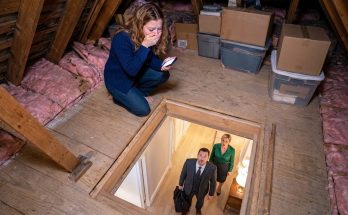
The words glowing on the ten-foot screen at my sister’s wedding reception were specifically designed to strip me of my dignity in front of three hundred wealthy guests. “Infertile, divorced, and a total failure,” the bold letters screamed as the room erupted into a chorus of cruel laughter that echoed against the crystal chandeliers.
My father leaned toward me with a smug grin and whispered that I should lighten up because it was all meant to be a harmless family joke. My mother swirled her expensive wine while she watched the screen with the detached interest of someone enjoying a particularly entertaining piece of theater.
Felicity, the beautiful bride, leaned into her diamond-encrusted microphone and told the guests not to laugh too hard because I might actually start crying in front of everyone. I did not shed a single tear as I pulled my phone from my clutch and sent the pre-written message to my friend so he would know it was time to activate our plan.
The room became so incredibly silent that you could actually hear the ice cubes cracking in my mother’s glass as the screen suddenly went dark. What happened next did not just ruin the expensive party, but it dismantled sixteen years of elaborate lies and the family reputation built on top of them.
My name is Seraphina, and I am a thirty-four-year-old woman who has finally decided to stop playing a role in someone else’s twisted play. Let me take you back to four weeks before the wedding, on the night I received the unexpected phone call that started this entire chain of events.
It was eleven in the evening on a rainy Thursday while I sat at my desk in Silveridge, finishing the final elevation drawings for a historic courthouse renovation. My back ached from hours of work and my coffee had grown cold, which was a perfectly normal state for a dedicated architect working late.
My phone lit up with an unknown number from a smaller area code that belonged to the town I used to know as my home. “My name is Nora Vance, and I am a nurse at the Pine Haven Care Center calling because your grandmother asked me to reach out to you,” a careful and professional voice said when I answered.
My hand tightened around the phone because Iris was the only person in my family who ever made me feel like I truly belonged among them. Nora explained that while Iris was eighty-four and scheduled for hip surgery, she had been constantly asking for me despite the restrictions placed on her visitors.
“She has been asking for you every single night, and she wanted me to tell you that she misses you more than words can say,” Nora whispered into the phone. I closed my eyes and remembered the last time I had snuck into the facility two years ago to hold her hand and listen to stories about her garden.
My father, Lawrence Blackwell, had made sure the front desk had strict instructions that I was not on the approved visitor list after he found out about my last secret visit. “Your father told Iris that you can visit her only if you agree to attend your sister’s wedding in three weeks,” Nora added with a voice that had dropped to a quiet murmur.
I realized that everything with Lawrence came with a heavy price tag or a set of impossible conditions designed to keep him in control. “There is something else she wanted you to know, Seraphina, because she says they are planning something for you at the reception and you need to be ready for it,” Nora warned me.
I looked up at my office wall where a framed certificate identified me as the State Emerging Architect of the Year. It was poetic that after five years of silence, the first voice I heard from my hometown was a nurse warning me about my own family.
To explain why I felt such a chill at that warning, I have to take you back sixteen years to the day my life was torn apart by a single signature. I was eighteen years old and sitting at the kitchen table in Oak Creek, a town where everyone knew your last name and exactly how much your father was worth.
Lawrence Blackwell slid a legal document across the table and told me that he needed me to sign over the land my grandmother had given me for my sixteenth birthday. The property was a beautiful two-acre parcel with a winding creek and an old oak tree that Iris had legally transferred to my name.
“I need this specific parcel for the new development project, and I am telling you right now to give it back to the family company,” Lawrence said with a cold authority. I looked at my mother, Cynthia, who sat at the end of the table flipping through a home decor magazine without ever looking up or saying a single word to defend me.
I refused to sign the document because I knew the land was the only thing I truly owned that didn’t come from my father’s bank account. Three days later, I discovered that Lawrence had cancelled my college tuition fund and redirected the money he had been saving since the day I was born.
One week after that, Lawrence stood in the grand foyer with his arms crossed and told me that if I walked out that door, I would never be allowed to come back. My little sister, Felicity, was only eleven years old as she watched from the top of the stairs without saying anything to stop the madness.
I left that night with one duffel bag and forty-three dollars in my checking account while my father told the neighbors that I had dropped out of school to run away with a boy. None of those rumors were true, but in a town like Oak Creek, my father’s word was the only version of the truth that anyone ever bothered to believe.
I spent two weeks sleeping in my old car and working at a gas station outside the city while I tried to figure out how to survive on my own. I worked double shifts at a greasy diner while I studied for my GED and saved every penny so I could apply for a community college program.
I eventually transferred to Silveridge State on a scholarship and studied architecture because I loved the idea of building things that were permanent and could not be taken away. I graduated at twenty-three with honors, but nobody from my family came to the ceremony to watch me walk across the stage and shake the dean’s hand.
At twenty-four, I married a man named Randall who was charming in public but became suffocating and controlling the moment we were behind closed doors. He was essentially a younger and quieter version of my father who wanted to manage my bank account and screen all of my professional phone calls.
I finally managed to get out of that marriage when I was twenty-seven, but the emotional scars took much longer to heal than the legal ones. A year later, a doctor in a quiet clinic told me that I would never be able to have children, which was a medical fact I had to process entirely on my own.
Somehow Felicity found out about my private medical history because Randall had stayed in contact with my family to maintain some form of leverage over me. Now I am thirty-four and a senior architect at a top firm where I design the restorations of historic buildings that people thought were beyond saving.
I never hid my life from my family to be dramatic, but I simply stopped performing for people who had already decided that I was a total failure. The morning after Nora’s call, I sat in my office and watched my colleague Gideon working on a complex museum project through the glass wall.
Gideon was a former military IT specialist and the most reliable person I knew, so I decided to tell him everything about the wedding and the warning from the nurse. “If you are going to walk into that room, you need to go with a strategic plan instead of just a foolish hope for reconciliation,” Gideon said after he listened to my story.
I told him that I had to go because Iris was eighty-four and I could not live with myself if something happened to her before I could say goodbye. “Then we are going to make sure that you are not walking into their trap without a way to defend yourself,” Gideon replied while he started typing on his laptop.
I booked a hotel in Oak Creek and pulled a navy blue dress from my closet that was professional and well-cut, rather than the shapeless thing my mother would expect me to wear. Three weeks before the wedding, Lawrence demanded that I attend a family dinner as a condition for letting me see my grandmother without a guard.
The Blackwell estate had not changed at all, with its white columns and manicured lawn designed to project an image of perfect respectability to the world. Cynthia looked me over at the door and told me that I looked terribly thin before asking if I was even eating properly in the city.
Lawrence sat at the head of the table and asked if I was still answering phones at some tiny design firm while he poked at his expensive steak. I did not bother to correct him because I knew that he wouldn’t believe the truth even if I showed him the blueprints for my latest skyscraper.
Felicity arrived late and made sure to flash her four-carat engagement ring under the dining room lights while she talked about her future mother-in-law. “I need you to wear something very understated at the wedding because my fiancé’s family is extremely particular about their social circles,” Felicity told me in the hallway.
She tilted her head and asked if I was still all alone without a man to take care of me, and she smiled when I chose not to give her an answer. Cynthia handed me a garment bag containing a beige dress that was two sizes too large and told me it would be perfect for someone in my position.
As I was leaving, Lawrence put a heavy hand on my shoulder and warned me not to embarrass the family because the groom, Conrad’s parents, were old money. “The Carlisle family judges everyone they meet, and one wrong move from you could kill the business deal I have been working on for months,” Lawrence hissed.
I drove toward the highway and realized that the name Carlisle was incredibly familiar because I had a project file with that name sitting on my desk. The Carlisle Heritage Foundation was funding the massive restoration of an old textile mill in Oak Creek, and I had been the lead architect for six months.
Isabella Carlisle was the chair of the foundation and had exchanged dozens of emails with me, but we had never actually met in person. She knew my work and my design philosophy as T. M. Blackwell, but she had no idea that I was the daughter of the man she was doing business with.
I did not plan to use this information as a weapon because I was not like Lawrence, but I filed it away in case things turned ugly at the wedding. Gideon called me later that night to tell me that the AV company for the wedding was short-staffed and he had already been hired as a freelance technician.
“I will have direct access to the projector system and the soundboard, so I can make sure your family doesn’t get to control the narrative,” Gideon explained. I spent the next few days preparing a short presentation that wasn’t an attack but simply a collection of facts about my actual life and career.
Gideon looked at the slides and told me that if they fired the first shot, I would be the one who fired the final and most devastating one. One week before the wedding, Lawrence finally allowed me thirty minutes with Iris, though he made sure Cynthia was there to supervise us.
Iris looked much smaller than I remembered, but her eyes were still sharp and full of the wisdom that the rest of my family seemed to lack. She grabbed my hand and whispered that I was the strongest person in the family and that I should never let them break my spirit again.
Iris reached under her pillow and pulled out a small envelope containing a photocopy of the property deed for the two-acre parcel of land. “Your father never managed to get this land transferred because he never had the legal right to take it from you,” she whispered while keeping an eye on the door.
I realized that for sixteen years, Lawrence had been lying to everyone about owning that property while he waited for me to finally give up. Cynthia knocked on the door and told me that our time was up before she checked her lipstick in her phone screen and led me out.
I left the care center with my grandmother’s blessing and the proof that my father’s entire business expansion was built on a legal lie. Six days before the wedding, Gideon and I reviewed the final version of my presentation which included photos of my graduation and my architecture license.
“I want the truth to be much louder than whatever cruel joke they have planned for the reception,” I told Gideon as he saved the file to a secure drive. He asked if I was sure that I didn’t want to include the details about the land theft, but I told him that I wasn’t interested in being a bully.
We established a signal where I would send a text message with the word “begin” if I decided that their behavior had finally crossed the line. Five days before the big day, Lawrence called to give me a list of rules that included sitting at a back table and not speaking to the Carlisle family.
“You are to tell people that you work as a receptionist at a small firm if they ask, and you are not to mention your divorce or your medical issues,” he commanded. That evening, Felicity added me to a group chat and shared a preview of a slideshow that featured unflattering photos of me with cruel labels like “dropout” and “infertile.”
Cynthia told her to keep it tasteful, but she never told her daughter that it was wrong to mock her sister’s private pain in front of a crowd. I stared at the word “infertile” on my screen and realized that my family viewed my body and my trauma as nothing more than a punchline for their amusement.
The wedding day arrived with a clear sky, and I wore my navy blue dress instead of the beige sack that my mother had tried to force on me. The church was filled with the elite of Oak Creek, including Isabella Carlisle, who sat in the front row looking like the powerful woman she was.
I sat in the very last pew where no one greeted me, and I watched Lawrence shake hands like a politician while he ignored my presence entirely. Cynthia laughed with her friends and mentioned that even her difficult daughter had managed to show up for the occasion.
Gideon was already near the side entrance wearing his AV uniform, and he gave me a small nod to let me know that everything was ready. The reception was held at a prestigious country club where I was seated at table fourteen, which was located right next to the noisy kitchen door.
Felicity took the microphone for the first toast and thanked everyone before she pointed toward the back of the room and made a snide comment about my arrival. The guests gave a few rounds of polite laughter while Lawrence clinked glasses with the Carlisle family and discussed their upcoming business partnership.
Cynthia whispered in my ear that I should not talk about myself and that I should try to smile for the sake of the family’s reputation. I smiled because I knew that in twenty minutes, the lights would dim and the slideshow would reveal the true character of the people in the room.
The maid of honor announced that there was a special presentation from the Blackwell family, and the screen flickered to life with photos of Felicity’s childhood. I was not in a single photo because my father had spent the last decade trying to erase my existence from the family history.
The music shifted to something playful, and the screen announced that it was time for everyone to meet the rest of the Blackwell family. I held my phone under the table with my thumb hovering over the send button while I gave them one final chance to be decent human beings.
The screen changed to show a grainy photo of me from high school with the words “high school dropout” plastered across the bottom in bold letters. The room rippled with uncomfortable laughter as the slides continued to mock my divorce and my financial struggles during the years I was homeless.
The final slide featured a clip-art baby with a large red X over it and the word “infertile” glowing in ten-foot letters for everyone to see. “Please don’t laugh too hard because my sister might actually start crying in front of all of you,” Felicity said into the microphone.
I saw Isabella Carlisle set her glass down with a sharp click while her jaw tightened in a way that suggested she was not at all amused. My thumb pressed the send button, and three seconds later, the cruel slideshow froze and the screen went completely black.
Gideon swapped the drives with the steady hands of a professional while Felicity frowned and called for the tech support to fix the issue. The screen lit up again with the title “The Real Seraphina Blackwell,” and the room went so silent that you could have heard a pin drop.
Lawrence stood up and demanded that the screen be turned off, but Gideon had already locked the system and the power closet. The first slide showed me at my university graduation with my honors cords and a caption explaining that I had put myself through school alone.
The next slide featured my official architecture license and photos of the historic buildings I had successfully restored throughout the state. The murmurs in the room grew louder as people realized that I was not a receptionist or a failure, but a highly successful professional.
When the slide showing my “Emerging Architect of the Year” award appeared, Isabella Carlisle stood up from her chair and stared at the screen. I stood up from my seat at the back of the room and looked toward the front where my family sat in a state of visible shock.
“I did not drop out of school, but I was forced to leave when my father took my tuition because I wouldn’t give him my land,” I said with a steady voice. Lawrence tried to claim that I was faking the photos, but the evidence on the screen was far too detailed for his lies to hold any weight.
“My divorce was not a failure but a survival from a controlling man, and my medical history is not something for you to use as a joke,” I added. I looked at Cynthia and told her that she was a coward for helping to design a slideshow that was meant to humiliate her own child.
Isabella Carlisle walked toward me and asked if I was the same T. M. Blackwell who was the lead architect on her mill restoration project. “Yes, I am the lead architect, and I have been working with your foundation for the last six months,” I replied while the room gasped.
Isabella turned to Lawrence and told him that the woman he had just publicly mocked was the professional she had hired to save the town’s history. “I do not do business with people who treat their own children with such calculated cruelty, so the Oakdale partnership is officially over,” Isabella declared.
Lawrence’s face went gray as he realized that his biggest business deal had just evaporated because of a slideshow he thought was funny. I pulled the photocopy of the deed from my pocket and informed everyone that the land Lawrence claimed to own was still legally mine.
“You were planning to build a multi-million dollar project on land that you don’t even own,” I said as the room erupted into whispers. The guests began to leave the reception in a steady stream because they didn’t want to be associated with a family that had been so thoroughly exposed.
I walked out of the country club and found Gideon waiting for me with a cup of coffee and a look of genuine pride on his face. “You didn’t ruin their lives, Seraphina, you simply stopped holding the curtain up for their lies,” Gideon said as we drove away from the chaos.
My grandmother called me the next morning to tell me that she had seen the livestream and she was incredibly proud of me for finally standing up. Lawrence lost several other business partners in the following weeks because his reputation as an honest man had been completely destroyed.
Felicity’s fiancé moved out of their home after the wedding because he realized that he didn’t want to be married to someone so mean-spirited. I am still living in Silveridge and working on the mill restoration project, but now I do it with the full support of the Carlisle family.
I have set a firm boundary with my parents and I no longer accept their calls unless they are willing to speak to me with basic respect. It turns out that you do not need your family’s permission to build a life that is beautiful, successful, and entirely your own.
THE END.