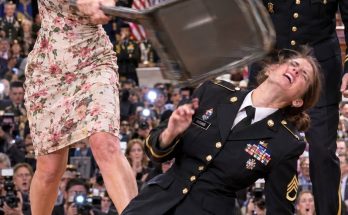
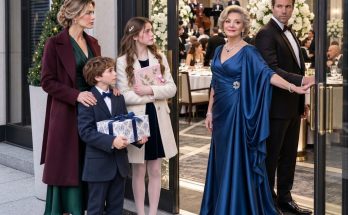
General Pierce’s expression remained controlled.
“Your family connection now creates a conflict. You’ll be removed from the technical review immediately.”
The words struck harder than I expected.
That investigation had consumed nearly a year of my life. My team trusted me. I had not known my family was connected when the case began.
“No one believes you did,” General Pierce said. “This protects you and the case.”
Protection did not feel like protection when it required surrendering work that mattered.
The electronic approval for the transfer carried Marissa’s credentials.
But if Blake had forged her name once, he could have used her identity again.
General Pierce closed the folder.
“You cannot pursue this independently, Ava.”
“I know.”
“Do you?”
She rarely used my first name.
“I know,” I repeated.
When we returned, Blake had been taken upstairs to speak with his attorney. Marissa stood near the table, unsure what to do with the freedom of not following him.
The ballroom had nearly emptied.
My father looked at me.
“Did you know about the foundation before I called you?”
“I knew its name had appeared in financial records. I didn’t know how much you understood.”
“You assumed the worst.”
“I investigated the facts.”
“I am your father.”
“Yes.”
That single word unsettled him more than an argument would have.
He lowered his voice.
“I have made mistakes with you.”
Mother looked at him sharply.
He continued anyway.
“I believed distance was what you wanted.”
“I stopped explaining my life because neither of you listened,” I said. “But I also stopped giving you chances to change. Both things can be true.”
It was not forgiveness.
It was not an apology.
But it was the first honest sentence we had exchanged in years.
Part 5: The House in Decatur
Marissa and I left through a side entrance after midnight. Rain had begun falling over Atlanta.
She paused beside the Tesla and laughed weakly.
“So it really is yours.”
“You sound disappointed.”
“No,” she said. “Embarrassed. I asked Blake if you leased it to impress people.”
“That sounds like him.”
“I repeated it.”
She looked at me.
“I’m sorry.”
The apology was small and unpolished.
That made it matter.
I took her to my house in Decatur. She was surprised I had bought it three years earlier.
“Why didn’t you tell anyone?” she asked.
“Who would I have told?”
The answer settled between us.
Inside, she studied the framed photographs on my wall: military ceremonies, overseas assignments, dinners with friends.
“You have an entire family I’ve never met,” she said.
“Friends.”
“That isn’t what I said.”
At the kitchen island near two in the morning, Marissa opened a backup folder from an online account Blake did not know existed.
“There’s one message I want you to see before I send everything to Daniel,” she said.
The email was dated seven months earlier.
Subject: LANE ACCESS CONFIRMED.
My pulse slowed.
The message contained three sentences:
The credential remains active. She has not detected the secondary user. Proceed after the September review.
My phone vibrated.
A secure message from General Pierce appeared.
DO NOT ACCESS PERSONAL OR GOVERNMENT SYSTEMS. CONTACT ME IMMEDIATELY.
Before I could respond, the kitchen lights flickered.
The security panel chimed.
Not an alarm.
A notification.
Someone had entered the correct code at my front door.
I reached the hallway as the lock disengaged.
The door opened slowly.
My father stood on the porch, rain dripping from his coat. He held an old wooden box against his chest.
“I need to speak to both of you,” he said.
“How did you get my code?”
He looked past me toward Marissa’s laptop.
“Because the house belonged to me before it belonged to you.”
I stared at him.
“That’s impossible.”
He stepped inside and placed the box on the entry table.
On the lid, beneath years of scratches, were two carved initials.
A.L.
My initials.
Then he handed me a faded photograph.
It showed him standing in front of my house twenty-eight years earlier beside a woman I had never seen.
She was holding a baby.
On the back, in my mother’s handwriting, were seven words:
Charles, tell Ava who her father is.